
Bureaucracy from hell: Why “The Screwtape Letters” is a mirror of modernity
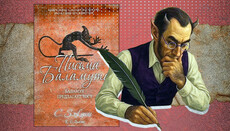
The devil wears a three-piece suit and works in an office. We look at C. S. Lewis’s book, written under the bombing of London, and realize: it’s the same war, only the enemy has grown less visible.
St. Anthony the Great saw lions. Huge ones, snarling, with claws and fangs. They burst into his cave, smashed the walls, choked the air with their stench. It was terrifying, but honest. The enemy showed his face.
We see a neighbor whose shoes squeak during the liturgy. A coworker who chews with his mouth open. A news feed that drains hour after hour, leaving only fatigue and irritation.
The war is the same. It’s just that the enemy put on a three-piece suit.
In 1941, while German planes were bombing London, C. S. Lewis was writing a book. He stood watch in the Home Guard, listened to air-raid sirens, and each week sent The Guardian a new letter. Written in the voice of a devil.
“The Screwtape Letters” appeared as a book in February 1942. Lewis admitted it was the most tormenting text of his life. He had to “set his mind to dust, sand, and thirst.” He didn’t enjoy the process. It was an ascesis – thinking like the devil in order to understand how he works.
The result turned out to be prophetic. A book about the 1940s became a manual for 2026.
The portrait of Screwtape: senior manager of the perdition of souls
Screwtape is not a horned monster. He is an experienced official in hell’s chancery – a senior devil who writes letters to his nephew Wormwood, a young specialist. Wormwood has a task: drag one human being to hell. Lewis calls him simply – the Patient.
Screwtape gives instructions. Cold, cynical, professional. He explains to his nephew that there is no need to force the Patient into great sins. Murder, betrayal, blasphemy – that’s too loud. It can wake the conscience.
What you need is something else. You need “nothing.” Petty despondency. Irritation at a mother who eats her soup slowly. Boredom during prayer. The feeling that “no one understands me.” Endless postponing of an important conversation. Scrolling the feed instead of reading a book.
Screwtape writes: “The safest road to Hell is the gradual one – the gentle slope, soft underfoot, without sudden turnings, without milestones, without signposts.”
Sin is not always a crime. Most often it is simply drift. Laziness. The absence of will. A person does not fall into an abyss – he slowly slides down a convenient incline, without even noticing the moment he stopped resisting.
Gluttony as delicacy: how to kill a soul with toast
There is a letter that cuts sharper than a scalpel. Screwtape teaches Wormwood to use the Patient’s mother.
She is not a glutton. She does not eat much. But she says: “I only need a cup of tea – but properly made. And one piece of toast – but properly browned.”
It looks like modesty. In reality it is tyranny.
She terrorizes waiters and loved ones with her “modest” desire. The tea is not brewed right – she sighs. The toast is overdone – she suffers out loud. Her stomach (more precisely, her caprice) rules her spirit. It is gluttony without overeating.
Screwtape triumphs: “Let her think she is plain and undemanding. In reality she is a slave to her taste. And through her we make everyone around her miserable.”
We read this and remember ourselves. How many times have we spoiled the mood of those close to us because the coffee was “wrong”? How many times have we believed we had a right to irritation because “I’m asking so little”?
Lewis shows: sin disguises itself as refinement.
We think we are defending our boundaries. In reality, we are simply being capricious. And through that caprice, the devil gains control.
War: why Screwtape is furious
The fifth letter is the most important for us. Wormwood rejoices: war has begun! Now the Patient will be afraid, will suffer, might become embittered or fall into despair. Isn’t that a victory?
Screwtape is furious. He writes an angry rebuke. “Of course, war is entertaining. But if we are not careful, we will see thousands of people who, in this hour of sorrow, turn to the Enemy.”
The Enemy is God. In hell’s terminology, God is the chief opponent.
Screwtape explains the logic. In peacetime a person believes he will live forever. He makes plans decades ahead. He postpones repentance “for later.” He lives as though death were something abstract – something that will happen to someone else.
War shatters this illusion. A person understands: I may die tomorrow. Or tonight, under the bombing. And suddenly the questions that seemed unimportant become the main ones. Where will I be after death? Am I ready to meet God? What have I done with my life?
Screwtape writes: “Our aim is a long, safe life full of trivial cares, so that the man may die without ever having remembered the Enemy. War gets in the way. It wakes the conscience.”
We read this in 2026. Outside the window – an air-raid alert. The news is full of words that squeeze the heart. The world feels fragile, like glass at the edge of a table.
And we understand: Screwtape is right. War is terrifying. But it is also a chance to wake up.
When life is stable and predictable, it is easy to forget God. Easy to live as though you were your own master. Easy to put off prayer because “tomorrow I’ll definitely pray – today I’m tired.”
When life cracks at the seams, the questions become honest. And so do the answers.
Church: the trap of the neighbor’s squeaky shoes
The second letter is about church. Wormwood panics: the Patient has begun going to services. What should we do?
Screwtape is calm. He knows how to neutralize the threat. “Make him look at the people on the bench. That one’s shoes squeak. That woman’s hat is ridiculous. That man sings off key.”
The mechanism is simple. If a person sees only people in church, he becomes disillusioned. Because people are imperfect. They squeak, they sing off key, they wear ridiculous hats.
The devil makes us judge the liturgy by the outward appearance of the parishioners, so that we forget: the church is not a club for ideal people. It is a hospital for sinners. We are all patients here. We all squeak in our shoes.
If I look at my neighbor and think, “How ill-mannered he is,” I’m already caught. Because I have forgotten why I came. I did not come to judge. I came to meet God.
Screwtape knows: if a person is focused on the flaws of others, he does not see Christ. And if he does not see Christ, the church becomes for him merely a boring gathering of strange people. And he leaves.
Laughter as a weapon: why saints mocked devils
Lewis begins the book with two epigraphs. The first is from Martin Luther: “The best way to drive out the devil is to mock him.” The second is from Thomas More: “The devil – that proud spirit – cannot endure scorn.”
Why? Because Satan is proud. He wants to be feared. He wants to seem great, dreadful, invincible. Laughter strips him of his pomp.
The saints knew it. When demons appeared to St. Anthony the Great in the form of monsters, he laughed in their faces. He said: “If you were strong, you wouldn’t need to pretend to be frightening. You show your fangs because you are afraid I won’t be scared of you.” And the demons vanished.
Lewis does the same.
He shows hell not as an epic battle of titans, but as a dull office with folders, reports, and denunciations.
Screwtape is not a fearsome commander. He is a mid-level bureaucrat who writes memos and is terrified of missing the quarterly plan.
It is funny. And in that laughter – there is liberation.
When we see the trick and laugh at it, the devil loses. Because his main weapon is invisibility. He works in darkness, in trifles, in what we do not notice.
But if I notice – if I see that irritation at my mother, or boredom in prayer, is not “just a mood,” but an attack – then I can resist. Not with great feats. Simply by refusing to go along with the temptation.
Hell smells not of sulfur, but of dusty office carpet
Lewis wrote in the preface: “I have always liked bats much more than bureaucrats.”
His hell is not cauldrons of boiling pitch. It is a gray office with fluorescent lamps. A research department. A corrective facility for incompetent devils. Folders with dossiers on every human being.
Screwtape explains to Wormwood the philosophy of hell: “We live by the principle of absorption. I want to eat you. You want to eat me. The strong eat the weak. In hell there is no love – only hunger.”
We live in a world where people use one another. Where relationships are built on advantage. Where everyone pulls the blanket toward himself. Where the main question is not “How can I help you?” but “What do I get out of this?”
Lewis shows: this is hell. Not after death – here. Now. When we live by the principle of absorption, we are already in hell. We simply haven’t noticed yet.
Heaven works by a different principle. God wants to give Himself to people without swallowing their personhood. He wants us to be free. To love, not to devour one another.
The choice between hell and paradise is a choice between two philosophies – absorption or love, hunger or gift.
What to do when there is no strength for feats
I close the book and look out the window. Outside – an ordinary January evening. Gray, cold, anxious.
I do not want to perform great feats. I want simply to make it to tomorrow without irritation at my loved ones, and without an hour lost to the news feed.
Lewis says: that is enough.
You don’t need to slay a dragon. You just need not to slide down the gentle slope. You don’t need great sins – you need not let “nothing” eat your soul millimeter by millimeter each day.
Saw the trick – named it. Laughed at it. Said “no.” This is not an epic battle. It is a quiet, stubborn war – every day, every hour.
Screwtape is not afraid of our feats. He is afraid of our humility. And of our laughter.