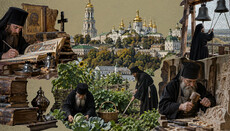

To the saints – by appointment only
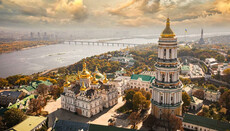
In the Lavra caves, the temperature has always been the same – under the Mongols, under Khrushchev, and now. The same holiness, too. But today, access to the relics is limited to just forty people a day, and only by prior registration.
A passageway four feet wide – this is the familiar reality of the Kyiv Caves Lavra. The cast-iron slabs beneath one’s feet receive each step with the same indifference with which they received them a century and a half ago. The temperature hovers at around fifty degrees Fahrenheit, and that number has not changed since Venerable Anthony dug the first cave cell here in 1051. The earth keeps its own temperature, just as it keeps the reliquaries of the saints who were laid into it.
The relics of more than one hundred and twenty saints rest in niches along the narrow corridors – Venerable Nestor the Chronicler, Venerable Ilya Muromets, Agapit the Physician, princes, warriors, recluses. Their relics remain incorrupt, and science still cannot explain it: in such humidity and at such a temperature, the body ought to decay, not endure. Soviet biologists who studied the remains in the 1980s found traces of highly refined oils in them – but in an atheistic state, they did not dare to say so publicly.
As time passes, science falls silent, acknowledging its helplessness before the miracle of God. Bureaucracy, by contrast, only grows more talkative.
Since February 2026, prayer at the relics has become a matter of advance booking and strict quotas. Ten people per group. No more than forty people per day. Two hundred per week. On feast days before the start of the large-scale persecutions, ten to fifteen thousand pilgrims a day passed through these same corridors, scarcely four feet wide. The current limit amounts to just three-tenths of one percent of that former living stream.
The Lavra grounds are now run like a commercial property, drawing money from visitors with practiced confidence and not the slightest embarrassment. The reserve’s sightseeing bureau has posted its price list. Guides in secular suits retell the lives of the saints as if they were little more than colorful legends, carefully skirting the central truth – that the Church is not a “cultural layer,” but the living breath of eternity.
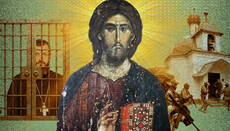
A century-old remake
This picture is not new. We have seen it before.
In 1926, the Soviet authorities turned the Lavra into an “All-Ukrainian Museum Town.” Monks were driven out under slogans about “liberating monuments from clerical narcotic.” Many of them were later shot.
A hundred years later, the script is the same – only the vocabulary has softened. No longer “clerical narcotic,” but “the preservation of cultural heritage.” The result is identical – a shrine is turned into an exhibit.
In 1941, under the German occupation, monastic life was allowed to resume. But on November 3 of that same year, the Dormition Cathedral – the very one founded under Venerable Theodosius of the Caves in 1073, the cathedral that had seen Constantinopolitan architects and heard the prayers of Yaroslav’s grandsons – was reduced to dust. To this day, the arguments continue over who blew it up. Soviet sappers mined it while retreating, yet the Nazis too carted off the cathedral’s treasures by the wagonload, like a bird of prey stripping its catch to the bone before casting aside the skeleton.
Oleksandr Dovzhenko wrote in his diary the bitter truth of a man condemned to silence: it was our own people, he said, who destroyed Kyiv and the Lavra – “but I will never tell anyone this in my life.” Later, a terse inscription was carved into the stone near the restored cathedral: “Blown up by barbarians of the twentieth century.” No names. No address.
And below, in the caves, nothing changed that November day. The same fifty degrees. The same smell of wax. The same relics in the niches. The detonation that turned eleventh-century walls into rubble did not disturb the silence fifteen yards underground.
The Kurenivka tragedy
On March 17, 1961, Khrushchev’s officials closed the Lavra “for restoration.” The last monks departed quietly. Yet four days earlier, on March 13, the dam at Kurenivka, in Babyn Yar, had burst. A wall of mud forty-six feet high crashed down on Podil, burying people, houses, and transport alive. Altogether, around fifteen hundred people perished. At that time, the Kyiv priest Georgiy Yedlinsky reminded his parishioners of Christ’s words about the tower of Siloam: “Do you think that those eighteen upon whom the tower fell were more guilty than all the others living in Jerusalem?” Believing Kyivans linked the catastrophe with the closure of the Lavra – and there is little point arguing over metaphysics when a coincidence cuts this deep.
The Lavra was silent for twenty-seven years. Museum halls were draped with anti-religious posters and exhibits. Only in June 1988, for the millennium of the Baptism of Rus’, did monks return to the monastery. Its first superior after the reopening, the future Metropolitan Ionafan (Yeletskikh), recalled that the director of the museum-reserve greeted him with a sour expression. Mold ate at the walls, plaster crumbled, floorboards lurched underfoot. But in the caves – the same forty-six to fifty degrees, the same silence waiting for them as a mother waits at the window, never for a moment doubting that her children will come home.
The architecture of loneliness
The Apostle Paul wrote of people “of whom the world was not worthy,” who “wandered in deserts and mountains, in dens and caves of the earth” (Hebrews 11:38). The verse sounds as though it had been written not of the righteous of the Old Testament, but of the brethren of the Lavra – those of the past, and those of today.
In 1978, archaeologists found in one of the crypts a sealed bottle containing a letter from Archimandrite Valeriy (Ustimenko), the superior of the Lavra during the occupation. He had hidden it there in 1942 – for those who would come after. The bottle lay for thirty-six years in stone like a grain buried in frozen ground. In the letter, the priest asks forgiveness of the brethren and the faithful, saying that he has voluntarily enclosed himself in the caves to share the monastery’s fate and, if need be, to accept a martyr’s death within its walls. It was composed as the spiritual testament of a man who did not know whether he would survive the coming battle for the city.
That gesture of a confessor – a message sent into the future – is worth more than any theological treatise on hope.
Christ said, “My house shall be called a house of prayer” (Matthew 21:13). He did not add: by prior appointment, in groups of ten, on weekdays from nine to eleven.
But the caves do not care how many officials stand at the entrance. They waited under the Mongols, they waited under the Bolsheviks, they waited through twenty-seven years of Khrushchev’s desolation. The cast-iron slabs will receive any footstep – that of today’s administrator with his pass, and that of the future pilgrim who will enter here when not a particle of that pass remains, not even paper dust. By their relics, the venerable fathers outlived more than one generation of persecutors. But will we survive the wrath of God that will surely, sooner or later, fall upon all who turn a holy place into a sightseeing bureau?