
Christianity does not teach us to be compliant victims

A believer may endure humiliation for years at home, at work, or in their church community. And when someone asks, “Why do you put up with this?”, they always have an answer ready: “We must be humble,” “God endured suffering, and so must we,” “We must turn the other cheek.” But behind this apparent calm and peace, there is very often suppressed pain that has become the norm of everyday life.
Let us return to the primary sources. What did Christ actually do when He was struck and humiliated by the Jews?
Jesus did not stay silent
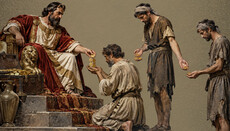
The scene takes place at the trial before the high priest Annas. Christ answers a question about His divinity, and one of the guards strikes Him in the face, saying: "Is that how you answer the high priest?" Christ does not try to appear as a beaten prisoner but speaks directly to His accuser: "If I have spoken wrongly, bear witness about the wrong; but if I have spoken rightly, why do you strike Me?" (John 18:23).

The Savior did not respond to injustice with silent acquiescence. Calmly and with dignity, He called things by their proper names: if my guilt has not been proven, you have no right to strike Me. He demands legal arguments from those accustomed to settling everything by force. This – and no other way – is how the Lord responds to violence directed against Him.
The true meaning of turning the other cheek
There seems to be some inconsistency here. For the same Christ teaches something quite different in the Sermon on the Mount: "If anyone slaps you on the right cheek, turn to him the other also" (Matt. 5:39). If we look more closely at the context of these words, we can notice something obvious: to strike someone on the right cheek with the right hand, you would have to use the back of your hand. This is not an ordinary slap, but a humiliating gesture, the kind of backhanded slap with which a master would reprimand a slave, a husband would punish his wife, or a dominant Roman would put an uppity Jew in his place.
Now imagine what happens when, after such a blow, the person turns the other cheek. Striking the left cheek with the back of the same hand is awkward; the natural response would be a blow with the fist or an open palm. That is already a fight between equals. The aggressor is caught in a trap: either he stops, or he unwittingly acknowledges the victim as his equal.
Now the meaning of this commandment becomes clear: it is about the victim’s refusal to bow down and accept the status of a worthless person.
The humility that turns out to be pride
In the Paterikon there is a story that quite literally turns our understanding of humility inside out. St. Abba Dorotheus once told his spiritual father, Barsanuphius the Great, that he considered himself worse than every creature. The elder's response was unexpectedly sharp: "For you, it is pride to think so."
At first glance this seems strange: a man humbles himself with all his might, yet is accused of pride. But the elder saw what an ordinary person might easily miss: behind ostentatious self-abasement, there is often not sober-mindedness, but the other side of that same pride.
True humility is an honest understanding of one’s actual condition, without excessive theatrics of the “I’m better than everyone else” or “I’m worse than everyone else” variety.
Abba Dorotheus himself later pointed out another extreme: ostentatious humility for the sake of others’ approval. “It happens that some humble themselves for the sake of praise,” he said.
Where is the boundary of endurance?
True humility does not remain silent about pain, nor does it forbid calling injustice by its name. Christ before the high priest speaks calmly, without rage, but firmly. The apostolic tradition regards the gesture of turning the other cheek not as capitulation but as a refusal to yield before humiliation. The Holy Fathers teach spiritual sobriety, not a competition in self-abasement.
What is often presented as piety today – the habit of remaining silent about one’s own pain, excusing the cruelty of others, and feeling ashamed even at the thought of having personal boundaries – looks more like learned helplessness than an evangelical virtue.
A person who has received no response to their pain from a priest or fellow believer for years may eventually stop speaking about it altogether. But they have not become humble; they have simply stopped believing that voicing the problem will change anything. Telling them to “be humble” has become a convenient excuse for avoiding the real work of helping them cope with their psychological trauma.
If we are facing danger or someone has caused us pain, seeking help and a way out of a dead end in life is no less spiritual than praying patiently. The Lord does not call us to pretend that pain does not exist. Through His own example, He shows us that faith in God and a sense of self-worth can coexist perfectly well and can be expressed in a word of rebuke to the person who is causing us harm.