
The Mysterious "Bridegroom of Blood" in the Book of Exodus
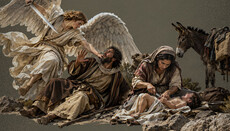
A dusty caravan moves westward through the scorching desert, leaving behind the pastures of Jethro. Moses returns to Egypt by the command of the Almighty, gripping a wooden staff in his hand. Long years of exile lie behind him; ahead awaits the great exodus of a people from slavery. The evening sun quickly drops below the horizon, plunging the road into pitch darkness. The caravan halts for the night, making a temporary camp under the open sky.
Nothing foreshadows trouble. His wife Zipporah puts the weary children to bed, the animals chew on thorny grass. But no sooner does the camp sink into deep sleep than a strange darkness thickens around the prophet. The Bible describes this moment as follows: "And it came to pass by the way in the inn, that the LORD met him (Moses – Ed.) and sought to kill him" (Ex. 4:24).
The text of Exodus cuts the narrative at its most terrifying point, offering no explanation for such sudden divine wrath. The prophet, who had just spoken with God at the burning bush, suddenly falls out of favor with the Creator.
Disputes in the Midianite Tent
Why does the Lord's wrath fall upon the patriarch precisely during the journey? The answer lies in the details of his family life.
The Venerable Ephrem the Syrian points to a long-standing internal conflict. Moses, having married the daughter of a Midianite priest, found himself between two different worlds. When children were born to them, a dispute over faith arose in the young family. Moses insisted on fulfilling the covenant of Abraham, demanding that the sons be circumcised according to the law of their ancestors. Zipporah resisted, defending the customs of her native tribe.
In the end, the spouses reached a fragile compromise. One boy was circumcised, while the other was left uncircumcised, yielding to the pleas of the mother and her relatives. .
This long-standing compromise seemed an insignificant trifle amid the bustle of nomadic life. But just before entering the borders of Egypt, it becomes clear that neglecting God's covenant goes unpunished.
Jewish tradition offers a more mundane explanation for all of this. At the first stopping place in the desert, Moses decided to circumcise his elder son, but first busied himself with setting up camp and put off the important matter. The delay provoked heavenly punishment.
Noteworthy is the divergence in ancient translations of this passage. The Greek Septuagint softens the horror of the scene, saying that an angel of the Lord met Moses. The ancient Hebrew text speaks of Divine presence itself. Even the earliest translators already sensed the full complexity of this biblical passage.
Sudden Redemption
The night in the camp becomes the arena of a spiritual contest. Moses is paralyzed by an unknown force, life rapidly leaving his body. Zipporah instantly grasps the true cause of the unfolding horror.
She did not lose her composure in the face of death. The woman seizes a sharp flint knife – an archaic instrument that underscores the antiquity of the rite – and herself performs the circumcision of her son.
Drops of the infant's blood fall onto the dry earth. Zipporah approaches her dying husband and throws the severed foreskin at his feet with strange words: "Surely a bloody husband art thou to me" (Ex. 4:25).
Saint Gregory of Nyssa sees in this act a profound symbolic meaning. The Midianite woman Zipporah embodies external human wisdom, which must be cleansed of the defilement of error through participation in the divine covenant. The salvation of the Jewish leader is accomplished by the hands of a foreign woman who has recognized the greatness of his law.
The Mysterious "Bridegroom of Blood"
Immediately after this the threat recedes, but the key phrase "A bloody husband thou art, because of the circumcision" (Ex. 4:26) is repeated. What did these words mean in the language of the ancient nomads?
Interpreters offer two entirely different answers. The first version sees here the language of redemption. Zipporah calls her husband by this name because the blood shed by the child ransomed the life of the head of the household from the wrathful Creator. One life is saved at the cost of another's blood.
The second version is rooted in the tribal customs of the Midianites. The expression may have pointed to an ancient rite of blood kinship and protection. By performing the circumcision, Zipporah seemingly re-bonded her husband to her own clan, drawing him into the system of tribal security in the face of an unknown danger.
Blessed Augustine compares this episode to the long history of a person's growth in faith, where the movement of the soul comes first, followed by the visible sign of the covenant.
Moses's journey continues. In the morning the caravan will move westward again, toward the banks of the Nile. The prophet will press on, leaning on his staff, having learned the lesson of that terrible night which changed his life forever.