
Fr Seraphim Rose: From Emptiness to Truth
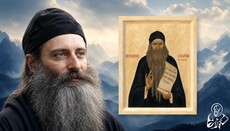
The Russian Orthodox Church Outside of Russia has blessed preparations for the glorification of the American hieromonk who passed through unbelief, Eastern philosophy, and spiritual crisis to become one of the most widely read Orthodox authors of the twentieth century.
The Council of Bishops of the Russian Orthodox Church Outside of Russia (ROCOR), held in Munich from April 29 to May 5, 2026, resolved: “The Council of Bishops, having recognized the righteous course of life of the ever-memorable Hieromonk Seraphim, has blessed the process of preparing his ecclesiastical glorification among the ranks of our venerable Fathers.” Many interpreted this announcement as meaning that Fr. Seraphim had already been officially proclaimed a saint. Debate immediately followed: some greeted the news with enthusiasm, while others expressed sincere bewilderment.
But we should not forget that canonization is not a media campaign, not the promotion of a religious celebrity, nor a posthumous award. It is the conciliar recognition that the Church sees in a person the fruit of God’s grace. Canonization also has another side. Once a person is recognized as a saint, he is often transformed in the public imagination from a real human being into a mythological figure somehow different from ordinary sinners like ourselves. Every action of his begins to be viewed through the prism of sanctity. His opinions become almost impossible to criticize, and his books are reduced to quotations that anyone may apply however they wish.
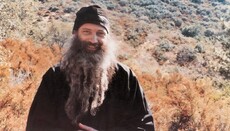
That is why it is worth speaking about Seraphim (Rose) and his works without breathless admiration, but also without irritated skepticism.
The path of Seraphim Rose
The future Hieromonk Seraphim, born Eugene Dennis Rose, came into the world on August 13, 1934, in San Diego, California, in an ordinary American Protestant family. At the age of fourteen he was baptized in the Methodist Church, but later lost his faith and described himself as an atheist. His later life would show that this was not merely a teenage rebellion against the religion of his parents. It was a stage in the formation of Eugene as a profoundly religious man.
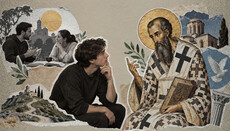
After high school he studied Chinese philosophy at Pomona College, graduating with honors in 1956. He later studied under Alan Watts at the American Academy of Asian Studies, and then entered graduate school at the University of California, Berkeley, where in 1961 he defended a thesis with the revealing title: “Emptiness and Fullness in the Tao Te Ching.”
Alan Watts was not simply a lecturer – he was a cult figure in the American intellectual and countercultural world of the 1950s through the 1970s, a popularizer of Eastern philosophy in the West, especially Zen Buddhism and Taoism. Eugene Rose thus found himself at the very center of America’s “spiritual alternative,” where people sought spirituality outside traditional Christianity. And it is striking that Rose eventually moved in the opposite direction: not toward syncretic spirituality, but toward strict Orthodoxy. Even the title of his thesis was deeply symbolic.
Rose was searching for an answer to the question: where is ultimate reality – in the visible fullness of the world or in the mysterious emptiness beyond it? He found the answer in Orthodoxy: not an impersonal Tao, but a Personal God; not dissolution into emptiness, but an encounter with Christ.
During this period Eugene immersed himself in Eastern teachings, Buddhism, and ancient Chinese thought. He even learned classical Chinese so he could read the texts in the original rather than through translations and interpretations. It was a time not only of intense searching for truth, but also of deep moral collapse. In the second half of the 1950s, Eugene lived in an open homosexual relationship with a man named Jon Gregerson, as evidenced by his surviving letters.
The ways of the Lord are beyond understanding. It was Gregerson himself, who had Finnish roots, who introduced Eugene to Orthodoxy. One day he suggested that Rose visit a Russian Orthodox church. Fr. Seraphim later recalled the experience this way:
“When I visited an Orthodox Church, it was only in order to view another ‘tradition’. However, when I entered an Orthodox Church for the first time (in San Francisco) something happened to me that I had not experienced in any Buddhist or other Eastern temple; something in my heart said this was ‘home’, that all my search was over. I didn’t really know what this meant, because the service was quite strange to me and in a foreign language. I began to attend Orthodox services more frequently, gradually learning its language and customs…With my exposure to Orthodoxy and Orthodox people, a new idea began to enter my awareness: that truth is not just an abstract idea, sought and known by the mind, but something personal – even a Person – sought and loved by the heart. And that is how I met Christ.”
In February 1962, three years after first entering an Orthodox church, Eugene was received into the Orthodox Church through the Sacrament of Chrismation. Later he wrote: “When I became a Christian, I voluntarily crucified my mind, and all the crosses that I bear have been only a source of joy for me, I have lost nothing, and gained everything.”
His repentance was deep, sincere, and transformative. The remainder of his life was lived in chastity and ascetic restraint. His spiritual father became St. John of Shanghai and San Francisco, then Archbishop of ROCOR.
It was in San Francisco that Eugene met Gleb Podmoshensky, a man who would later become a highly controversial figure. Together they opened an Orthodox bookstore near the cathedral on Geary Boulevard in 1964, began publishing The Orthodox Word magazine, and in 1969 moved to a remote area near the tiny settlement of Platina in northern California, where they founded the Monastery of St. Herman of Alaska.
On October 27, 1970, Archbishop Anthony Medvedev tonsured Eugene and Gleb into monasticism. Eugene received the name Seraphim, in honor of St. Seraphim of Sarov, while Gleb became Herman, after St. Herman of Alaska.
Life in Platina was austere in the extreme. Fr. Seraphim lived in a tiny cell without electricity or running water. There he prayed, studied the writings of the Holy Fathers, and wrote books. He continued editing The Orthodox Word, translating spiritual literature, and maintaining extensive correspondence on spiritual matters.
On January 2, 1977, Fr. Seraphim was ordained a deacon, and on April 24 of the same year he was ordained to the priesthood. To his labors as a writer and translator was added pastoral ministry. In his final years, increasing numbers of pilgrims and converts to Orthodoxy came to seek his counsel.
His final illness came suddenly. In August 1982 he began suffering severe abdominal pain. For several days he endured the agony before the brethren finally brought him to Mercy Medical Center in Redding, California, already in critical condition. According to one of his spiritual children, one reason for the delay may have been that Fr. Seraphim had no medical insurance. Once, when asked about this, he pointed upward and said: “That is my medical insurance.”
Hieromonk Seraphim Rose reposed on September 2, 1982, at the age of forty-eight.
What Seraphim (Rose) wrote about
Fr. Seraphim authored several influential works: Nihilism: The Root of the Revolution of the Modern Age, God’s Revelation to the Human Heart, Genesis, Creation and Early Man, The Place of Blessed Augustine in the Orthodox Church, and The Northern Thebaid. Yet two books became especially well known: Orthodoxy and the Religion of the Future and The Soul After Death.
In Orthodoxy and the Religion of the Future, he examined yoga, Zen, tantra, transcendental meditation, the Hare Krishna movement, UFO culture, charismatic Christianity, and the Jonestown tragedy as symptoms of a new pseudo-spirituality.
His central argument was that humanity possesses a natural longing to know the spiritual world. This longing manifests itself in countless spiritual practices, yet together they reveal “a terrifying unity of purpose.” That purpose, he argued, was to offer spirituality without repentance, without Christ, without the Church, and without the crucifixion of one’s passions and desires.
It is important to remember that these words were written by a man who himself had passed through a profound fascination with Eastern religious and philosophical traditions. He knew what he was talking about. His words were not abstract theorizing, but the testimony of someone who had personally encountered Truth and the many ways of deviating from it.
The book was criticized by Orthodox theologians, religious scholars, and representatives of other religions alike. Critics argued that it suffered from excessive categorical thinking, conspiratorial tendencies, and weak theological argumentation. Yet even many critics admitted that the book accomplished its essential task: warning Orthodox Christians about the danger of drifting away from the faith, diluting it, and turning it into an amorphous pseudo-spirituality.
His second major work, The Soul After Death, attempted to confront humanity’s oldest fear – the fear of death. Written in the 1970s amid growing public fascination with near-death and out-of-body experiences, inspired in part by the works of Raymond Moody and Elisabeth Kübler-Ross, the book sought to interpret such phenomena in light of Orthodox tradition and patristic teaching.
After its publication in 1980, The Soul After Death also provoked intense controversy within ROCOR and beyond.
Most of the criticism centered on the teaching concerning the toll houses. Critics argued that if interpreted literally, the teaching could devolve into an almost mechanical picture of the afterlife, where everything is reduced to a transaction of good and evil deeds and demons function almost as arbiters of human destiny. Yet it is important to note that Rose himself warned against crudely literal interpretations of these images, insisting that such descriptions should be understood spiritually rather than as a material “geography” of the afterlife.
But once again, the book achieved its main purpose. Countless people around the world began to think seriously about death and eternal life precisely because they had read it.
The writings of Seraphim Rose do not attract readers because of flawless argumentation. Their power lies elsewhere. They speak about things modern man fears to discuss seriously: death, spiritual deception, false spirituality, the loss of truth, and self-delusion. Fr. Seraphim was not afraid to denounce error, nor did he strive to appear tolerant or politically correct. He remained himself and defended the Truth he had found in Orthodoxy.
Instead of a conclusion: not a myth, but a living man
ROCOR’s desire to glorify Seraphim Rose among the saints is entirely understandable.
People long for spiritual support in someone who sincerely sought God, suffered, wandered astray, fell and rose again, and in the end found Christ.
He was not born into a ready-made Orthodox world. He did not inherit the true faith, nor come to the Church through inertia or habit. He searched for Truth in the same places where thousands of people of his generation searched for it: philosophy, culture, the religious East, mystical experience, freedom from tradition, and freedom from moral norms. Perhaps he believed that this was where he would finally discover it.
And then he stepped into an Orthodox church…
What followed is described in Greek by the word metanoia. Repentance – but not merely sorrow for past sins. Rather, a profound transformation of mind, heart, worldview, and way of life.
He became a monk and a priest. He wrote books and spoke with people. And his words carried power because they were the words of a man who himself had passed through a spiritual desert, who understood that man perishes not only through sins, but also through substitutions: spirituality without Christ, knowledge without repentance, freedom without Truth, conversations about death without readiness for the Judgment of God.
When the process of Fr. Seraphim’s glorification is completed, it will be very important not to turn him into a myth or a sentimental icon. It is important that, reading his books, we understand this: the path to God may be exceedingly thorny and winding, but if a person is sincere in his search for God, the Lord can transfigure even a wounded, lost, and tormented soul.
That is the path Seraphim Rose walked – from emptiness to Truth.