



Director of the Orthodox School in Holosiiv: We were slandered
The head of the school at the Holosiiv Monastery stated that journalists distorted the facts about the teachers' work and in some cases outright lied.
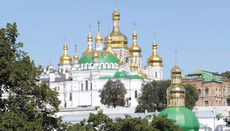
In early January, an artificial scandal arose in Ukraine’s media space. The resource Slidstvo.info published the so-called "investigation" into the activities of the Orthodox school Perspektyva at the Holosiiv Monastery. The journalists accused the school administration of promoting the "Russian world", and (don’t laugh) of "glorifying the Russian God". A real witch hunt against the teachers is unfolding in the media and on social networks, and the Security Service of Ukraine (SBU) and the Prosecutor’s Office have even initiated a criminal case. The UOJ contacted the school’s director, Anna Bolhova, to learn the details of the scandal. Anna categorically denied the accusations against the school. According to her, the journalists distorted the facts and took information out of context to create a sensational story.
"We were open, hiding nothing"
"Our parent club operated openly, we were hiding nothing at all. Well, if we had had any plans there, we wouldn't have gathered in front of everyone," emphasizes Anna.
According to her, it was an ordinary parent club – mothers who wanted to give their children a quality education and Orthodox upbringing: "Our children are Orthodox, in regular schools it's very difficult for them – gadgets, swearing, and everything else. We came together because this situation with education has become a pressing concern for all of us."
Parents openly distributed announcements in Orthodox groups online, inviting like-minded people. "Everything was publicly available online, nothing was hidden from anyone. We had a shared group where everything was visible – you could track all our activities. We didn’t do anything illegal," says Anna.
"There was no funding from Russia"
One of the main accusations by journalists is that the school was funded from Russia, which the director categorically denies.
"No one can believe it, but no one funded us – at all. We had no funding. I thought we would gather, and then someone with money would come and say: 'Let's help.' But no one came. No one," she says with bitterness.
Everything was done purely out of enthusiasm: we bought second-hand furniture, some people donated, others brought things from home. Two used pianos were brought. Textbooks were collected one by one, discarded from libraries as waste paper. "We collected money bit by bit from whoever could give. Our people were just common folk," the director emphasizes.
The story with textbooks: specifically looking for the Ukrainian version
A separate story concerns the Soviet textbooks, because of which the school was accused of promoting totalitarian symbols and the "Russian world".
In their "investigation", the journalists highlighted a Pchelko arithmetic textbook, a Soviet edition of 1966, that was indeed used in the school. But the director explains that it is a high-quality textbook, which many modern parents use at home with their children or with tutors, and it is available for sale. Moreover, it is in Ukrainian, and the school specifically sought out this Ukrainian-language edition.
«We found the Ukrainian version, searched the entire Internet, found the Ukrainian version – it's a Ukrainian school! Imagine, we printed these tasks, examples on printers. And now, we turned out to be criminals," says Anna Bolhova with bitterness.
She emphasizes that the Pchelko textbook is "very logical and consistent".
Many parents who want their children to truly know mathematics use these textbooks. She emphasizes that the main criterion in choosing a textbook was the quality presentation of the material: «Physics, mathematics – what crime can there be? Our main concern is that the information is presented adequately. Because the latest reform in the Ukrainian school is very questionable, the information is presented in a heavy and incomprehensible form." Bolhova emphasizes that the school had textbooks from different periods – both modern Ukrainian, pre-reform, and older ones. "We had many textbooks in Ukrainian – we found so many old, adequate ones. You know, the program used to be completely different," says the director.
On the Russian anthem
The question from a UOJ journalist about whether it was true, as Slidstvo.info claimed, that the Russian anthem was sung at the school, outraged Bolhova. According to her, this is an outright lie. She explained that Ukrainian children are currently using TikTok to protest against the imposition of a patriotic agenda.
"I was talking about the trend on TikTok right now – there is a protest against the imposition [of patriotic messaging]. They start teasing on purpose. And there is currently a trend on TikTok where they deliberately start singing the Russian national anthem," she explains, emphasizing that this is just a fad – entirely online – and it has nothing to do with her school. Moreover, when Anna Bolhova heard that one of the boys had shown such TikTok videos to other children, she called them in and held a disciplinary talk, explaining that this behavior is unacceptable.
"Glorifying the Russian God" – an absurd accusation
The claim by Slidstvo.info that the school "glorified the Russian God" left Bolhova utterly perplexed. She described it as complete nonsense, so absurd that it’s impossible to respond sensibly: "I just don’t understand this. Let them explain to me – how is that?"
She said that both the teachers and parents were practicing believers for whom faith in God matters greatly. That is why the curriculum for the children included the Law of God.
"We are Orthodox and believe that the Law of God is a core subject. Everything is built on it. It is absolutely necessary for Orthodox children. I personally taught it. We are all Christians, all the parents support this subject – we came together because the truth was very important to us," Anna Bolhova explained.
On the Russian language and literature
The school indeed studied the Russian language and Russian classics, but the director explains why this was necessary.
"We had some fully Ukrainian-speaking families. But the majority were Russian-speaking. But this did not divide us at all," she says.
The director, a psychologist by education, explains the methodological basis of her approach: "Based on my observations and practical experience, I’ve realized that it’s important for a child to learn to read in the language they use with their parents and in which they think. Then another language can be layered on."
According to her, after Russian was banned in schools, a huge number of Russian-speaking children, in addition to all other problems, also faced a difficult situation in learning.
"Today, most children struggle with writing and are not proficient in either Russian or Ukrainian. However, Russian-speaking children who initially studied in Russian and later learned Ukrainian were literate, spoke Ukrainian perfectly, wrote without errors, and even won awards in Ukrainian language competitions. This was the case for my own children and for others I knew," the director clarified.
She criticized the reforms in the school program regarding literature. According to her, there appeared works that are absolutely heavy for perception and harmful to the child's psyche.
The director provides specific examples: "'Perfume' by Süskind, 'Flowers of Evil' by Baudelaire, and much other depressive literature."
In contrast, the parent club studied classical literature:
"We had a curriculum that included poems by Russian classics. Well, let them shoot me for that. If verses by Yesenin are considered propaganda of the ‘Russian world,’ then excuse me. So now everything beautiful counts as the Russian world?»
At school, they watched old Soviet fairy tales and discussed what they watched with the children. They also showed pupils films about the danger of drugs.
How a journalist sneaked into the school posing as a refugee
Anna Bolhova told how a journalist from Slidstvo.info gained access to the school, posing as a refugee from Luhansk.
“She introduced herself as a refugee from Luhansk and won everyone over. She spent several days coming around, chatting with everyone. We welcomed her with open hearts. We weren’t hiding anything and hadn’t done anything wrong, so we told her everything,” she recalled.
The director shared with this "refugee" information about the TikTok situation, the selection of textbooks, and the school’s educational work. "She simply didn’t take it in," the director said, referring to how the journalist misrepresented her words.
Consequences: harassment and school closure
After the publication of the "investigation". phone calls and pressure began.
Parents became frightened, and the monastery asked to close the parent club. "It was all blown up so much that the parents were simply scared, and the monastery also said, 'Sorry, goodbye.' I understand we caused them problems. We all went through such a heavy stress," she says.
The director fondly recalls the sense of community that had developed at the school.
"We had such a wonderful community, I’ve never seen people like this. I cried with joy that we had managed to come together. Such selfless people. We were so close, we became like a family," she said.
"The children cried when the holidays started: they didn’t want to part, didn’t want to leave. It was so enjoyable being together, so harmonious. We talked with them, played with them, and in the Law of God classes we discussed all kinds of problems," Anna recalled.
"We gathered them from regular schools, and they brought so much with them – unbelievable. Children get lost in ordinary schools, no one engages with them, they are discarded, nobody needs them. And in such a short time, we achieved these results –they were literally changing before my eyes,’ she said proudly.
What’s next
When asked about her plans, the director replied: "Right now, I’m not focused on anything. We’ll see what happens next. I’ve never faced such harassment. I’m a simple person, and nothing like this has ever happened to me before. Nobody is behind me, nothing."
No official charges have been filed, and no summonses have been issued. But the school is closed, the community has disbanded, and the children are forced to return to regular schools.
"We reached out to everyone we could before. We tried many times to open a school. No one cared. Thank God the monastery let us in and gave us a space. And we started everything ourselves. And nowit’s all over," the director concludes bitterly.