
Have the talking points on the Sviatohirsk murder already been rolled out?

Four days have passed since the tragedy at the Sviatohirsk Lavra, where unidentified assailants killed one monk and wounded two others. It is an extremely high-profile case. So how have the authorities responded? The answer is as simple as it is shocking: with total silence.
The only official response so far has been a statement from the local police announcing that a criminal investigation had been opened. But even that came only after journalists from one media outlet submitted an inquiry. In other words, without that request, we might not have heard anything at all.
And it is not only the authorities who are silent. Nearly all the media are silent as well – and that speaks volumes. It is hard to imagine this happening without “recommendations” handed down from above – the case is simply too explosive. At the same time, those at the top understand that the story cannot be buried completely, so the talking points on how exactly the Sviatohirsk tragedy should be framed are already being rolled out.
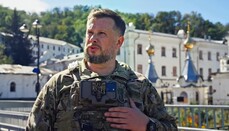
We can see one of them on Espreso, one of Ukraine’s major TV channels: “Who Stabbed the Monk? Massacre at the Sviatohirsk Lavra.”
The host’s favorite word is “allegedly”: an “alleged attack,” it “allegedly happened,” and so on. But even more striking is her tone and the way she presents the story – sneering and gloating. This is especially apparent in the mocking way she draws out the abbreviation “UOC MP.”
The message to the viewer is clear: nothing particularly terrible happened, and there is no great reason to feel sorry for the “Moscow Patriarchate monks.” And anyway – who knows what really happened there, or who was stabbing whom?
And that brings us to the second talking point. The claim is already being planted on social media through certain bloggers that perhaps things are not so clear-cut after all, and that what happened at the monastery may simply have been an everyday “knife fight.” The implication is that the “Moscow priests” were settling some score among themselves and fell out over something – just another day in their world.
But the police have already opened a criminal investigation, which means it should eventually produce findings. Moreover, one of the wounded men has said that he was stabbed by men in uniform because he gave the “wrong” response to “Glory to Ukraine.” So what kind of damage-control scenario might be deployed in such an awkward situation?
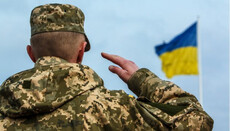
We would not be surprised if, in the end, we were presented with some serviceman suffering from PTSD (post-traumatic stress disorder), who was supposedly forced to defend himself against the aggression of the “Moscow priests” and simply went a little too far.
We have seen precedents for this kind of thing. Take Sternenko, for example, who in 2018 chased down his assailant and, in an act subsequently portrayed as “self-defense,” stabbed him to death.
Of course, such a scenario may sound far-fetched. But today, it is entirely conceivable.
We’ll just watch and see.