
Why are a rabbi and an exarch pleading for corruption suspects?
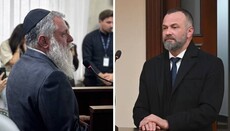
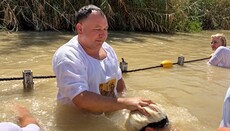
On August 24, Ukrainian media were abuzz over the actions of Kyiv Chief Rabbi Yonatan Markovich: he appeared at a hearing to determine a preventive measure for Deputy Head of the Presidential Office Iryna Mudra and offered to stand surety for her.
Helping someone in trouble is, of course, noble and commendable. But it is difficult to see how that applies to Mudra, given how glaring her alleged “exploits” are. NABU has released several recordings of her conversations in which she discusses in detail how to circumvent the law in order to “launder” hundreds of millions for the bail of another corruption suspect, H. Halushchenko, how to bribe judges, how to seize property through corporate raiding schemes, and even says that corruption should not be fought but taken over and run.
The final decision, of course, rests with the court, but the published recordings leave little doubt that the deputy head of the Presidential Office was involved in schemes through which enormous sums were stolen from the state.
Mudra is neither Jewish nor a member of a synagogue congregation. Nevertheless, the rabbi offered to stand surety for her, arguing that he had known Mudra for several years, that she had visited his home, and that “when there was a need to pray, when there was a need to do various religious things, she came and did them.”
Is that enough to stand surety for someone implicated in the theft of hundreds of millions? The question is rhetorical. The problem is that the rabbi is not alone in suddenly coming to the defense of high-ranking corruption suspects.
In late 2025, the country followed another high-profile scandal involving former Deputy Prime Minister Oleksiy Chernyshov, a suspect in a NABU investigation linked to Mindich. Investigators allege that Chernyshov – who referred to himself as Che Guevara in the recordings – was involved in laundering cash through the scheme’s “back office.” Detectives documented the transfer of more than $1.2 million and nearly €100,000 in cash to him and a trusted associate. Chernyshov is Zelensky’s kum – a godparent to his child.
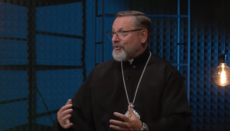
The situation was just as clear-cut as in Mudra’s case. And once again, a “surety” appeared in court. This time it was not a rabbi but Bishop Michael (Anishchenko), exarch of the Patriarchate of Constantinople. Yet his explanation in court was just as “convincing” as Markovich’s. According to the bishop, Che Guevara’s aides had “asked” him to come, and he agreed because he knew Chernyshov as a “good person.” Again, Chernyshov was not a parishioner of St. Andrew’s Church, had never gone to confession to the bishop, and there is no reliable information that he is even Orthodox. Nevertheless, the Phanar exarch decided to appear in court and plead for a man with a highly questionable reputation.
Now consider this. Anyone who wants to can listen to the recordings of Mudra and Chernyshov discussing the laundering of staggering sums – they are publicly available. Yes, their guilt still has to be proven, but everyone understands that these people are not “victims of the regime.” And they may well turn out to have been involved in stealing public money on an especially large scale – during wartime, no less.
At the same time, both the rabbi and the exarch are highly intelligent men and cannot fail to understand all this. Nor can they fail to understand that their actions are dealing a serious blow to their own reputations. Yet they still went to court. Why?
Of course, only they themselves know the exact answer. But logic suggests that there are few possibilities, and none of them reflects well on Markovich or Bishop Michael. One thing can be said for certain: our authorities have managed to build a remarkably effective system of relations with religious denominations.
Perhaps not even the Soviet Union achieved this level of effectiveness.