
Pocket god of the Third Reich
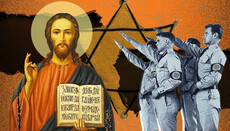
In the heart of Europe, professors of theology created an alternative Bible, cutting out every word that displeased the state.
You flip through the yellowed galley proofs of German editions from 1940 and feel a moment of disorientation. Before you lies a book titled Die Botschaft Gottes – “The Message of God.” At first glance, it looks like an ordinary New Testament, printed in large numbers and bound in quality covers. But when you open the Gospel of John and reach the fourth chapter, your eyes stumble.
The famous line declaring that salvation comes from the Jews has simply vanished. It is no longer there.
At first, you might assume it is a typographical error, some accidental defect in printing. But the further you turn the pages, the clearer it becomes: this was a deliberate attempt to rewrite the text in accordance with the Party line. Words like “Zion,” “Jerusalem,” and the names of the ancient prophets were carefully scraped out of the Gospels. Christ’s genealogy linking Him to King David was removed entirely. Even words such as “Amen” and “Hallelujah” were forbidden and replaced with German substitutes.
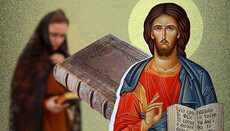
Pencil marks across Holy Scripture
The cleansing of the biblical text was carried out in academic offices with solemn efficiency and full state support. On May 6, 1939, a special institution with an impressively bureaucratic title was opened at Wartburg Castle: the “Institute for the Study and Eradication of Jewish Influence on German Church Life.”
The choice of location was symbolic. It was within those very walls that Martin Luther had once translated the Bible. But the new masters of the castle arrived with the exact opposite mission.
What is most astonishing is that this project was led by dozens of German professors, doctors of theology, and Lutheran bishops. This was the intellectual elite of the era – men with superb university educations, fluent in Latin and Ancient Greek. They gathered in comfortable halls, held courteous scholarly discussions, drank coffee, admired the spring sunshine over Thuringia – and calmly crossed out enormous portions of Scripture with pencils.
In the end, up to ninety percent of the original Gospel content was removed.
Highly educated men with doctoral degrees consciously transformed an eternal sacred text into a racial pamphlet while the ink dried beside folders marked with swastikas.
The warrior from Galilee
To somehow reconcile the Gospel with the new ideology, the institute’s director, Walter Grundmann, resorted to a racial reinterpretation of history. He argued that Galilee in antiquity had been populated by non-Jewish tribes and therefore Jesus Himself had no ethnic connection to the Jewish people.
In Grundmann’s version, Christ came into the world solely to destroy the old religious order, which was why He was ultimately executed.
The image of the suffering Savior who takes upon Himself the sins of the world and forgives His tormentors from the Cross was utterly useless to the new political system.
A weak and merciful God did not fit the spirit of the age. So they recast Him into a “heroic warrior” – a fighter against global materialism.
In the catechism Germans with God, published later by the same institute, the Sermon on the Mount and Christ’s words about meekness disappeared, replaced by ordinary rules about loyalty, courage, and readiness to fight for one’s people. Christ with a sword in His hand became the central symbol, while the true evangelical meaning was pushed aside to serve the machinery of war.
A betrayal nobody needed
Judging from reports and publications of the time, the institute’s staff sincerely expected full recognition from the Nazi leadership. They believed they were building the ideal religion of the future and hoped to gain the status of an official state church.
Reality proved far more cynical.
Leading Party ideologues such as Martin Bormann and Alfred Rosenberg looked upon these loyal professors with open contempt. To the Nazi elite, attempts to modernize Christianity were merely the pathetic convulsions of a dying age. The regime had no intention of preserving the Church at all. In time, it planned to replace Christianity with entirely new cults.
The theologians betrayed their ideals and rewrote the commandments – yet for the godless system they still remained outsiders. Their betrayal turned out to be completely useless.
And yet these were not merely books. These were texts millions of people had regarded as sacred for centuries. But most ordinary pastors in provincial parishes preferred silence. They obediently preached from these “corrected” editions because open resistance meant immediate loss of work, social standing, and the very real possibility of ending up in Dachau concentration camp.
The fear of losing one’s accustomed comfort was easily disguised as noble concern for preserving the parish in difficult times.
At the time, Swiss theologian Karl Barth stated plainly that a Church willing to alter the passport of its Lord for the approval of the authorities instantly ceases to be the Church.
Clean hands after the catastrophe
The most terrifying part came afterward, when the Third Reich collapsed.
One would think history should have drawn a final and merciless line through the careers of those academic editors of eternity. Thousands of copies of the de-Judaized Bibles were burned or hidden away in restricted archives. Wartburg Castle was stripped of Party banners, and Grundmann’s institute was officially dissolved.
But the authors of the forgery themselves did not disappear.
They merely changed their vocabulary and quietly adapted to the new postwar reality.
Walter Grundmann himself passed through denazification without serious consequences. He never faced trial and never lost his doctoral credentials. On the contrary, in postwar East Germany he calmly returned to teaching theology, headed a seminary in Eisenach, and continued publishing books. His Gospel commentaries were printed in massive editions and remained popular in both East and West Germany.
Only after the fall of the Berlin Wall did researchers open the Stasi archives and discover that the aging Professor Grundmann had for years served as a valuable informant for the East German secret police under the codename “Berg.”
The man who in the 1930s edited the image of Christ for the sake of the Führer spent the 1950s and 1960s just as calmly writing denunciations against parishioners and fellow pastors for the peace of a socialist ministry.
There was no public repentance. There was only the ordinary adaptation of an intelligent man to the demands of yet another state bureaucracy.
The state for which biblical books were rewritten at Wartburg soon became ruins itself.
Because the moment people try to turn God into political advertising or a banner for earthly victories, He ceases to be the God whom the human soul was seeking.