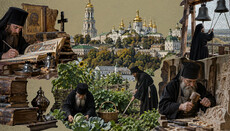

A country settlement where infirmity ceased to be a verdict
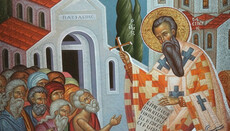
Ancient culture highly valued civic fitness, leaving the weak on the sidelines of public life. The Christian project in Cappadocia changed this approach.
Behind the flawless geometry of Greek statues displayed in museum halls, one can notice a hidden distancing from real people. Snow-white marble, precise proportions, calm symmetry of faces. Ancient civilization left behind a grandiose aesthetic form that relied on quite specific requirements for humans. A polis dweller remained a full-fledged member of the community as long as he possessed strength, could bear arms, cultivate land, and bring benefit to the state. Infirmity, serious illness, or congenital disability were regarded by society as a grave misfortune and, at times, as a sign of the gods' disfavor.
Now the information field also tends to judge a person through the prism of dry statistics, mobilization potential, or fitness for work. When a person faces infirmity or loss of health, they develop a subconscious feeling of guilt before society.
A feeling arises that you are falling out of the ranks, becoming a burden. In such moments, it makes sense to turn to historical documents and see how Christian tradition changed attitudes toward human weakness.
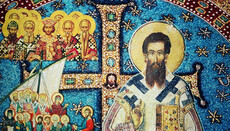
Temples of healing
In popular literature, ancient Greek Asclepieions are often called the first hospitals. However, historical sources and archaeological evidence from Epidaurus or the Island of Kos point to their completely special nature. These large temple complexes included religious buildings, pilgrimage centers, and elements of folk medicine, but they functioned according to strict laws of sacred purity.
The priests of Asclepius guarded the sanctuary against everything that could disturb the ritual order. Within the boundaries of the sacred grove, it was categorically forbidden to admit women in labor and people dying heavily. If a pilgrim proved to be incurably ill, he was often asked to leave the complex premises. Death within the boundaries of the Asclepieion was considered a defilement of the place. Of course, private medical practice existed in ancient poleis, wounded warriors were treated, and families cared for their aged relatives. Yet secular society did not develop a general institution for the systematic care of the incurably ill.
The philosopher Plato in his treatise "The Republic" attempted to justify this utilitarian approach from the perspective of an ideal polis. He reasoned that medicine should serve only those citizens who were capable of bringing benefit to the state. For the thinker, man remained primarily an element of society. If this element finally broke down, spending community resources on it was considered inexpedient.
The quarter of mercy at the foot of Caesarea
This pragmatic logic remained the customary norm until around 368–369 AD when severe famine struck Cappadocia. Crop failure led to roads being filled with emaciated refugees, while local markets emptied. It was under these conditions that Archbishop Basil of Caesarea – a man of noble origin and aristocratic Athenian education – undertook a large-scale step. Beyond the boundaries of Caesarea, he established a large charitable and hospital complex, which contemporaries later called the Basiliad.
This was not a small shelter or temporary hospice. Saint Basil designed an entire infrastructural quarter. Historians, relying on the saint's own letters, describe separate buildings for various categories of patients, living quarters for duty personnel, nurses, kitchens, laundries, and workshops. The disabled and vagrants were not simply fed here – those who were recovering were taught crafts, helping them return to independent life. Aid in this complex was provided free of charge, and they admitted precisely those hopeless patients before whom the doors of pagan sanctuaries were closed.
The buildings of the Basiliad were not intended for protection from military threats. They fulfilled a different task – to protect vulnerable, sick, and weakened people from the indifference of the urban environment.
In Cappadocia, the Christian community clearly demonstrated: the value of human life cannot be measured by its contribution to the imperial economy.
Breaking down class boundaries
The most serious test for Cappadocian society was the opening of a leprosarium as part of the Basiliad. Leprosy in the fourth century caused not only fear but also social rejection. The afflicted were declared living dead, deprived of property and civil rights, and forcibly expelled beyond city limits. Healthy people avoided any contact with them.
Later church tradition and hagiographic texts preserved testimonies that Archbishop Basil himself regularly visited hospital wards, communicated with lepers, and greeted them as brothers. For patricians raised on ancient canons, this was a serious challenge.
The Christian pastor proposed to see personality where society saw only the destruction of the organism.
Most inhabitants of the leprosarium could not be cured; the level of medicine at that time did not allow healing leprosy. The meaning of the Basiliad's existence lay primarily in overcoming the loneliness to which an infirm person was doomed in the ancient world.
Refuge in the midst of crisis
Today, leafing through these testimonies from sixteen centuries ago, it is difficult to shake off the feeling of hidden parallels. The modern way of life returns us to harsh criteria for evaluating a person by their functional fitness. Society again demands from each of us continuous productivity, psychological resilience, and conformity to external standards. When internal resources are depleted under the weight of constant anxieties, lack of sleep, and bad news, a person has a feeling of their own uselessness. It seems that if you stop being strong, the world will simply step over you and move on.
The history of the Cappadocian hospital shows us the real spiritual guidelines of the Church. In the Christian community, weakness ceased to be a reason for pushing a person beyond the framework of society.
Church Tradition reminds us: the value of the human soul is absolute in itself, it is given by God and does not diminish because you are tired, burned out, or temporarily unable to meet the harsh demands of the times. A true church community remains that very Basiliad – a quiet fortress where a person is accepted not for their civic merits, usefulness, or strength, but simply because they need support, understanding, and warmth.