
Why did St. John of Kronstadt die without the Liturgy – while we avoid it?
The holy pastor felt himself spiritually fading whenever he went without serving the Liturgy. And we are dying without it too – slowly, week after week.
On Monday morning, the alarm tears you out of sleep so abruptly that for a few seconds your heart cannot understand what is happening. Then comes the automatic sequence of movements: the kettle, the phone, the endless feed where battlefield reports alternate with currency rates and strangers’ photographs. Coffee is swallowed standing up, in haste. By Saturday we collapse, and on Sunday the thought of spending two hours in church feels almost cruel toward the little strength we have left. “I just can’t do it. I have no strength anymore,” gasps a soul exhausted by worries.
That sentence has become the common prayer of our generation. We repeat it like an incantation, and in some sense it even sounds true. There really is no strength left. But if that is true, then why do we have even less strength outside the church? Why does every Monday find us more drained than we were on Friday? Something in this logic does not add up.
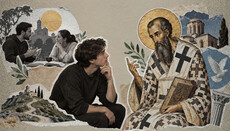
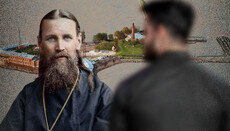
And then, in that cramped kitchen between the cooling kettle and the endlessly scrolling screen, one man suddenly appears. It is John of Kronstadt – with his gray beard, weary eyes, and the rough hands of a laborer. He lived in late nineteenth-century Kronstadt, a harsh port city where the capital unloaded all its unwanted people: exiles, beggars, sailors, men and women without a future. Every day thousands of letters poured into his mailbox from across the empire – letters filled with death, sickness, poverty, despair. Father John slept no more than four hours a night for decades. And yet he did not break.
“I fade away, I die spiritually whenever I do not serve”
In his diary – the very one he wrote for himself at night, never intending it for publication – Father John confessed:
“I fade away, I die spiritually whenever I do not serve in church for several days.”
We read those words, and something inside us resists them. In our minds, the Liturgy is still merely a Sunday obligation, something halfway between a mandatory school assembly and a cultural event. Stand there, listen, receive Communion – if you managed to get to confession beforehand. But for Father John, it was as necessary as breathing, washing, eating. He insisted that life itself ceases without the Chalice.
In the notes later published as My Life in Christ, he added:
“Without the Divine Liturgy, the earth would become hell. The world stands by the Liturgy.”
He does not speak of the Liturgy as a ceremony that decorates life or merely helps us survive difficult times. He speaks of it as the very thing holding the world together. The Chalice sustains human society the way a foundation sustains a house. Remove the foundation – and nothing remains: no sunrise, no taste of coffee, no ability to love the people beside us. On Monday morning we are already living inside a house slightly tilted off its foundation – and that is where the heaviness in our shoulders comes from, the heaviness we habitually call exhaustion.
Bound, weak, blind
But what are we supposed to do when there is not even enough strength to make it to church? When the body feels twice as heavy as usual, and every prayer seems unbearable?
Father John answers with another entry from his diary:
“The Holy Mysteries give life to my soul and body. After Communion I become like another person – clear, radiant, strong. If I do not commune, I feel myself bound, weak, blind.”
Bound, weak, blind. Do we recognize ourselves?
We too are bound – by obligations, fears, by a thousand open tabs inside our minds. By Wednesday we are already depleted; by Friday we no longer even notice the faces of the people nearest to us. We call it accumulated fatigue. But perhaps it is really the symptom of someone who has not truly breathed in a very long time.
And here another terrible word used by Father John begins to emerge – habit:
“Fear becoming accustomed to holy things. Habit is the cooling of the soul. Whoever grows accustomed ceases to marvel and ceases to give thanks.”
After years in the Church, we know perfectly well how to receive Communion. Yet thousands flocked to Father John in Kronstadt’s St. Andrew Cathedral precisely because, with him, the Chalice became once again what it truly is – living fire, not merely a familiar Sunday ritual.
First the oxygen mask – then your neighbor
On an airplane, the instruction is always the same: when the pressure drops, put the oxygen mask on yourself first, and only then help others. Without oxygen, you will lose consciousness within minutes, and then you will be unable to help anyone at all.
Father John rose at three in the morning. By four he was already in the cathedral. The Liturgy often lasted until noon – according to eyewitnesses, thousands would come to commune, and he restored the nearly forgotten practice of general confession, where people openly cried out their sins in a crowded church. He was no sentimental old man. He could interrupt the service and tell a person directly what they did not want to hear.
But his love was boundless. Every day he received thousands of letters filled with suffering – and he did not collapse beneath their weight. Few psychologists today could endure such an avalanche of human pain. Yet the pastor of Kronstadt endured it. Because every morning before the Holy Table he laid all that suffering down, remembering one simple truth: first the oxygen mask – then your neighbor.
He himself wrote in his diary:
“O Lord! I confess before Thee that life, health, and strength of soul and body are found not at the summer house, nor in the forest, but with Thee in Thy храм, above all in the Liturgy and in Thy life-giving Mysteries.”
Only a few days until Sunday
At the end of our conversation, the saint rises from the stool. Before leaving, he speaks once more with the words of his diary:
“The church and the divine services are heaven on earth. Here you breathe the air of the higher world; here you are nourished with heavenly food and heavenly drink.”
The door closes behind him.
There are only a few days left until Sunday, and during that time every person we meet will draw another spoonful of strength out of us.
We can keep hoping that one day we will finally rest for real.
Or we can simply rise on Sunday morning and go to the Liturgy, remembering Father John’s words: without the Chalice, human beings fade away. We die too whenever we cease to commune.
Only very slowly – and without even noticing it.