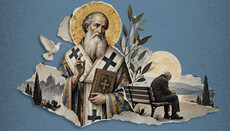

Excel spreadsheet of holiness and why it always fails
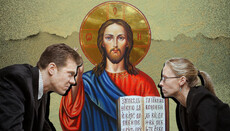
We secretly keep track of our spiritual victories. And when the table is reset to zero by a fall, we cry not about God, but about the lost status of being a good Christian.
In the morning, we read our prayer rule – we put a checkmark. Before sleep we ask forgiveness from our loved ones – another checkmark. Wednesday and Friday without meat – pass. Beneath a layer of pious wording, we keep a neat spreadsheet: a column for income, and a column for expenses. By the end of the week, we balance the books.
This can be denied. One can refuse to admit this to anyone. But if we look honestly, the internal accountant exists. He is the one who cries the loudest when we fall. In such moments we don't so much lament that we neglected God's love, as we regret that we spoiled our beautiful reporting.
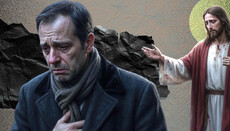
The trap of spiritual KPI
When a measure becomes a target, it ceases to be a good measure. This principle is known as Goodhart's law, and it works everywhere.
A schoolchild who cares about getting a high grade stops being interested in the subject. A doctor whose KPI is the number of patients seen stops treating and only prescribes medications according to protocol. A scientist who receives perks for the number of publications begins splitting one study into ten.
The same thing happens with prayer when its main purpose becomes the number of pages read from a prayer book; with fasting when its main purpose becomes strict compliance; and with worship when its main purpose becomes simply the act of attending a service. Prayer turned into a metric ceases to be prayer.
Two nighttime disasters
There are evenings and dawns – especially after a sleepless night to the sounds of sirens, upsetting reports, and news about a loved one – when it's impossible to read anything. Eyes don't arrange letters into words. The heart is empty. At this moment the perfectionist inside us panics: "I'm a bad Christian, I failed everything today."
What if on this evening of total exhaustion God is closer to us than on all the days when the rule was read clearly and with secret pride in our discipline?
The Gospel describes two episodes that occur almost simultaneously – in one night. They show what happened to two different perfectionists when their system collapsed.
The first is Peter. The same Peter who solemnly declared to the Teacher: "Even if all fall away, I will not" (Mark 14:29). Perfect self-perception and a transparent "spiritual resume": I'm not like everyone else, I'm reliable, I will stand firm. And a few hours later he swears three times that he doesn't know This Man. By a fire, in the presence of an unarmed servant girl. Out of fear. His righteous resume is torn. The accounting book of former merits turned to ash.
The Church as a field hospital
The second is Judas. He too understood what had happened to him. He returned the money for the betrayal, threw it in the temple, and publicly confessed: "I have sinned by betraying innocent blood" (Matt. 27:4).
Formally, he did even more than Peter. Peter simply wept in a corner, while Judas tried to fix everything. But then, there are two different roads. Peter weeps bitterly, Judas takes his own life.
What's the difference? Both betrayed the Savior. The difference is in how they reacted to their own failure.
Peter loved Christ and wept because he had caused pain to his Beloved Teacher. Judas loved, it seems, his own image as a good disciple and could not endure the fact that this image had been ruined.
He could not endure the zeroing of his metrics; he broke under the very fact that he was not the person he had previously believed himself to be. This is the fundamental turning point. After any fall, we find ourselves standing before it.
One can weep bitterly not because I am worse than I thought, but because I have let down the One I love. And one can fall into hopeless despair because the image of the ideal self has been destroyed. The first is the path of Peter. The second is the path of Judas.
The perfectionist wants his soul to be a museum display case. Clean glass, exhibits in a row, good lighting. One can conduct tours: look at my humility, my chastity, my disciplined prayer life!
One problem: nothing grows inside a display case. You can't get hurt there because there's nothing to hurt yourself on. You can't receive help there because there's no one to accept it. A museum is a place of dead things. But the Church is not a museum, but a field hospital. There's blood, bandages, groans, someone's broken vows, someone's relapses, the smell of decaying flesh, iodine and alcohol.
There no one evaluates anyone by a beautiful resume. People come there because it hurts and because they feel they can't cope without help.
The only question that matters
Metropolitan Anthony of Sourozh said approximately the following: we're afraid to come to God with empty hands. We want to come dressed up, in virtues. But God waits for us to bring Him our real wound. Imaginary perfection cannot be healed, only real ugliness can be cured.
If we come to church only with a formal portrait of ourselves, we have nothing to do there. A formal portrait doesn't need intensive care. Intensive care is needed by someone who has a real hole inside. Each of us has one, we just carefully plaster it over for external effect.
Saint Peter of Damascus left behind a phrase that completely overturns perfectionist logic. He said: the first sign of the beginning health of the soul is seeing one's sins, countless as the sand of the sea. Let's reread slowly. Precisely a sign of health, not illness.
A person who has stopped sinning and brought his KPI to one hundred percent, according to patristic logic, is not recovering but dangerously ill.
And the one recovering is the one who suddenly saw that his sins are like sand on the shore. He didn't go mad with horror and run to hang himself like Judas but calmly got up and went with this infinite sand to the One who alone can do something with it.
Habit tracker apps teach us: the fewer violations, the better. With saints it's the opposite: the more I see my poverty, the closer I am to the Light.
After the Resurrection, on the shore of the Sea of Tiberias, Christ makes a fire and calls the disciples to breakfast. Peter approaches him – the same one whose "accounting" as a good disciple had recently collapsed.
It seems the Teacher should have reminded him of his duty, presented a bill, or at least conducted a debriefing. But Christ asks him only one question. Not "how could you?", not "do you remember what you did?", not "have you realized your sin?". One single question: "Simon, son of John, do you love me?" (John 21:15-17). This is all God needs to know.
If the answer is "yes" – even if weak, even with tears and stammering – nothing more is required. This is enough.
If there is anything worth writing down in the notebook of one’s life, it is probably this. God’s question is not answered with ready-made phrases. It is answered with the heart. Perhaps after all the sleepless nights, the missed morning prayers, after all the breakdowns and failures, we will finally understand this and simply say “yes,” as Peter did. That will be enough.