
When God is silent: what are we doing wrong?
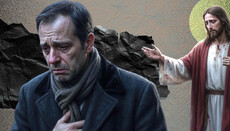
We are used to every button producing a response. But when we pray for the deepest, most urgent request of our lives, we are met with silence. Lewis described it so precisely that it can hardly be said better.
We beat against the same door for months. You pray for someone who is ill. For someone who has left. For the thing that keeps you from sleeping and breathing. You turn the words of the prayer book over and over, go to church, light candles. And – nothing. Silence.
Then the questions begin turning inward. Am I asking wrongly? Has God turned away? Am I terribly guilty of something?
None of us has an exact answer. There is no instruction manual here. But there are some things we do understand about this silence.

God is not an ATM
The modern world has trained us in a simple chain of actions. Press a switch – the light comes on. Tap a card – coffee is bought. Every effort has an instant response.
Without noticing it, we drag this same scheme into our relationship with God. You light a candle, stand through a service, read your prayer rule – as though you have entered the right PIN code. Now the thing you need should drop from the heavenly machine. When the machine remains silent, we sincerely feel indignant and demand the result we paid for. This mechanical logic often lies at the root of our grievances.
God is different. It matters to Him to wean us from the consumerist feeling that He owes us something.
The door and the bolt
C. S. Lewis, the author of The Chronicles of Narnia, was a deeply honest man. In 1960, his wife Joy died of cancer. To keep from losing his mind, Lewis began keeping a journal, which later became the book A Grief Observed.
There is a heavy passage in it. Lewis writes that while things are going smoothly, it seems as though God welcomes you with open arms. But try to turn to Him in a moment of pitch-black despair. What will you find? A door slammed in your face. And you will hear the bolt being drawn on the inside.
Then everything falls silent. And the longer you stand before that door, the louder the silence becomes.
This was written by a great Christian thinker. In the darkest moment of his life, he stands before a locked door and understands nothing.
Several months later, Lewis would write different thoughts in the same journal. He admits that the door, apparently, is no longer locked. Perhaps his own cry and demand for an answer had slammed it shut. He compares a person in grief to someone drowning: it is hard for the rescuer to pull out a man who is thrashing about in panic. To receive help, one must become a little calmer.
The Canaanite woman who did not leave
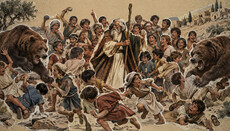
In the fifteenth chapter of the Gospel of Matthew, there is a severe scene. A woman from the Phoenician coast approaches Jesus. Her daughter is ill. She runs after Christ, begging Him to help. Jesus simply answers her with silence.
The disciples ask Him to send her away so she will stop shouting. And then the Savior says words that make one shiver: “It is not good to take the children’s bread and throw it to the dogs.” Many of us, in her place, would have turned around and left in bitter offense. We would have written an angry post on social media and forgotten the way to church.
The woman acts differently. She accepts these words, swallows her pride, and replies: “Yes, Lord, yet even the dogs eat the crumbs that fall from their masters’ table.”
At that moment, the silence is broken. Christ says to her: “O woman, great is your faith! Let it be to you as you desire.”
Before our eyes, God allowed her faith to grow. Had He healed her daughter at once, at the first cry, the woman would have run off joyfully about her business. But the seeming refusal drew from her an astonishing depth of trust.
Mother Teresa’s dark night
After Mother Teresa of Calcutta died in 1997, her personal letters to her spiritual advisers were published. She cared for the dying in the slums of India and was an icon of active mercy. The letters revealed that for nearly fifty years of her life, she barely felt the presence of God.
She wrote: “The darkness is such that I really do not see... The place of God in my soul is blank... I feel rejected, empty, no faith, no love.”
Every morning she went into the filth to hold the hands of the dying. And she did it without inner consolations or mystical illuminations. This was fidelity to the will of God burned down to the bone. Had she been working for emotional rewards, she would have abandoned everything in the first year. But she continued to serve without any reward at all.
The fire that burns away impurities
In the New Testament there is the word dokimion (δοκίμιον). It was a term used by ancient metalworkers. It referred to the process of heating gold in a furnace to extreme temperatures so that all the dross would burn away.
God’s silence works like that furnace. In the silence, our habit of bargaining with the Creator burns away. So does our resentment over past sorrows. So does the certainty that we deserve a quick answer. When the husk has burned off, one decision remains at the bottom: “I will stay with You, whatever You decide now.”
The hardest test sounds like this: “If I were to know for certain right now that God will never grant this request of mine, would I still remain with Him?” If a quiet “yes” is heard, then unanswered prayer has already done its work.
The Syrian hermit Isaac the Syrian explained this divine slowness simply. The Lord sometimes delays His answer in order to prolong our conversation. If we received everything at once, we would say thank you and run off to urgent business.
God’s silence is His way of keeping us close to Him.
It hurts, and it is bitter, when our pleas remain unanswered. But in these moments of emptiness, real faith is forged.