
Saint Luke's testament: on quiet compromises

Archbishop Luke went through torture and exile, but towards the end of his life faced a different trial – the "polite" pressure of the era.
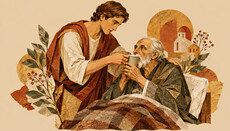
Simferopol in the mid-fifties was permeated with the heat of the "thaw." In a small house on Gospitalnaya Street, the windows were covered with heavy curtains during the day – not so much from the sun as from dust and prying eyes. In the semi-darkness of the room sat an old man in a cassock. His eyes could see almost nothing: after decades of exile and the most grueling work, surgeon Valentin Feliksovich Voyno-Yasenetsky, known in monasticism as Luke, had gone blind.
He led the eparchy by ear. Visitors entering his office saw a man who seemed to look right through them. But this gaze from darkness often proved more perceptive than that of those who could see the light. The Crimea at that time was a complex region: churches were not formally closed, but every step of a priest was watched by a commissioner. Pressure had changed its form – it became administrative, bureaucratic, and pointedly polite.
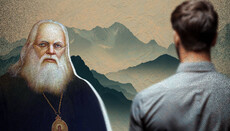
Let us imagine how on one such day a priest from a distant parish came to the bishop. He fidgeted for a long time, shifting his worn skufia from knee to knee, until he finally spoke.
– Your Grace, we have a difficult situation in our district. The commissioner gently hinted: if we don't stop baptizing children openly, in the church, the parish might lose its registration. He says, why do you need extra problems? Better go to people’s homes and do it quietly. The sacrament will still be performed, and the authorities won’t be irritated.
Archbishop Luke remained silent for a long time. In the silence of the room, only his heavy breathing could be heard.
– You ask whether one can go with the flow? his voice sounded muffled but firm. Dead fish go with the flow. They don't resist the current, they become part of it. But there is no life in them. Confessors have always chosen a different path.
– But now there are no exiles, no interrogations, the guest objected. They're simply asking us to be a bit wiser. Is one signature in a registration book really worth losing an entire church?
The boundary in shadow
For Saint Luke, who had endured "conveyor belt" interrogations in GPU prisons, when he was deprived of sleep for weeks, the current "politeness" of officials seemed more dangerous than open terror. He understood: when an enemy strikes you in the face, you gather strength to fight back. When an enemy offers tea and "mutual understanding," you relax and don't notice how you begin to surrender positions.
In 1955, he issued a decree that struck the Crimean clergy like thunder from a clear sky. It contained a dry pastoral will: "I demand that all priests cease secret baptisms at home. Perform services only in churches, fearing nothing but God."
– Your Grace, the priest continued, but parents fear for their jobs! If it becomes known that they brought their child to church, they'll be fired. We must care for people.
– If we begin hiding Christ in corners, we will deprive people of the most important thing – truth, the archbishop replied. You think you're saving the parish, but in reality you're teaching the flock cowardice. Faith that fears an entry in a book won't live long.
The saint knew what he was talking about. He saw how the system of "gentle coercion" gradually turned communities into ethnographic circles. The authorities didn't need to close all doors at once. It was enough for them that priests became convenient, quiet, and "reasonable".
Blindness and keen sight
The bishop's final years are an example of how a person can remain free while being physically limited. He couldn't see the faces of parishioners, couldn't read decrees without outside help, but he heard the falseness in the voice of everyone who tried to justify their cowardice with "benefit for the cause."
He was often accused of excessive harshness. A Stalin Prize laureate, a world authority in medicine, he could have used his status to live peacefully. The system offered him this compromise: be a "ceremonial general," consult in hospitals, stand on platforms – and we won't touch your eparchy. But he continued to walk the streets in his cassock, blessed people in markets and operating rooms, placed icons where they shouldn't be.
He understood that every small concession was a blurring of spiritual boundaries. Today you agree not to preach to youth, tomorrow you remove an icon from your office, and the day after tomorrow you discover that your faith has become merely a set of words without weight.
– To my great sorrow, he loved to repeat, I see those whose faith remains only on their lips. You call an ordinary fear of earthly authority prudence.
Last summer
Archbishop Luke died on June 11, 1961. Soon after his death, a serious shift occurred in church life: under administrative pressure, the clergy's authority in managing parish affairs was radically limited. The priest was effectively removed from the financial and economic life of the community, becoming a hired servant.
The bishop didn't live to see this moment, but all his Crimean ministry was directed against the very possibility of such a state of affairs. He taught his pastors to be not administrators, but witnesses to truth. From his darkness, he saw that the main threat to the Church was not in NKVD decrees, but in Christians' own readiness to "make room" for the sake of comfort.
His testament is his very biography. A man who wasn't broken by eleven years in camps proved unyielding even to "polite" blackmail. He proved that firmness is not a trait of temperament, but the result of daily choices in minor matters.
His last words, addressed to his flock, were full of that very sobriety he demanded from everyone.
This tone of calm courage still resonates among us. It reminds us that true freedom begins where a person stops looking for excuses for their weakness. Saint Luke showed that one can be blind yet see the light of God; one can be shut in a room yet guide people’s minds; one can die yet remain a living voice that does not let the conscience fall asleep.