
Saint Luke of Crimea: how not to lose faith in the Church over people

It is difficult to see faintheartedness in a church. We seek support in the letters of Saint Luke: a surgeon who survived in exile but suffocated in the "spiritual desert" among his own people.
A special pain occurs within the church enclosure. It is usually kept silent. This is disappointment in people. You come to a church seeking peace, only to find there the very things you were trying to escape: careerism, indifference, and fear for one’s position. Your gaze rests on a priest who is seeking comfort. Something inside breaks. It feels as though staying means lying to yourself. Leaving feels like betraying Christ.
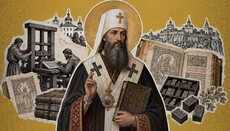
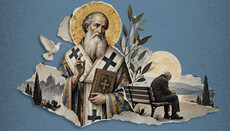
Let us talk about this with Saint Luke of Crimea. In icons, he is depicted as an elder in clerical vestments. We remember him for interrogations and prisons. But there was also another confessor-bishop Luke: a bishop who struggled against spiritual apathy within his diocese. In the 1950s, he wrote bitter words to his son Mikhail from Simferopol: “It is hard for me to live and work in this spiritual desert.”
The surgeon who survived the camps called the main trial not the convoy. He was suffocating from the emptiness around him. This is worth discussing precisely with him. With a master who saw the disease from within and did not let the scalpel slip from his hands.
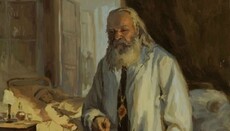
Diagnosis: lukewarmness
– Your Grace, we are taught to trust pastors. But what to do when a priest is simply a bureaucrat? Afraid of authority, working his hours, glancing toward the exit at the end of the service?
Saint Luke answers with lines from his sermons:
"To my great sorrow, there are many such people among us... whose faith is only in words, not in the heart. These are the lukewarm ones of whom the Lord speaks sternly in the Apocalypse in the Apocalypse... They are afraid to confess Christ before people, so as not to be subjected to mockery."
The saint did not seek gentle words. He knew this from personal experience. In the Crimean diocese, part of the clergy wrote denunciations against him of their own accord, without any pressure. Simply to avoid angering the commissioner for religious affairs. The officials took advantage of these fears. They saw how people, frightened by repression, were ready to make any compromise.
Luke understood: this is where the line is drawn. Tragedy begins where the instinct for survival replaces the Gospel—when the desire to “avoid trouble” becomes more important than ministry. As a physician, he saw this as a deadening of the soul. And like any illness, it must be acknowledged openly.
Craftsmen at the Altar
– How did you manage them? Those who are ready to remain silent or retreat at the first danger?
"Many have become only performers of rites, not pastors. They perform sacraments like craftsmen, not putting their souls into them," the confessor states with sorrow.
In these words one hears the cry of the soul of a man who was accustomed to giving himself to service to the end. He served in exile, in poor temples where frost lay on the altar. He operated on patients and prayed under threat of new arrest. And he demanded the same from others. Without allowances for difficult times.
His directives for the eparchy sounded strict. He forbade taking money from the poor for baptism. He insisted on preaching after every service. He was angered if the Liturgy was shortened for convenience. If baptism was refused because the parents had no money, the responsible person would be brought to court. The bishop believed that one stands before God only in earnest. He considered clerical “craftsmanship” to be ruinous for a pastor.
Solitude in the desert
– Your Grace, how not to begin hating the Church itself, seeing all this? Where to find strength not to become a cynic who notices only dirt on vestments?
The saint only humbly laments:
"It is hard for me, very hard to live and work in this spiritual desert... There is no one with whom I could share my thoughts, and my sorrows."
Here he is without a halo and utterly exhausted. He was lonely. He did not pretend that everything was fine. He saw emptiness. He named it as it was. For him, a man of great intellect, it was frightening to see how the priesthood was turning into mere obligation.
But he remained. He did not abandon the eparchy. He did not try to create a “church for the perfect.” He remembered the Renovationists of the 1920s. They too cried out for purification, but ended in pride and collapse. He understood that any attempt to gather only the “flawless” makes you yourself the measure of purity. It is a dead end. He chose solitude among his own, but did not withdraw into isolation.
To whom do we come?
– Where is the line between truth and poisonous judgment? How to look at falls and not go mad?
The holy surgeon answers calmly and firmly:
"It is not our business to judge priests. If a priest is bad, if he is a drunkard, if he is a fornicator, it is not for you to judge him, God Himself will judge him. And you go to church not to the priest, but to God."
The bishop never doubted the power of sacraments despite human shortcomings. Sin burns the pastor but does not spoil Communion. For the Church stands on God's mercy, not on our holiness.
Saint Luke was inconvenient for many. He irritated those who wanted comfort. He was called difficult, lacking diplomacy. Yet it was he who, suffocating in loneliness, continued to operate and preach until his last breath, even when he became blind. He proved that one can see the imperfections of a system and still remain faithful to Christ.
His example offers no cheap consolation. It says: do your work. Be honest. Call evil by its name. And remain in the church to the end. We have come for Christ, not for a flawless image of a priest.
At the end of the conversation, the Gospel words of the Savior about wheat and weeds come to mind: "Let both grow together until the harvest" (Mt. 13:30).
It is not for us to decide who is wheat. This is the work of the Master of the field. Our task is not to become weeds ourselves in this desert.
Saint Luke departed, leaving us atlases and sermons. He did not promise that in the Church all living people would be angels. He showed how to remain faithful to God among those who do not understand you. Disappointment in people should not be a wall. On the contrary, it can become a door to faith that does not depend on human authorities.
We all stand before one God. His light breaks through any darkness. The main thing is not to turn away from this light because someone nearby chose shadow.