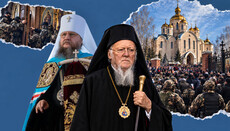

Bans in the UOC – “repression,” but in the UGCC – canonical discipline?
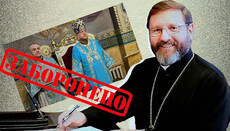
A Greek Catholic priest has been defrocked for joining the OCU. Among Uniates, this is presented as normal. Yet when the UOC acts in the same way, it faces a storm of criticism. Why the double standard?
Shortly before Pascha, religious media reported that the Greek Catholics had defrocked their cleric Bohdan Murovanyi for “deviating into schism,” more precisely, for transferring to the OCU.
At first glance, this might seem an internal matter of the UGCC. But in today’s Ukraine, identical ecclesiastical actions are increasingly judged not by their substance, but by the jurisdiction in which they occur. When the UOC suspends or defrocks a cleric who joins the OCU, it is often framed as a scandal, “repression,” or proof of the Church’s alleged lack of freedom.
But when the UGCC strips its own clergy of rank for the same move, it provokes little to no public outrage. This raises another question: against the backdrop of joint services between Pope Leo XIV – and previously Pope Francis – and Patriarch Bartholomew, why does the UGCC apply such strict measures? The recent case of Bohdan Murovanyi is revealing precisely because it exposes both dimensions at once – the socio-political and the ecclesiological.
Reaction to UOC bans
Yes, the UOC does prohibit its clergy from serving if they transfer to the OCU. After the so-called “unification council” on December 15, 2018, the UOC Synod officially described the participation of Metropolitans Simeon (Shostatsky) and Alexander (Drabinko) as a “departure into schism” and suspended them from ministry. Similar measures were applied to dozens of UOC clergy who joined the OCU in subsequent years – and this triggered a wave of criticism.
For instance, in 2023, when Archimandrite Avraamiy (Lotysh) of the Kyiv-Pechersk Lavra joined the OCU and was suspended for it, TSN ran a piece titled: “They didn’t forgive the ‘betrayal’: the UOC MP decided to punish a Lavra archimandrite who was the first to join the OCU.” In this framing, a canonical decision is recast as emotional retaliation: “Metropolitan Onufriy decided to punish Archimandrite Avraamiy.”
The same narratives appear in broader commentary. Former UOC cleric Oleksandr Kolb, for example, urged people to “overcome their fear of Moscow and not be afraid of these insignificant bans from ministry,” while describing fidelity to one’s Church as “brainwashing.” In other words, supporters of the OCU attempt to portray UOC disciplinary measures not as internal canonical acts, but as a “crackdown” on “Ukrainian patriots.”
A very different reaction to the UGCC
The response is entirely different when it comes to Ukrainian Greek Catholics.
In 2021, UGCC cleric Ivan Harat was excommunicated for transferring to the OCU, his act classified as schism and a crime against the faith. In 2024, the penalty was somewhat softened, recognizing him as a layman – but the essence remained unchanged. Joining the OCU is treated as a grave offense, while canonical penalties are seen as a legitimate form of internal Church discipline. This provoked no public outcry.
Earlier, in 2018, the UGCC suspended its cleric Ivan Kashchuk in the Lviv region after he joined the UAOC and later the OCU. The initial suspension became permanent, based on the same grounds – “conscious disregard for the laws of the Church, remaining in schism, and unwillingness to return to Eucharistic communion with the Catholic Church.”
The case of Bohdan Murovanyi is even more telling. On April 2, 2026, the Sokal-Zhovkva eparchy of the UGCC announced that “former UGCC priest Bohdan Murovanyi has been deprived of clerical rank.” The sanction was imposed precisely because he transferred to the OCU. Yet media outlets sought to reframe the case as punishment for immoral behavior. For example, ZAXID.NET wrote: “He was married to one woman, then took another, had two children with her. There must be morality.”
Other outlets echoed the same narrative.
But the official statement of the Sokal-Zhovkva eparchy gives a very different reason: “We inform that, in accordance with the Decree of the Dicastery for the Doctrine of the Faith regarding a grave sinful act bearing signs of a schismatic offense (ref. No. 61/2024), former UGCC priest Bohdan Murovanyi is deprived of clerical rank pursuant to Article 2 in matters of doctrine, dated 03.11.2025.”
In other words, the Vatican’s Dicastery defrocked him not for moral failings, but for entering into schism – that is, for joining the OCU. Yet Ukrainian media largely obscured this point.
The socio-political dimension
What we see, then, is that essentially identical canonical actions provoke radically different public reactions. When the UOC disciplines clergy for joining the OCU, it is branded “repression” and sparks outrage. Media narratives present it as evidence of political disloyalty. But when the UGCC does the same, it is treated as a legitimate exercise of internal rules – and the core reason is often pushed into the background. This is a textbook case of double standards.
The ecclesiological dimension
At the same time, we see Roman pontiffs and the Patriarch of Constantinople engaging in joint liturgical acts. We hear calls from Catholic and some Orthodox figures for unity. The head of the UGCC, Sviatoslav Shevchuk, and the head of the OCU, Epifaniy (Dumenko), speak of a “roadmap” toward closer relations. In a recent Paschal homily, Shevchuk said: “We want to be united in our faith, in our communion, in the joy of Christ, united in the sacraments of Christ's Church. And let everything else give us freedom.”
In other words, unity in the sacraments is proclaimed – yet a priest who moves from the UGCC to the OCU is labeled a schismatic and defrocked.
If the OCU is schismatic, how can one speak of future unity with it? How can there be “unity in the sacraments of Christ’s Church”? Why does the UGCC, despite its ecumenical rhetoric, react so harshly to such transitions?
The answer lies in the Catholic understanding of ecumenism and Christian unity – as the return of “schismatics” (Orthodox and others) into the fold of Catholicism.
The very title of the Vatican’s foundational document on ecumenism – “Unitatis redintegratio” – literally means “restoration to unity with Catholicism.” It states: “Our separated brethren, whether considered as individuals or as communities and Churches, are not blessed with that unity which Jesus Christ willed to bestow upon all those who, through Him, are reborn into one Body and quickened to newness of life – that unity which Holy Scripture proclaims and the ancient Tradition of the Church bears witness to. For it is only through the Catholic Church of Christ, which is the 'all-embracing means of salvation,' that they can fully benefit from the means of salvation.”
Thus, the Catholic understanding of unity is inherently asymmetrical. Movement into Catholicism is “restoration of unity.” Movement away from it is a grave offense against the faith.
***
The case of Bohdan Murovanyi, along with others of a similar kind, exposes two convenient illusions. The first: that only the UOC disciplines clergy for leaving, and that this somehow proves its “harshness.” The second: that Catholic ecumenism today means unity on equal footing. No – we should not deceive ourselves. What is proposed as “unity” among the heirs of the Baptism of Rus’ is understood, in Catholic terms, as the reintegration of those considered schismatics into Catholicism, and nothing more.