
Institute of National Memory to search for Hetman Sahaidachny's remains
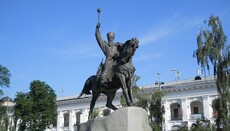
Historians and archaeologists are planning large-scale excavations at the site of the destroyed Epiphany Cathedral to identify the burial of Sahaidachny.
The head of the Ukrainian Institute of National Memory Oleksandr Alferov announced the launch of archaeological research on the territory of the former Epiphany Cathedral with the aim of searching for and identifying the remains of Hetman Petro Konashevych-Sahaidachny.
During a joint working meeting of representatives of parliamentary committees, the leadership of the Kyiv-Mohyla Academy, historians and archaeologists, the participants discussed a draft law on the legal regime of the Brotherhood Monastery complex and the organization of excavations in Podil.
The head of the UINM stated that modern historical and anthropological methods make it possible to identify the hetman's remains with a high degree of probability even among hundreds of other burials from the 17th–18th centuries. "The combination of existing historical information, biographical data and anthropological characteristics makes it possible to carry out such identification after the completion of the necessary archaeological research," Oleksandr Alferov noted.
Petro Sahaidachny was a patron and sponsor of the Kyiv-Mohyla Academy. The wooden Epiphany church was built in 1620 with funds from Sahaidachny, and after his death in 1622 the commander's remains were buried at the cathedral. In 1690–1693, with the support of Hetman Ivan Mazepa, a stone cathedral in the Ukrainian Baroque style was erected on this site, with a crypt containing a burial vault. In 1936, the Soviet authorities destroyed the cathedral and the bell tower.
Earlier, in 2011, Hetman Petro Sahaidachny was "canonized" in the UAOC with the rank of "pious hetmans." In August 2020, the decision on his "universal church veneration" was adopted by the OCU as well, adding the historical figure's name to its calendar, despite his failure to meet the criteria for canonization and despite the fact that over four centuries the commander had been venerated by the people as a warrior and patron, but had never been regarded as a saint.
As the UOJ reported, the head of the Institute of National Memory received the head of the "Montenegrin Church" in Kyiv.