
The Church celebrates feast of Apostle and Evangelist Mark
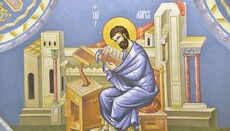
On May 8, the Orthodox Church honors the memory of the author of the second Gospel and founder of the Church of Alexandria – one of the closest disciples of the Apostle Peter.
On May 8 (April 23 according to the Julian calendar), the Orthodox Church commemorates the holy Apostle and Evangelist Mark, who belonged to the Seventy Apostles – the seventy disciples of Jesus Christ.
Saint Mark was born into a Jewish family in Palestine. His mother, Mary, was a disciple of the Savior, and her house in Jerusalem served as a gathering place for the first Christians. Mark accompanied the Apostles Paul and Barnabas on their missionary journeys and later became the closest disciple and spiritual son of the Apostle Peter. According to the testimony of early Christian writers, it was from Peter’s words that Mark composed the second Gospel – the shortest of the four.
The Gospel according to Mark was addressed primarily to Christians from among the Gentiles, especially the Roman communities. This is evident from the absence of references to the Old Testament, genealogies, and discussions of the Mosaic Law, all of which were highly important for a Jewish audience. Instead, the text contains explanations specifically needed for Gentiles: for example, Mark explicitly explains the Jewish custom of washing hands before meals (Mark 7:3–4), something that would have been self-evident to a Jew.
The Apostle Mark founded Christian communities in Egypt, Libya, and other countries of North Africa, becoming the first bishop of Alexandria. Around the year 68 after Christ’s Nativity, he suffered a martyr’s death: pagans tied him to horses and dragged him through the streets of the city. Christians later buried the apostle’s body with honor in Alexandria.
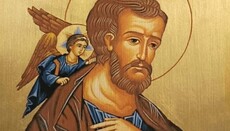
As the UOJ previously reported, the Church also honored the memory of the Apostle and Evangelist Mark last year. The saint’s relics are kept in St. Mark's Basilica in Venice, where they were transferred in 828. Part of the relics remains in Alexandria, in the Coptic church bearing the apostle’s name.