
Is Ramadan closer to the authorities than Great Lent?
Have Muslims and Jews – who together make up just over one percent of the country’s population – become a privileged class? And yet Ukraine is widely seen as a Christian country.
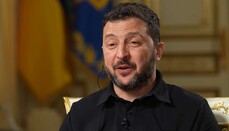
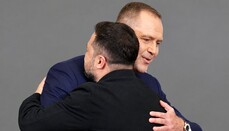
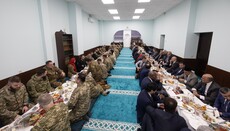
On February 19, Ukraine’s State Service for Ethnopolitics issued official greetings to Muslims on the start of Ramadan. On March 2, DESS published a message to Ukraine’s Jews on the occasion of Purim. That very same day, Volodymyr Zelensky, together with Kyrylo Budanov, came to a Kyiv mosque and shared an iftar meal with the Muslim community – the evening meal that breaks the daily fast of Ramadan. Before the meal, the faithful offered their prayer to Allah in gratitude for the fast. This time, too, Zelensky and Budanov stood with everyone else and listened as the imam prayed.
All of this, in itself, is good and right. Jews and Muslims live in Ukraine, and they deserve respect – and public support for their religious life. But there is an uncomfortable detail.
On February 23, Great Lent began for Orthodox Christians – a season of intensified prayer and repentance that leads to the heart of the liturgical year: Pascha. Yet neither Zelensky nor Viktor Yelensky and his State Service for Ethnopolitics said a single word about the fast.
And this is not a matter of the much-disputed January 7 “Moscow Christmas,” which the authorities have demonstratively ignored in recent years. This is different. Great Lent and Pascha are observed not only by the UOC, routinely dismissed in official rhetoric as “Moscow-affiliated,” but also by the openly pro-government OCU. More than that: Great Lent has long been underway for Greek Catholics and for Roman Catholics as well – communities whose relations with the country’s leadership are, by all appearances, warm and demonstratively cordial.
So the question inevitably arises: have Muslims and Jews – who together account for barely more than one percent of the population – suddenly become the faiths the state is most eager to notice? In a country that is still overwhelmingly Christian?
The UOC has, by now, grown used to an unfriendly state posture. But for the OCU and for the Greek Catholics, this silence should sound like a warning bell – quiet for the moment, yet distinctly alarming.