
Heroes beneath a low ceiling: When literature forgets the eternal
Modern prose increasingly resembles an emotional first-aid kit deprived of hope. Why does the substitution of moral choice with trauma take the sky away from us and leave literature cramped and airless?
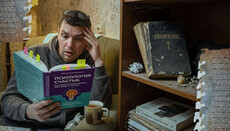
Step into a bookstore. The covers of contemporary bestsellers soothe the eye with their elegant minimalism. But read the blurbs, and a strange suffocation begins to set in. “Generational trauma,” “toxic imprint,” “setting boundaries,” “self-acceptance.” These are words that have migrated from the therapist’s office to the shelves of fiction.
The novel seems to have ceased being a space of the spirit and become instead a manual for emotional self-maintenance. More and more rarely do we read of a human being confronting fate, conscience, or the terrible freedom of moral choice. More often, what we are given is a detailed account of how a character struggles to survive the injuries dealt to him by life. Parul Sehgal once remarked that contemporary fiction has killed the classical hero and replaced him with the patient. It is an exact and piercing observation. The character of a modern protagonist is no longer born out of his actions – it is assembled almost mechanically from his psychic wounds.
This shift alters the very nature of narrative. There are fewer and fewer books in which each turn of the plot is driven by a choice that determines destiny. Choice has yielded to reaction. The hero is led by trauma the way a blind man is led by his guide. This makes literature highly legible, highly therapeutic, and often deeply compassionate. But it also robs it of that current of eternity – that cold, invigorating draft from an open height – for the sake of which we once opened great books.

The archer and his wound
To grasp the scale of this loss, it helps to recall two ancient concepts. In Greek there is the word hamartia – the missing of a mark. This is the word the New Testament uses for sin. The image is strikingly physical: there is an archer, there is an arrow, and there is a target set high and far beyond him.
To miss is to fall short, to fail in effort, to let the arrow fly wide. Yet the target itself remains fixed, majestic, and untouched. The whole movement is upward.
Trauma is something else entirely – a wound. Something that happens to us without our willing it. A puncture, a tear, an injury caused from without. If hamartia presumes personal responsibility for the flight of the arrow, trauma turns the human being into the object of damage. The vector no longer rises – it closes inward. A character fixated on his wound inevitably looks down. He studies the edges of the cut, observes the process of healing, listens to the ache, describes the pain. The world narrows until it is no larger than the wound itself.
Modern fiction has traded sin for trauma. And with the loss of the “miss,” repentance has vanished from literature as well – because one cannot meaningfully repent of having been wounded. But once repentance disappears, so does the possibility of transfiguration.
If a character is defined from the outset solely as a victim of circumstance, then he does not need to change – he needs only for the world to recognize the depth of his suffering. It is an understandable and even comforting position, but it deprives the story of interior air, of freedom, of upward movement.
Two shores
The difference in the “height of the ceiling” becomes especially clear when we set the classics alongside today’s intellectual bestsellers. Take Rodion Raskolnikov. At the end of Crime and Punishment, he falls to his knees in the filth of Sennaya Square. It is a painful, wrenching movement – an attempt to break through the dome of his own ego. Dostoevsky leads his hero toward the light through the reading of the raising of Lazarus (John 11:43).
Raskolnikov is a man called out of the grave by name. His healing comes vertically. It requires the death of his former pride, yet opens before him a horizon without end.
In many contemporary works that are hailed as new ethical manifestos, the picture is quite different. Consider the suffering in a novel like A Little Life. Pain there is rendered with surgical precision; it saturates the whole fabric of the text.
But the suffering goes nowhere. It does not purify the soul – it simply accumulates, like exhaustion in the muscles.
The final point is “self-acceptance” in a state of brokenness. The hero remains in the same mirrored room, only now he has examined every crack in the glass.
Classical art once revolved around the idea of catharsis – that purification through compassion after which a person felt lifted inwardly upward. Contemporary prose, by contrast, more often offers consolation. It brings us back to where we started, pats us on the head, and assures us that everything is fine. But consolation leaves us where we are. Purification demands effort and raises us to another stage of spiritual growth.
Vanishing words
If one turns to word-frequency statistics – Google Ngram Viewer, for example – one begins to glimpse a quiet catastrophe. Words such as “virtue,” “honor,” “mercy,” and “redemption” have been steadily receding from books over the last century. Their place has been taken by “abuse,” “toxicity,” “burnout,” and “boundaries.” Moral categories are slowly being displaced by clinical terms.
The more characters reflect on their problems, the less capable they seem of performing a real act for the sake of another. The supreme ideal becomes the preservation of one’s own inner resources.
This, in turn, shapes a new kind of reader – one who is able to empathize at a safe distance, but recoils from any responsibility that demands self-giving. Books begin to preach a new commandment: save yourself. And they forget that salvation in solitude very often becomes another name for isolation.
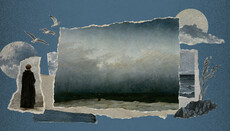
Christian asceticism knows an essential skill: the discipline of beholding, of fixing one’s gaze on what is greater and more glorious than oneself. The Apostle Paul wrote of looking to “the author and finisher of our faith” (Heb. 12:2). It is a movement of the head, a literal lifting of the eyes, when a person ceases to scrutinize his scars and instead sees the sky – and God, who weighs his deeds.
The contemporary hero has largely lost this faculty. Above him hangs a dense ceiling made of social norms and psychological defenses.
Stars and tears in the fabric
Great literature never denied suffering. King Lear on the heath, or Pierre Bezukhov in captivity, suffered no less than the protagonists of present-day novels. But behind their wounds there was always the felt presence of the eternal. Their private tragedy was inscribed into a design vast, frightening at times, yet magnificent. This gave meaning to their pain and made even their errors redeemable. When a man senses infinity above him, he straightens his shoulders. But when the ceiling drops too low, he can only stoop.
We return to old books not simply because we are nostalgic for the past. We go back to them because we are searching for a world in which a human being could be guilty, not only wounded. A world in which the ending could mean something more than a successful course of therapy.
What we lack are books that remind us that the human self is not the sum of its traumas, but what it does in spite of them – when it hears God’s call to rise and return home (Luke 15:18–19).
True healing begins where we finally stop studying our tears under a microscope and dare instead to see, through them, the light of eternity. Perhaps literature must learn once more how to teach us to throw back our heads and look upward.
For man remains truly man only so long as there is something in his life greater than his own psychological comfort.