
The title born of sheer malice: how Rome legalized God
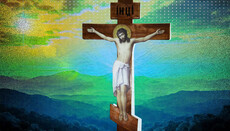
Pilate only wanted to humiliate his enemies, but his caustic inscription on the cross became a legal recognition of Christ. The Roman document accidentally recorded the truth of eternity.
In the Roman world, a whitewashed plaque placed on a cross served strict legal purposes. It had a specific name – the titulus (a credential of execution). This was an official protocol that recorded the causa poenae (reason for punishment). Roman authority demanded transparency: every passerby had to understand exactly what crime this person was dying for today.
The procedure was perfected to the point of automatism. A wooden board was coated with a layer of white gypsum so that the text, written in black paint or red ochre, could be seen from afar. First, this indication of guilt was carried before the condemned through the dusty streets of Jerusalem, sometimes hung around his neck, and at Golgotha it was nailed to the upright post.

That morning in the praetorium, Pontius Pilate dictated the text for such a board. The interrogation was finished, his hands – washed. There remained one last formal action: to formulate the guilt.
Usually, when accusing of high treason, they used a formula indicating pretensions: "He who made himself king." In Roman law this was important – to record precisely the attempt to seize power, imposture. The Jewish leaders would later persistently ask Pilate for exactly this correction. They required clarification: this man only called himself king, not being officially titled.
However, Pilate ordered otherwise. He dictated: "Jesus of Nazareth, King of the Jews."
In this short line there is no description of a crime. It contains a statement of status. The state apparatus of the empire, in the person of its official representative, recorded the dignity of the Crucified One as an indisputable legal fact.
The prefect's counterstrike
To understand Pilate’s motives, one must reconstruct the atmosphere of that morning. On the stone platform of the praetorium, a scene unfolded that became a bitter humiliation for the Roman aristocrat.
Pilate tried to maneuver; he wanted to release the accused, but the Jerusalem elite pressed him against the wall. To achieve their aim, they publicly renounced the messianic hopes of their people. In front of thousands of pilgrims, they shouted a formula of absolute loyalty to Rome: “We have no king but Caesar.”
It was a victory for Pilate as an administrator, but he was enraged by the price he had to pay for it. And when the time came to dictate the text of the titulus, he turned a mundane document into an act of personal revenge.
The inscription "King of the Jews" became his cynical gesture. The prefect seemed to hold up a mirror to his opponents: "Look at your sovereign. He is beaten, he is in a crown of thorns, and now you will nail him to the tree with your own hands. This is all you are worthy of."
When the enraged high priests demanded that the text be changed, Pilate displayed the very Roman stubbornness that later writers would describe. His reply, “What I have written, I have written,” was final. In the legal field of the empire, no more appeals were accepted.
Publication for the oecumene
The inscription was made in three languages. This was the norm for a major imperial center during religious holidays. Latin represented the language of court and legions. Greek was the language of culture and trade, spoken throughout the entire Mediterranean region. Aramaic remained the dialect of local residents.
The document was composed so that everyone would read it: from a stern legionnaire to an educated scribe or a visiting merchant. Literacy was not a barrier – in Jerusalem of that time, any adult person understood at least one of these languages.
Among experts in ancient Hebrew (Hebraists), there exists an interesting observation. If one writes the phrase "Jesus of Nazareth, King of the Jews" in Hebrew and takes the first letters of the words, one gets the sacred tetragrammaton (the four-letter Name of God, which is forbidden to pronounce aloud).
This version remains in the realm of theological assumptions, but it explains the irrational panic that seized the Jewish leaders at the sight of the plaque. For them, this piece of wood transmitted something transcendent. But Pilate, most likely, did not even suspect the hidden meanings. He simply enjoyed his superiority.
Evidence from walnut wood
In the Roman Basilica di Santa Croce (Italian for 'Basilica of the Holy Cross'), a fragment of a walnut board is preserved, which tradition calls that very titulus. Studies from the beginning of our century dates it to a much later period than the time of Christ, which for many closed the question of its authenticity.
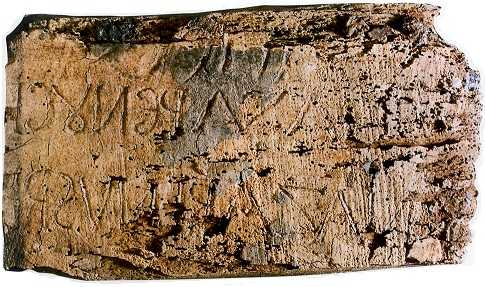
However, specialists in ancient manuscripts point to a detail that is difficult to imitate. On this board, all three lines – both Latin and Greek – are inscribed from right to left. For a medieval European craftsman, such writing manner would have been absolutely unnatural. But for a first-century Eastern scribe, accustomed to the right-to-left direction of Hebrew writing, it was an automatic action. Having been instructed to copy unfamiliar letters in foreign languages, he did so as his hand led him. This strange error still leaves scholars room for reflection.
Case conclusion
If one discards emotions and looks only at facts, the picture turns out harsh.
The Jerusalem elite sought execution out of fear of losing control. Pilate pronounced the sentence from cold political calculation. None of them sought the truth. And in this collision of two personal wills arose a text that officially proclaimed what both sides refused to acknowledge.
The pagan superpower recorded the Royal dignity of the Crucified in the three main languages of the then world. This happened not despite, but thanks to human pride and pettiness.
Sometimes what was intended as a mocking label becomes a testimony of eternity. The title written out of sheer malice turned out to be more accurate than a dogmatic definition.
This leads to a thought that goes beyond history. When people or circumstances place their “final” label upon us, seeking to destroy our name, what exactly are they documenting in reality? And can we preserve within ourselves such dignity that any slander ultimately becomes a testimony to our righteousness?