
Gnosticism: How heretics tried to turn faith into an elite club
In the first century, the Church was not stormed by an army, but by intellectuals – armed with diplomas, mythology, and disdain for those who caught fish with their bare hands.
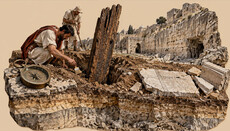
In 1945, in Upper Egypt, near the village of Nag Hammadi, a peasant named Muhammad Ali al-Samman was digging for fertilizer when he came upon a sealed clay jar. Inside were thirteen papyrus codices. Some of the pages were burned in the household stove by his mother before anyone realized what they were. What survived radically changed our understanding of the first centuries of Christianity. Before this discovery, we knew the Gnostics only through the writings of their opponents – Hieromartyr Irenaeus of Lyons, Tertullian, and Hippolytus of Rome. Their critics were often accused of exaggeration or caricature. Nag Hammadi proved otherwise: the Fathers of the Church had quoted the Gnostics with unsettling accuracy. What seemed like caricature turned out to be a portrait.

A failed god and three kinds of people
To understand what the early Church faced, one must look at the Gnostic picture of the world – and its scale of imagination is striking. According to the Gnostics, the True God – distant, invisible, and ineffable – dwells in the Fullness, the Pleroma, surrounded by pairs of aeons so remote that they know nothing of the earth. The material world, they claimed, was not created by Him but by an ugly upstart named Yaldabaoth, a lower spirit who mistakenly believed himself to be the only god. Mountains, trees, human bodies – all of it, they said, was the product of his ignorance.
The Gnostics identified Yaldabaoth with the God of the Old Testament. The Ten Commandments, the Exodus from Egypt, the covenant with Abraham – all of this, in their view, was the work of a jailer who merely wished to keep humanity locked in a cage of obedience.
And then came the caste system – one that must have made the Apostle Paul’s hands tremble as he dictated his epistles.
The Gnostic teacher Valentinus in the second century divided humanity into three fixed castes: the pneumatics – the spiritual elite, saved by birth regardless of how they lived; the psychics – ordinary believers who might still be helped, though with reservations; and the hylics – the material mass destined for destruction. For these philosophers, salvation depended not on repentance or living faith but purely on a person’s origin.
How the Apostle Paul recognized the counterfeit
The Apostle Paul encountered proto-Gnostic ideas long before Irenaeus of Lyons was even born. In Corinth, in Colossae, in Ephesus – everywhere Paul preached, people followed close behind him, adopting his vocabulary and filling it with alien meanings. The word “gnosis” – knowledge – was used by Paul himself. But he saw what others were turning it into.
The last thing he writes to Timothy is not a theological treatise or liturgical instruction. It is a warning: “O Timothy! Guard what has been entrusted to you, avoiding the profane chatter and contradictions of what is falsely called knowledge, by professing it some have departed from the faith” (1 Tim. 6:20–21). In the Greek original, the word translated as “knowledge” is precisely that same word – gnosis.
The apostle calls it falsely named knowledge – not because knowledge itself is evil, but because under the banner of knowledge something entirely different was being sold: contempt for the body, a caste division of humanity, and a phantom Christ who never truly died on the Cross.
The Epistle to the Colossians strikes the same point. Paul warns against “philosophy and empty deceit, according to human tradition, according to the elements of the world, and not according to Christ” (Col. 2:8). He sensed where the real threat lay – not from Roman soldiers, but from educated men who repackaged the Gospel into a form pleasing to those who felt embarrassed to believe simply, as the fisherman-apostles had believed.
The scam of Mark the Magician in the Rhône Valley
Hieromartyr Irenaeus of Lyons continued the struggle where Paul had left it. Serving as bishop in Lugdunum (modern Lyon) at the end of the second century, Irenaeus described how Gnosticism operated not only in theory but in everyday life. One of his sketches tells the story.
A Gnostic teacher named Marcus worked in Gaul and deliberately targeted wealthy women from aristocratic families. At secret gatherings he celebrated a kind of “Eucharist,” during which white wine in a cup would appear to change color to purple – supposedly becoming the blood of Grace. According to Irenaeus, the trick was chemical, but it produced the desired impression. Marcus would then announce to the women that they were pneumatics, that a divine spark lived within them and that they possessed the gift of prophecy. Flattered and inspired, they handed over their fortunes to him – and sometimes more than their fortunes. Irenaeus writes about it with restraint but unmistakable clarity: women who later returned to the Church confessed “along with their other errors, this as well.”
Hieromartyr Irenaeus was not an academic scholar. He was a pastor who had seen families destroyed with his own eyes, and his anger is still palpable across eighteen centuries. “As soon as anyone gives himself over to them,” he writes, “he becomes extremely puffed up and arrogant; walking with great seriousness and strutting proudly, he has the appearance of a rooster.”
A phantom Cross that saves no one
But the greatest crime of Gnosticism was not about money or scandal. It was what they did to the Cross of the Lord.
If matter is evil, as the philosophers claimed, then the True God could not have become flesh. That meant Christ could not have had a real body. He only appeared to be human – something like a projection. In Greek this teaching is called Docetism, from the word meaning “to seem.”
In the Gnostic “Apocalypse of Peter,” discovered at Nag Hammadi, there is a scene that takes one’s breath away: the Savior sits laughing above the cross while someone else is mistakenly crucified below.
With that single stroke the Gnostics destroyed everything. No real flesh – no real blood. No blood – no sacrifice. No sacrifice – no redemption.
What remains is secret knowledge, passwords for passing through heavenly spheres guarded by hostile archons, and the conviction of one’s own chosenness. Salvation becomes a quest for initiates, where the greatest treasure is not love but possession of elite information.
Why they return
Today few people read the “Apocryphon of John” or the writings of Valentinus. But their idea lives on – it has merely changed its clothing. “I believe in God, but I don’t need the Church – I have my own channel of communication.” That is pure Gnosticism: contempt for the Church community and the sacraments in favor of “personal enlightenment.” Dividing humanity into the “awakened” and the “sleeping masses” is simply Valentinus’s caste system in the language of New Age spirituality.
Gnosticism returns because it flatters. It tells a person: you are a spark in the darkness, you are above this world, you do not need repentance – you only need to remember who you really are.
Christianity says something very different: you are a sinner like everyone else; the world was created by God and is good; the body is a temple, not a prison; and salvation comes through the real Cross and the real Blood of Christ, which flows within us and does not merely “seem.”
Irenaeus concluded his work Against Heresies not with a curse but with a declaration: God created this world good, and He entered it bodily in order to heal it. It was a challenge to the Gnostics of second-century Rome. It remains a challenge today to those who would rather float above reality than touch the wounds of others with their own hands – as Christ did.