
April Fools’ Day: How a culture of lies erodes the soul and trust
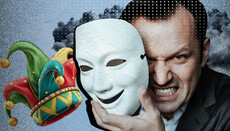
In popular culture, April Fools’ Day is treated as harmless fun. But where is the line between innocent play and the corrosion of the soul? What begins as humor can quietly become a habit of distortion – of truth, of relationships, of the human heart.
Each year on April 1, the world immerses itself in a ritual of sanctioned deception. Modern culture frames it as a kind of psychological “release valve” – a day when etiquette loosens and boundaries soften. Yet if we strip away the carnival mask of humor, a far more unsettling picture emerges: how a person chooses to use his most powerful gift – the Word.
We call it “pranks,” “jokes,” “tradition.” But for anyone seeking authenticity and spiritual sobriety, this day raises uncomfortable questions. Where does play end, and where does the quiet destruction of the destruction of the inner sanctuary begin?
The fracturing of reality and the micro-trauma of trust
In Christian teaching, the world is created through the Word – the Logos. The word is not neutral: it carries creative power, meant to express truth and bind meaning together. When we use it for deliberate deception – even fleetingly – we commit an act of “unmaking reality.”
A lie on April 1 is a small intrusion of chaos into the order of being.
If God is truth, then the conscious distortion of facts becomes a kind of imitation of falsehood itself – a parody of good news that replaces joy with disappointment. For a moment, a person believes: in disaster or sudden fortune. The heart tightens or rejoices – and then comes the reveal: “April Fools!” In that instant, trust is bruised. The soul is trained to accept that reality is unstable, that words carry no weight.
The other as target: a philosophy of alienation
The philosopher Martin Buber taught that true life unfolds in the encounter of “I and Thou,” where each recognizes the other as a person. In a prank, the “Thou” disappears. The other ceases to be a person and becomes an object – a tool for amusement, a mirror for one’s own cleverness.
The one being pranked becomes a target. We no longer look at him, but through him, waiting only for his reaction – confusion, fear, embarrassment.
April laughter, then, is no longer shared joy – it is the laughter of one who has outwitted another.
A subtle wall of alienation rises: “I fooled you – therefore I am above you.”
In the Gospel, the definition of the “father of lies” is stark. Falsehood is not merely error; it is anti-being – a distortion of reality as created by God. When we knowingly mislead another “for fun,” we step into a gray zone that is far less innocent than it appears. On the surface, it is play. At depth, it is training the soul to accept falsehood as a tool.
The aesthetics of deception and the acid of irony
On April 1, a person lives almost entirely in the “aesthetic” mode. What matters is the effect, the impression, the punchline. Responsibility for one’s words is suspended. Irony becomes a universal alibi: “It’s just a joke.”
But constant irony works like acid. It erodes the ability to take anything seriously – love, death, God. If everything can be turned into a joke, life loses its weight, becoming unbearably light and hollow.
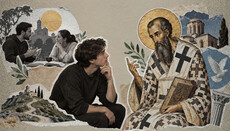
John Chrysostom once compared the soul to a vessel, and idle speech and laughter to cracks. Through them, grace leaks away, along with inner attentiveness. April 1 becomes a kind of scheduled breach – a day when the soul loosens, loses its orientation, and drifts away from eternity.
A prank always involves manipulation of another’s perception. Spiritually speaking, it is a subtle form of violence against the will and awareness of one’s neighbor.
We make a person see what is not there, feel what is not real. The atmosphere of April 1 is one of dispersion – noise, fragmentation, a laughter that, as the Fathers warn, relaxes and weakens the soul. Imagine the surface of a lake: when still, it reflects the sky. But throw stones into it for sport, and the reflection shatters into ripples and mud. So too the soul loses its capacity to reflect Truth, distracted by shallow effects.
The asceticism of honesty in an age of fakes
In a world shaped by “post-truth” and fabrication, the asceticism of honesty becomes urgently necessary. April 1 offers a paradoxical opportunity – a reverse feat: to resist the pull of collective deception.
The true alternative to April Fools’ Day is not grim seriousness, but luminous sincerity. It is a state in which word matches deed, and laughter flows from joy, not from trickery. We laugh not at someone, but with someone – celebrating life’s beauty, not another’s misstep.
Perhaps the best way to mark April 1 is to speak a truth long withheld, or to show genuine love where we usually hide behind polite humor. To be a Christian does not mean never to smile – it means to understand the vast difference between joy born of fullness and laughter born of emptiness.
The spiritual meaning of refusing the “day of lies” is a choice in favor of radiant seriousness.
It is the decision to guard the word as something sacred, and to guard one’s neighbor as a fragile image of God – not an object for manipulation. The real challenge of April 1 is not to trick someone, but to find the courage to be completely sincere in a world accustomed to masks.
Self-irony vs. sarcasm
True humor unites; it does not divide. Discard the easy excuse: “It’s just a joke.” If a word carries falsehood, it poisons the space around you, no matter how brightly it is wrapped.
Before saying something witty, consider the cost of that wit. Is it self-display? Is it humiliation? Is it judgment?
The safest and most spiritual form of humor is self-irony.
It humbles the soul, draws us closer to others, and harms no one. Sarcasm, by contrast, always points outward – and, like acid, corrodes the warmth of human relationships.
A Christian should seek inspiration in the beauty of life, in its paradoxes, and in kindhearted relationships. True joy is when, after meeting you, a person feels stronger, brighter – not left with the bitter aftertaste of having been “played.”
To be sincere in a world of masks is not dull. It is the highest form of courage – and a quiet nobility of spirit.