
Connection through eternity: Why we pray for the dead
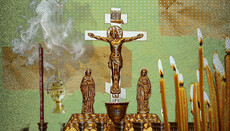
Universal Memorial Saturday. We stand in church with slips of paper for the repose of souls and wonder: does it mean anything? If a person has died, is their fate already settled? Or is it not?
In the secular calendar today is St Valentine’s Day – pink hearts, romance. In the Church’s calendar – Universal Memorial Saturday, the day of remembrance for all who have died from Adam to our own days. The contrast is almost mocking: there – love as a sweet confection; here – love that breaks through the wall of death.
We come to the church with commemoration slips. We write the names of those who are no longer with us. We submit them for the Proskomedia, we request forty-day commemorations, memorial services. And somewhere deep inside a question rises – the one many are afraid to voice aloud: do they truly receive anything from our prayers? Or is it merely a ritual for us, the living, to make our grief easier to bear?
Skeptics speak plainly: if someone has died – that’s it, the end. The particular judgment has been rendered; the verdict is in; the case is closed. It is too late to pray. It is like trying to change a grade on your school certificate ten years after graduation.
But the Church insists on the opposite. And it does so not on the basis of pious fantasies, but on the basis of texts many people do not even know.
What is written in the Bible, but not read
Let us open the Second Book of Maccabees, chapter twelve. There is a story there that overturns the notion of death as a final line.
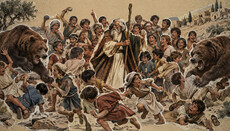
Judas Maccabeus finds pagan amulets on the bodies of fallen Jewish soldiers – idols of Jamnia. A mortal sin according to the Law of Moses. These men died in sin, without repentance. By the logic of “where the tree falls, there it lies,” their lot is already decided.
And yet Judas Maccabeus gathers two thousand drachmas of silver and sends it to Jerusalem so that a sin offering might be made for those who perished. And Scripture says: “Therefore he made atonement for the dead, that they might be delivered from their sin” (2 Macc. 12:45).
Read that carefully. Not “to console the relatives.” Not “in their memory.” But so that they – dead sinners – might be loosed from sin.
That is, their condition after death can be changed by what we do.
The Apostle Paul, in his Second Epistle to Timothy, prays for Onesiphorus: “May the Lord grant him to find mercy from the Lord in that Day” (2 Tim. 1:18). Exegetes, including St John Chrysostom, point out that by the context of the epistle Onesiphorus had already died by that time. Paul greets his household, his family – but not Onesiphorus himself. And he prays for him – for one who is dead.
These are not marginal texts. They are Holy Scripture. And it speaks unambiguously: the boundary of death is permeable to prayer.
Two judgments – and the space between them
We often confuse two different moments. The particular judgment is what takes place immediately after death. The soul stands before God, and a preliminary determination of its state is made. But this is not the final sentence.
The final sentence is at the Last Judgment, at the end of time, when Christ will come in glory to judge the living and the dead.
And between these two moments there is a space – our “now,” while we live, pray, celebrate the Liturgy, give alms. And in this space the preliminary determination of the particular judgment can be changed.
In the fifteenth century St Mark of Ephesus argued with the Catholics about purgatory. The Catholics taught that the souls of sinners suffer in a cleansing fire, paying for their sins. Mark of Ephesus rejected this legalistic model – God does not bargain over pain. And yet he formulated something very clearly: sinners receive relief, and even deliverance, through the Liturgy and through the almsgiving of the living.
Not because they “paid their debt by suffering.” Not because God is haggling. But because the Church – the living and the dead – is one Body. And when we here celebrate the Eucharist, naming the departed, grace reaches them there.
How it works: the “technology” of prayer
At the Proskomedia the priest removes a small particle from the prosphora for each departed person, pronouncing the name. That particle rests on the diskos beside the Lamb – the Body of Christ. At the end of the Liturgy all these particles are poured into the Chalice with the Blood of Christ, and the priest says: “Wash away, O Lord, the sins of those commemorated here by Thy Precious Blood.”
St Simeon of Thessalonica explains: the particle becomes a conduit of grace to the soul of the one commemorated. This occurs instantly, beyond time and space. We are here, in church, in February 2026. And the one for whom we pray may have died in 1943, in 2014, in 2022. But the Liturgy is celebrated beyond time – in God’s eternal “now.” And the prayer offered over the particle, immersed in the Blood of Christ, reaches the soul regardless of when that person departed.
We do not grasp the mechanics of this process any more than we grasp the mechanics of the Resurrection. But we know it works. Because it is witnessed in Scripture and in the Church’s experience.
The story of Perpetua and her little brother
Third century, Carthage. The Christian woman Perpetua sits in prison, awaiting execution. She dreams of her younger brother Dinocrates, who died at seven years old from a cancer of the face. She sees him in a gloomy place. Before him stands a tall basin of water, but he cannot reach it – the rim is too high. The wound on his face is rotting; the boy is tormented by thirst.
Perpetua begins to pray for her brother day and night. After some time she has a second dream. Dinocrates is clean; the wound has healed – only a scar remains. The rim of the basin has lowered to his level; he drinks and plays.
This is recorded in The Passion of Saints Perpetua and Felicity – an authentic third-century document, one of the oldest Christian texts. Not a legend, not a devout invention. A document.
The boy died in sin – he was not baptized. By the strict logic of “without Baptism there is no salvation,” his case is hopeless. But the prayer of his sister, a martyr, changed his condition. The basin lowered. He was able to drink.
Communicating vessels
We need an analogy, if only to glimpse this mystery. Here is one: communicating vessels. Do you remember school physics? If two vessels are connected by a tube at the bottom and we pour liquid into one, the level rises in both.
The living and the dead are one system, one Body of Christ. When we pour grace into our vessel – when we pray, commune, give alms in the name of the departed – the level rises in their vessel as well.
Not because we purchase an indulgence. Not because God negotiates. But because we are one whole – divided by death, yet not torn apart.
St John Chrysostom spoke sharply: if you want to honor the departed, do not squander money on lavish funerals and marble monuments. Give that money to the poor in his name. That will be his justification at the Judgment.
Almsgiving in the name of the dead is not a symbol of remembrance. It is real help. As though you were transferring funds to the account of someone who can no longer work.
What this means for us today
We live in a time when many lose loved ones to war. It happens suddenly and terribly. Sometimes without any chance to say goodbye. Sometimes there is no body – a person is missing, and that is all.
And we stand before that pain with empty hands. We cannot bring back the one we love. We cannot fix what was left unfinished. We cannot even give them a proper burial if there is no body.
But we can pray. And this is not psychological comfort for us. It is real, active help for them – for those who have gone into the other world.
When we submit a name for the Proskomedia, the particle taken for that person enters the Chalice with the Blood of Christ. When we give alms in his name, his heavenly account is filled with good deeds he can no longer perform. When we read the Psalter for the departed, the sacred words reach a soul that can no longer pray for itself – the will is paralyzed by death.
Church practice says: if a person is missing and there is no certain information about death, we pray for him as for the living – “for health and salvation.”
With God there are no dead. All are alive – only in different states.
And our prayer works in any state. Because love does not cease with death. It only changes its form.
Universal Memorial Saturday is the day when the Church prays for those for whom no one prays – for those who perished suddenly, without repentance; for those who drowned at sea, froze in the mountains, were burned in war; for those whose names have been forgotten.
It is as though we say to them today: we remember you. You are alive. And we have not abandoned you.
This is love strong as death – love that breaks through the wall between worlds, love that continues to act when everything else is powerless. It is wireless connection through eternity – a connection that can never be cut.