
Why the persecution of a Holosiiv Orthodox school is a shot at our future
The Prosecutor General’s Office and the SBU have opened a criminal case against the administration of the Orthodox school at the Holosiiv Monastery in Kyiv. Why this is a fight against the country’s future.
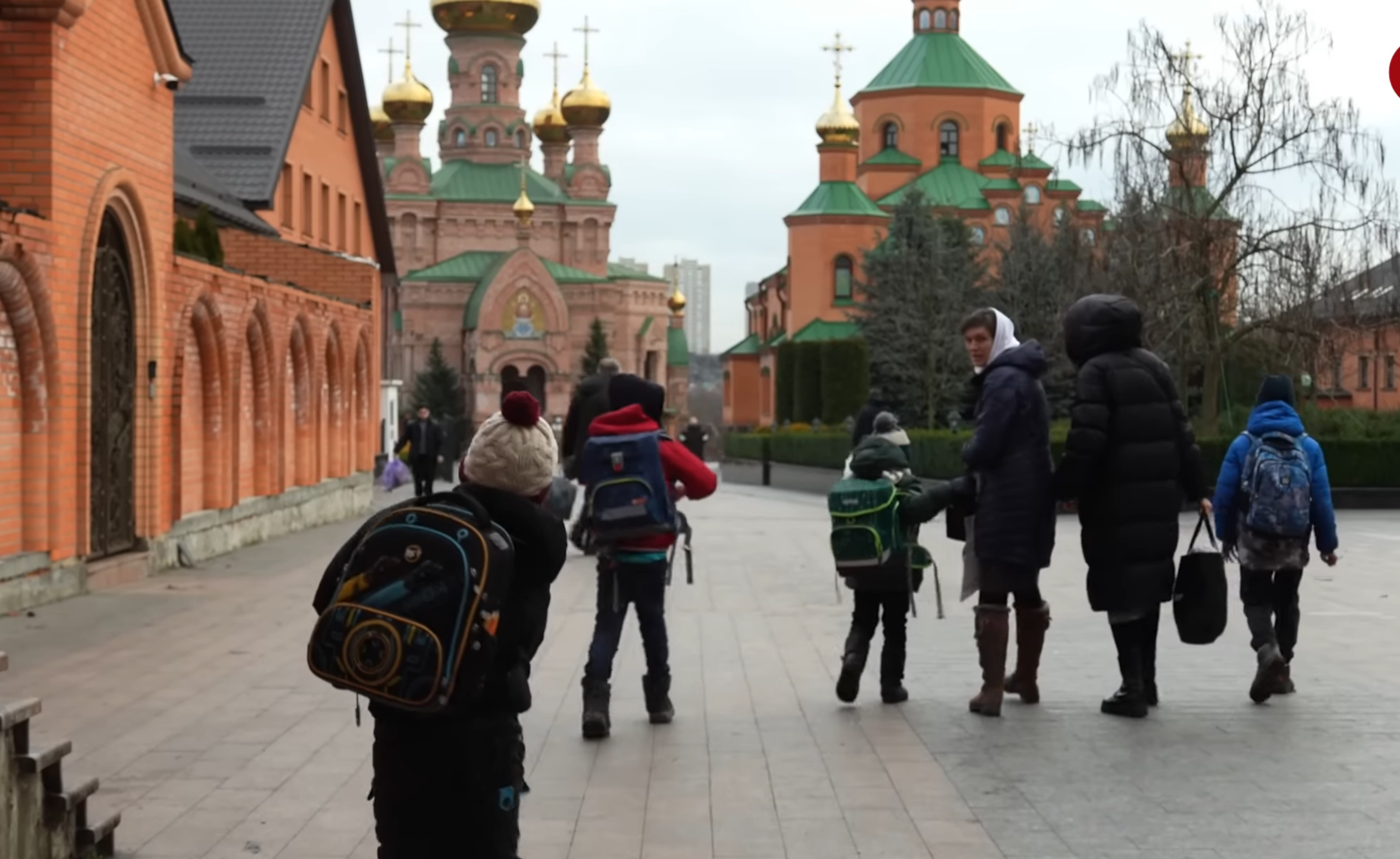
On January 7, 2025, the SBU and the Prosecutor General’s Office launched a pretrial investigation into the activities of the Orthodox parents’ club “Perspektyva”, which operates at the UOC Holosiiv Monastery. The grounds for this were a video described as a “journalistic investigation” by the Slidstvo.Info agency. The video makers themselves admitted that they acted deceptively: they filmed with a hidden camera (including children), asked provocative questions while posing as parents–refugees from the Luhansk region who wanted to enroll their children in this school. Anyone even slightly familiar with manipulative techniques will say that questions can be framed in such a way and in such a context that the answers obtained are exactly what the provocateur needs. All of this was fully employed in the so-called “journalistic investigation”. Besides, an appropriate commentary was added, and ominous music was overlaid. As a result, ordinary footage of children going to school was turned into something sinister.
But in addition to manipulative techniques, an outright falsehood was used. For example,
the very title of the video contains a claim that children at the school “sing the RF anthem”. No evidence of this is provided; the journalists knowingly lied. Yet this falsehood became a trigger for another wave of hatred toward ordinary Ukrainian children and their teachers.
Let us go through the main accusations made by Slidstvo.Info against the Orthodox school.
“They glorify the Russian god”
It is well known that the Holosiiv Monastery is an Orthodox shrine where people pray to Jesus Christ our Lord and teach children to do the same. So, who, then, is this “Russian god”? There are two possible interpretations here. Perhaps the authors of the video mean an object of worship, such as Putin, Russia, etc. In that case, this accusation is just as false as the claim about the “RF anthem”. No one at the Orthodox school engages in the worship of such objects.
Or perhaps the authors of the video consider Jesus Christ to be a ‘Russian God’? In that case, this accusation turns into an element of persecution against Christianity itself. And if one looks closely at the trends of the past two years, one can see how the notion of a “Russian god” has gradually come to include the calendar, icons, rituals, the language of worship, and so on. If this continues, then soon Orthodoxy itself will be declared a “Russian god” and subjected to a ban.
To lend some weight to their disgraceful video, the authors enlisted the so-called “experts”: the co-founder of some NGO, I. Kobernik, and MP Volodymyr Viatrovych. The latter claimed that the parents’ club existed under the patronage of the Russian Orthodox Church, that its activities were “ideological”, and that the SBU should deal with it.
“They study the Russian language”
Before the full-scale war, at least one third of Ukraine’s residents spoke their native Russian language. These are not some Russians; they are Ukrainian citizens who have lived on their land for generations, who love their country and are patriots of Ukraine. They proved their patriotism by not surrendering eastern Ukraine in the first days of the war, by enlisting in the Armed Forces of Ukraine just as massively as residents of other regions, by doing everything possible to defend Ukraine, and so on. Our fighters at the front speak both Russian and Ukrainian. Shoulder to shoulder, they fight the enemy. And none of them reproaches another for speaking the “wrong” language. Yet in the rear, such reproaches are for some reason considered not the incitement of discord but an element of “patriotism”.
The fact that in everyday life, almost the entire leadership of Ukraine speaks Russian, including the Verkhovna Rada, the Cabinet of Ministers, law enforcement agencies, and so on, adds a special note of cynicism. They are allowed to do so, but the Orthodox schoolchildren are not allowed to study the Russian language, even though all other subjects are taught in Ukrainian.
In a comment to the UOJ, the director of the parents’ club, Anna Bolhova, explained why they decided to teach Russian there. According to her, after the Russian language was banned in schools, a huge number of Russian-speaking children, in addition to all other problems, also faced serious difficulties in their education.
“Now most children write poorly and do not have a proper command of either Russian or Ukrainian. Meanwhile, Russian-speaking children who first studied in Russian and then began learning Ukrainian were literate, spoke Ukrainian fluently, wrote without mistakes, and won prize places at Ukrainian-language Olympiads. That was the case with my own children, and with others I knew,” the director cites examples.
“They are taught the foundations of the Russian world”
This narrative includes a great deal: old Soviet-era mathematics textbooks, as well as the classics of Russian (more precisely, world) culture – writers, poets, composers, artists, etc. The madness of the haters has already reached the point of complete absurdity. For example, it was enough for a Russian actor to appear in the film “A Prayer for Hetman Mazepa” by Ilienko, a classic of Ukrainian cinema, for the film to be banned as a threat to Ukraine’s national security. And yet Mazepa today is regarded as almost the principal national hero in history.
Reading Dostoevsky, Pushkin, Lermontov, Yesenin, and other authors; listening to Tchaikovsky, Mussorgsky, and Rachmaninoff; looking at the paintings of Vasnetsov and Repin in Ukraine has already become almost a sign of a collaborator and traitor. But in reality, this is simply a sign of an educated person. And now unrestrained Ukrainian pseudo-patriots want our children to grow up as uneducated ignoramuses, familiar only with supposedly “crystal-pure” Ukrainian authors. The problem, however, is that there are very few of those.
The concept of “down with everything that has anything to do with Russia” impoverishes Ukraine’s culture and science to such an extent that, by and large, nothing remains at all. Here are just some well-known Ukrainian figures in science and culture who cooperated with the Russian authorities or lived in Russia.
Writers and thinkers: Nikolai Gogol; Panteleimon Kulish; Mykhailo Drahomanov; Volodymyr Korolenko; Ivan Nechui-Levytskyi, and others.
Composers: Mykola Lysenko; Dmytro Bortnianskyi; Maksym Berezovskyi, and others.
Artists: Ilya Repin; Arkhip Kuindzhi; Nikolai Ge, and others.
Scientists: Volodymyr Vernadsky; Ilya Mechnikov; Alexander Lyapunov; Yevhen Paton, and others.
All of them were members of imperial academies, were published in Russian journals, and belonged to the intellectual elite of the Russian Empire. On this basis, all of them could be classified as representatives of the “Russian world”. And – oh, horror!
The national symbol of Ukraine, Taras Shevchenko, lived in St. Petersburg for fifteen years, was a member of the Imperial Academy of Arts, painted commissioned portraits of the Russian nobility (his main source of income), and was published in St. Petersburg journals. He wrote prose in Russian and (another shock!) his personal diary as well. After his exile in Kazakhstan, he returned not to his native Ukraine but to that same St. Petersburg.
Prayer instead of a minute of silence
On this matter, one could say that a person cannot be artificially forced to honor anyone’s memory. One could also say that a minute of silence by order is a perversion of the very concept of remembering those who died in this war. Such acts must come from the heart and do not require legal compulsion. But one can also pay attention to deeper aspects.
A minute of silence is a secular ritual directed toward the living. Prayer is a religious act, directed both at the one who prays and at the one for whom the prayer is offered. By praying, we ask God for mercy for those who died in this war – both soldiers and civilians. A rhetorical question arises: what benefits the deceased more: if we just remain silent, sometimes thinking about something entirely unrelated, or if we pray to God for the repose of these people “in the dwellings of the righteous”?
The fact that children are taught to pray rather than simply remain silent is the highest form of honoring the memory of the fallen. But pseudo-patriots want children to merely stand through a minute of silence, formally, just like in Soviet times.
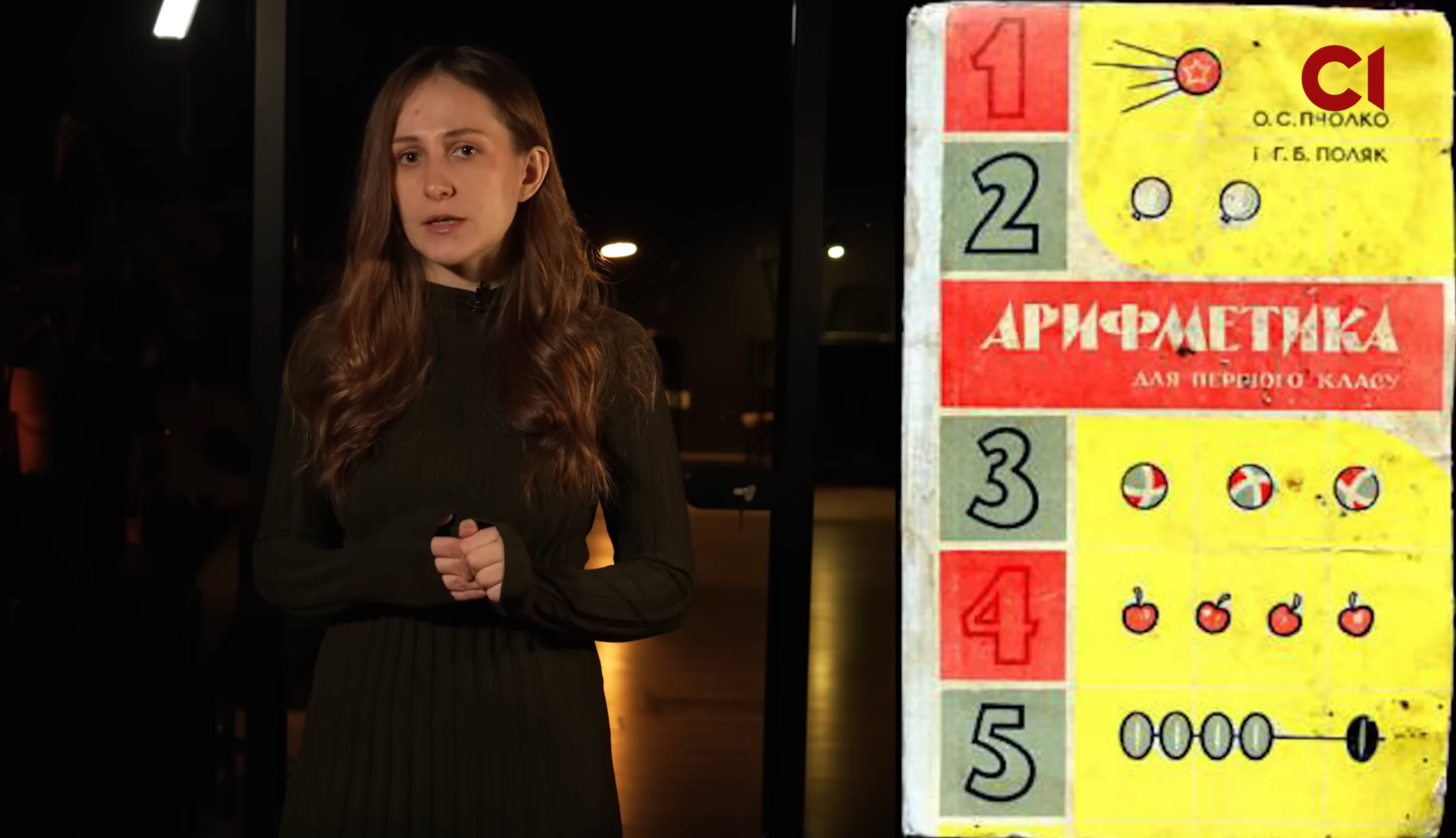
Children are also accused of not spending all their time on gadgets, of watching old Soviet fairy tales, of studying mathematics from old, reasonable (and, by the way, Ukrainian-language!) textbooks, and so on.
School in the format of a Parents’ Club
What particularly outraged the “investigators” was that the Orthodox school at the Holosiiv Monastery operates in the form of a Parents’ Club, which allows parents to impart to their children the knowledge they deem necessary. When one of the mothers said that it was their “personal matter” – what and how to teach their children – the investigators were simply beside themselves with indignation. After all, Ukrainian children are supposed to absorb not the Orthodox faith and the moral values of their parents, but the dominant state ideology. No dissent is allowed; everything must follow the templates of the Soviet ideological machine: children are cogs of the state, not free-thinking individuals.
In this way, pseudo-patriots take away one of the most fundamental human freedoms from Ukrainian children – the freedom of thought and worldview. Essentially, they want to turn them into zombies, thinking exclusively in the narratives of state ideology and having no independent opinion on key issues.
The bottom line
Ultimately, as already mentioned, there is a criminal case against the founders of the Orthodox school. But this is far from the most frightening part. We are confident that there are no legal grounds for criminal prosecution. The SBU and the Prosecutor’s Office initiated the case under Part 1 of Article 436-1 of the Criminal Code of Ukraine (manufacture, distribution, and public use of symbols of communist, Nazi, or other totalitarian regimes). Under such logic, the only thing that could be incriminated here as “symbols” would be a Ukrainian-language arithmetic textbook and Soviet fairy-tale films.
Following this reasoning, cases should be opened against Ukrainians for using the “totalitarian” metro, living in Soviet-era apartments, and the government and MPs would need to be arrested for glorifying the Stalinist regime, which constructed the Cabinet of Ministers and Verkhovna Rada buildings.
It is unlikely that investigators will want to make fools of themselves. And if there is no “green light from above” for a demonstrative punishment on absurd grounds, the criminal case will fall apart before it even really begins.
Another thing is truly alarming.
In fact, the Slidstvo.Info journalists, using fakes and manipulations, are artificially stirring up hatred toward Orthodox believers, who make up a large part of Ukraine’s population. They are inciting hatred and religious intolerance, undermining national unity, which everyone claims is necessary. Whether consciously or not, they are acting against Ukraine’s sovereignty and security.
They are harassing innocent children and their mentors. And despite such obvious anti-Ukrainian activity by the Slidstvo.Info “investigators”, the law enforcers are persecuting not them but the founders of the Orthodox school.
The published video sparked a new wave of claims on social media that there can be no place for the Russian language and culture in Ukraine. As we have already shown, this would encompass most Ukrainian scientists, writers, and cultural figures. Our children are being targeted to become illiterate, uncultured, and ignorant of a great deal of world literature and art.
And the most frightening part: they want to raise our children in an atmosphere of hatred, which directly contradicts the teachings of the Gospel. They want to confine them in a cocoon of resentment and hostility toward anyone whose views differ from the dominant ideology. And this is not limited to Russia. For example, pseudo-patriots are already ready to hate Poles for condemning the Bandera ideology. And soon, it might extend to Turks for their historical raids on Ukrainian lands and the enslavement of hundreds of thousands of Ukrainians. What kind of country will this be if our children are raised not in an atmosphere of love and happiness, but in hatred, enmity, and a thirst for revenge? Yet this is exactly where the video makers – and pseudo-patriots in general – are leading us. In effect, they are taking the future away from our country.
Is there an alternative?
Yes, there is. For this, we need to learn to forgive, according to God’s commandment:
“Be merciful, just as your Father is merciful. Do not judge, and you will not be judged; do not condemn, and you will not be condemned; forgive, and you will be forgiven; give, and it will be given to you: a good measure, pressed down, shaken together, and overflowing, will be poured into your lap. For the measure you use will be measured back to you.” (Luke 6:36–38)
And these are not just words – they can have a specific historical illustration. For example, Nazi Germany destroyed about 8 million Ukrainians: burned villages, ruined cities, executed civilians, and peasants taken into slavery. Germany brought Ukraine grief on a scale far greater than Russia did, yet we were able to forgive the Germans. We were able to separate the war criminals and the Nazi leadership from the German people. We managed to establish friendly relations with Germany. And no one ever thought of banning Goethe, Kant, Schiller, and others. Of course, this took time.
But to always remember evil, to live in hatred and thirst for revenge, is destructive to humans. All these passions are a reflection of hellish torment. And this is certainly not what we would want for our children.