

Ancient 4th–6th century monastery discovered in Egypt
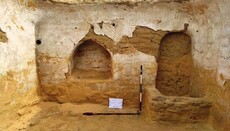
An archaeological mission has uncovered a 2,000-square-meter monastic complex featuring monks’ cells, kitchens, and burial chambers.
A monastery has been discovered in the Wadi El Natrun valley by a joint Egyptian archaeological mission from the Supreme Council of Antiquities and Cairo University, the Egyptian Ministry of Tourism and Antiquities reported.
The excavated structure covers around 2,000 square meters and was built from mudbrick. Its outer walls are one meter thick, while interior walls range from 60 to 70 centimeters; the structure rises to a height of about 2.2 meters. At the center lies an open courtyard, surrounded by monks’ living quarters. On the western side, researchers identified utility areas including kitchens, ovens, and storage rooms. Burial chambers containing human remains – likely members of the monastic community from the 4th to 6th centuries AD – were also found inside the complex.
The walls are decorated with white limestone carvings depicting crosses, palm branches, and geometric patterns. Archaeologists also uncovered Coptic inscriptions bearing the names of monks and religious texts with prayers for mercy and forgiveness. The architecture reflects a variety of roofing systems, including subterranean vaults and vaulted ceilings made of mudbrick.
Egypt’s Minister of Tourism and Antiquities, Sherif Fathy, said the discovery represents a major contribution to understanding the origins of monasticism both in Egypt and globally.
As previously reported by the UOJ, Wadi El Natrun is considered one of the oldest centers of monastic life in the Christian world. Located in the Beheira Governorate, the region played a key role in the formation of early Eastern Christian monasticism. The discovery reinforces historical evidence about the emergence of monasteries in the valley and sheds light on a transitional stage in the evolution of early Christian monastic architecture.