
German court legalizes prayers at mosque closed over Hezbollah ties
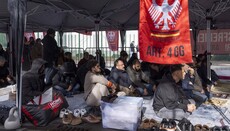
A German court has recognized street prayers outside a closed mosque in Frankfurt am Main as lawful, considering them a form of political protest.
On February 20, 2026, the Higher Administrative Court of the state of Hesse ruled that street prayers at the closed Imam Ali Mosque in Frankfurt am Main, previously discontinued in connection with an investigation into its network's ties to Hezbollah, fall under the protection of freedom of assembly guaranteed by the Basic Law of the Federal Republic of Germany, reports NIUS.
The court concluded that the weekly actions taking place on Thursdays and Fridays in the Rödelheim district are a form of public expression of position. According to the court's assessment, they carry a political message – a demand to allow the use of the mosque – and therefore qualify as assemblies, even if they take the form of religious rituals.

City authorities attempted to ban these events, claiming that they were primarily about religious services rather than protests, and therefore had no place on public roads. However, the court rejected this argument and obligated the municipality to consider the need for street closures and traffic route adjustments until 2026.
The protests began after Germany's Ministry of the Interior banned the activities of the Islamic Center of Hamburg in July 2024, calling it an extremist structure linked to Hezbollah. Following this, the Imam Ali Mosque in Frankfurt was also closed, as its operator belonged to the same network.
Despite the organization's ban, former parishioners continue to gather under the slogan of defending freedom of religion. The court emphasized that the right to peaceful assembly extends even to persons associated with banned organizations, if the actions themselves do not violate the law.
Earlier, the UOJ wrote that German authorities congratulated Muslims on Ramadan.