
On Budanov's statement regarding UOC
For Yelensky and his the State Service of Ukraine for Ethnic Affairs and Freedom of Conscience (DESS), Budanov's statement was very untimely.
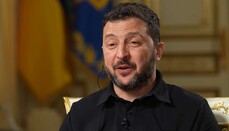
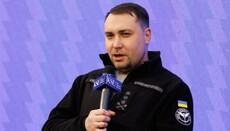
The OP chief Kyrylo Budanov, at a meeting with journalists, stated that the UOC cannot be called the "Moscow Patriarchate," and that pressure in the spiritual field is unacceptable. These words might seem like a Captain Obvious-style remark, but in today's Ukraine they had an effect of a bombshell. The video with Budanov was massively reposted on social networks by both supporters of the UOC and its opponents. In the first camp – restrained optimism, in the second – indignation. Moreover, UOC haters are raising quite reasonable questions: if the UOC has no ties to Moscow, then what is the value of the “studies” by the State Ethnopolitics Service, in which such ties were allegedly discovered? Who is lying – Budanov or Yelensky? How should we now regard Zelensky's statements about "spiritual occupation," about the “UOC being controlled by Russian special services,” and other streams of consciousness?
It turns out that because of a few phrases from a top official, the entire false construction on which the authorities and "patriots" have been building their campaign of persecution against the UOC in recent years suddenly began to fall apart.
And now a large-scale wave of court proceedings is unfolding to ban the governing structures and monasteries of the UOC. For Yelensky and his State Ethnopolitics Service, Budanov's statement came at a very inopportune time: it will now be much more difficult to convince judges of their case.
At first glance, the words of the OP head seem unexpected, but in essence they merely state the obvious: the "witch hunt" staged in the 21st century in the very center of Europe cannot last forever.
Of course, this is not even the beginning of the state's return to democratic norms in relation to its own citizens, but it is the first serious wake-up call.