
St. Athanasius the Seated – a Greek on the throne of Mhar Hill
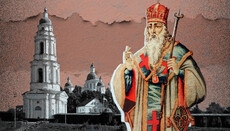
Three hundred and seventy years ago, the Patriarch of Constantinople sat on a stone throne in a Poltava crypt and has not risen since.
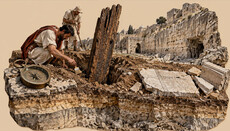
Early February 1662 hangs over the Sula region. In the Transfiguration Church of the Mhar Monastery, monks are dismantling a stone masonry wall beneath the ambo before the Royal Doors. For eight years now, the tomb of the Patriarch of Constantinople has rested beneath it. Metropolitan Paisios (Ligarides) of Gaza has come to see the relics. He said that the saint himself had appeared to him in a dream and commanded him to dismantle the masonry. When the last slab is removed, the light of a vigil lamp spreads through the underground chamber.
Inside sits a man. He is clothed in full episcopal vestments, with a staff in his hand. Over the eight years in the damp earth, the wood of the chair has rotted away, and the silk of the vestment has decayed in places, yet the body remains exactly as it stood on the day of burial: incorrupt, except that on the right hand which holds the staff, two or three fingers are missing.
This is the peculiarity of the Eastern rite of burial: when you descend into an ordinary crypt, you look down – at the lying deceased. Here it is different. The living meets the deceased face to face, at the same level, like two interlocutors in a cold room.
A Greek from Crete and his last journey
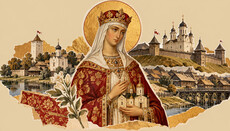
Alexios Patellarios was born around 1597 in the Cretan city of Rethymno, into a family related by marriage to the imperial Palaiologos dynasty. Later he would describe himself briefly and precisely: “I was a master of theology, mathematics, rhetoric, the much-laborious art of grammar, poetics, astrological wisdom, music, and other arts.”
The course of his life was as follows: a brilliant education, Mount Athos, where he received monastic tonsure with the name Athanasios, the See of Thessalonica, and finally the Patriarchal Throne of Constantinople in March 1634, on the very Day of the Annunciation.
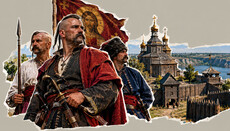
Then came Turkish pressure, deposition, escapes, exiles, and imprisonment in Thessalonica, where he sustained injuries that would later make themselves felt. The Pope of Rome offered him a cardinal’s hat in exchange for renouncing Orthodoxy but he refused. Again Athos, again Wallachia, again attempts to preserve the Constantinopolitan See devitalized by the Turks. On October 8, 1652, Saint Athanasios left Constantinople for the last time, stopping on the way to visit Bohdan Khmelnytsky in Chyhyryn. Half a year later he found himself in Moscow.
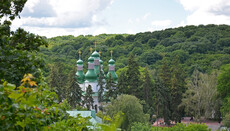
In April 1653, the hierarch met with Patriarch Nikon and Tsar Alexei Mikhailovich, bringing with him the order of the episcopal liturgy—the very one that would later come into common use. By December, he was already on his way back to Galați. February 1654 found him on the road in the midst of the spring thaw. His old wounds reopened, and his body began to swell. It was impossible to continue further, and the coachman was instructed to turn toward the gates of the Mhar Monastery, which stood above the Sula River on a wooded hill called Tabor by locals.
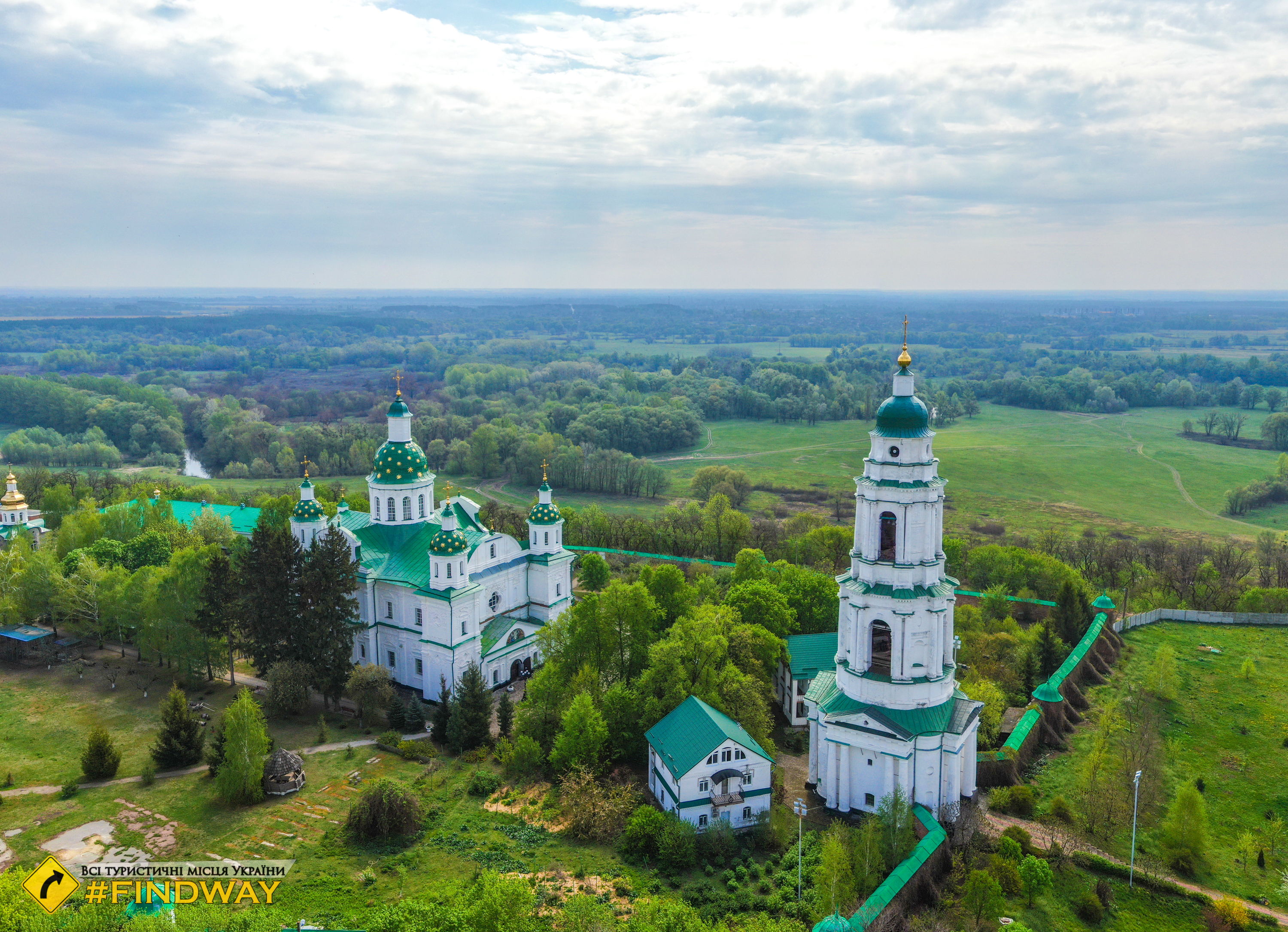
He reportedly said to Abbot Petronius: "I wish to end my days here." The Greek chose as his resting place a clay hillside above a Ukrainian river, in a land foreign to him, among people whose language he scarcely understood.
On April 5, on Wednesday of Thomas Week, Saint Athanasios departed to the Lord, in the words of a contemporary, "like a martyr, like a saint, giving his blessing to all Christians."
Eastern rite and stone throne
Abbot Petronios with the brotherhood buried the reposed according to the custom of Eastern patriarchs. The Byzantine rite prescribes that the deceased primate be placed in the earth sitting, in full vestments, with a staff in his right hand, just as during his lifetime he sat on the patriarchal high place during the reading of the Gospel.
The hierarch's body was seated in a chair: a mitre was placed on his head, a sakkos on his shoulders, a staff was placed in his hand. And together with the chair, the sitting patriarch was lowered into a stone tomb, carved in the floor of the church under the ambo – at the very Royal Doors.
To bury a person sitting, you need not a lying coffin but a vertical vaulted niche. And when they opened it eight years later, something happened that had never been seen in Ukrainian land: Bishop Athanasios appeared before the clergy sitting, like a ruling bishop.
2.jpeg)
Abbot Petronios instead of a tomb established a cathedra for the deceased saint. This has deep meaning: a bishop remains a bishop even after death – his ministry is not cut short, but continues before the Throne of God. This is precisely why the East buried its primates this way and not otherwise. The Poltava hill unexpectedly became a mooring for this tradition as if Byzantium had cast here, on the shore of the Sula, its last anchor.
How the throne went to Kharkiv
Since 1662, people have been coming to the Mhar Monastery en masse. Koshevyi Ivan Sirko's wife, who was seriously ill, also traveled there and received healing. A silver reliquary, weighing four poods and ten pounds, was cast to contain the chair with the holy relics. Across the Sula region spread the fame of the "seated" hierarch. The saint came to be known as the Wonderworker of Lubny.
And then came the year 1922. People’s Commissar Sereda traveled from Kharkiv to Lubny with a letter from Petrovsky and an order to confiscate the silver reliquary. The population of the Poltava region surrounded the monastery in a living ring numbering in the tens of thousands. The Divine Liturgy continued around the clock, with priests relieving one another every three or four hours.
The authorities concentrated up to three thousand soldiers around Mhar Hill and began military exercises with machine guns and artillery. The crowd could not be dispersed either by shouts of "Hurrah!" or by military maneuvers – only the beginning of the harvest campaign finally drew the people away from the monastery walls.
The monks themselves placed the saint's relics into a simple wooden coffin. The reliquary was taken to Kharkiv as scrap metal. Later, the relics of Patriarch Athanasios himself were also transferred to the museum. Only in 1948, through the initiative of Archbishop Stefan (Protsenko), was the shrine returned from the museum storeroom to the church. The relics of the saint were placed on an elevated platform in the right, southern side chapel of the Annunciation Cathedral, and once again seated upon a throne.
Since then, he has remained seated there continuously. In a metropolis, just a few dozen kilometers from the line of combat contact, where strikes are currently taking place. A canopy is spread above him, and beneath him is a carved platform. His eyes are closed, the staff still firmly held in his hand. For three hundred and seventy years, the patriarch has held this staff. Over that time two empires have collapsed around him, four wars have passed, and twenty generations have changed. Yet the shrine has remained untouched, as has the faith of our people, which no trials can break.