
55 million believers, or how the 1937 census left the USSR at a dead end
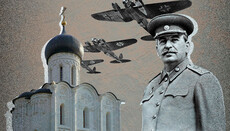
At the height of the Great Terror, more than fifty million people openly declared themselves believers. The figures so frightened the authorities that they were immediately classified for half a century.
In January 1937, somewhere deep in the Soviet countryside, a man with a folder approached a peasant hut. He was a census taker. In his hands was a questionnaire of fourteen items. Item five: “Religion.” This question had appeared in none of the previous Soviet censuses. It had been added to the form on Stalin’s personal instruction.
The woman standing in the doorway knew perfectly well that the priest in her village had already been arrested. That just yesterday, her neighbor had been shot for “counterrevolutionary agitation.” That rumors were spreading through the district: those who registered as believers would be exiled, and their children expelled from school.
And she answered: believer.
That same answer was given by 55.3 million citizens – 56.7 percent of all those over the age of sixteen who agreed to speak on the subject at all. A majority of the country. And this took place under the watchful eye of the NKVD. The results of the census proved so alarming that they were immediately classified.
The officials in charge of the census were branded “saboteurs” and shot. Ivan Kraval, head of the Central Administration of National Economic Accounting, was among the first. To understand what happened later, in 1943, one must remember this figure: fifty-five million. It explains almost everything that followed.
The plan to liquidate God
In 1932, the League of Militant Atheists, led by Yemelyan Yaroslavsky, launched the “Godless Five-Year Plan.” It was scheduled year by year, like an ordinary industrial construction project. By May 1937, not a single functioning church was to remain anywhere in the Soviet Union.
The word “God” was to be erased from dictionaries. The very concept of a “believer” was to be wiped from the people’s memory – and the people themselves were being cleansed for that purpose: through NKVD cellars, execution grounds, and the camps of Kolyma. By the end of the five-year plan, the number of churches had fallen by 58 percent.
Thousands of priests had been shot, and tens of thousands had passed through the camps. By 1939, only a handful of hierarchs remained alive, free, and still in office. Which raises the question: why ask people at all whether they believed in God, if faith had supposedly already been ground into dust?
Faith is not a brick
The regime measured its victory in kilograms of confiscated Church books and acres of demolished walls. But faith, as it turned out, is not a brick. That failure was recorded in Kraval’s memorandum to Stalin.
The note claimed that “class-hostile elements” had supposedly “confused” the peasants. No one had confused anyone. People had simply answered the fifth question on the form truthfully.
And then came the war.
In its first months, it became clear that political instructors had no answer to the main question of a soldier freezing in a trench: what is worth dying for, if there is nothing after death?
Atheism may sound as scientifically convincing as it likes in a warm classroom. On the front line, it evaporates in a minute.
Rings turned into armor
In December 1942, the locum tenens of the patriarchal throne, Metropolitan Sergiy (Stragorodsky), appealed to believers to raise funds for a tank column named after the holy Prince Dmitry Donskoy. The regime that had planned to erase the Church from the face of the earth opened a special State Bank account for the purpose.
The results of the campaign were astonishing. By the end of the collection, more than eight million rubles had been raised – enough for forty tanks that would later take part in battle.
Money came from everywhere. In besieged Leningrad alone, where people were dying of hunger, believers collected one million rubles.
In the occupied territories, where the Germans punished church collections with death, Priest Fyodor Puzanov, in the Pskov village of Brodovichi-Zapolye, gathered an entire sack of gold coins and church valuables. People brought wedding rings, earrings, icon covers from their homes – even watches inherited from grandfathers.
Among the donors were the very people whom Soviet power had only yesterday been imprisoning under charges of “anti-Soviet agitation.” In effect, they were saving the country that had been destroying them.
The night of September 4
By 1943, Stalin understood: without the Church, the war could not be brought to an end. His reasoning was brutally pragmatic. The army needed meaning – something no political officer could provide. And the Allies in London and Washington needed to be shown that all was well with freedom of religion in the Soviet Union.
On September 4, 1943, Karpov – the same state security colonel who had previously headed the NKGB department for “combating churchmen” – phoned Metropolitan Sergiy from Stalin’s office. Two hours later, three hierarchs entered the Kremlin.
They were the locum tenens himself, Sergiy; Metropolitan Alexiy (Simansky) of Leningrad, who had come from the besieged city; and Metropolitan Nikolay (Yarushevich) of Kyiv and Galicia. All three had survived almost by miracle. Alexiy was sixty-five. Sergiy was seventy-six. By that point, only four ruling bishops remained at liberty in the entire country.
The awkward question of personnel
Molotov opened the conversation: the government wished to know the needs of the Church. Metropolitan Sergiy, restrained at first, gradually began to say what he had been brought there to say. A Council of Bishops had to be convened, and a Patriarch had to be elected – the office had been vacant for eighteen years. Churches and theological schools had to be opened – the Church had been left without priests.
Stalin looked the metropolitans straight in the eye and asked: “And why do you have no personnel?”
Metropolitans Alexiy and Nikolay remained silent. Everyone knew why. The “personnel” were in the camps and under the soil of the Butovo firing range – by order of the man now asking the question.
Metropolitan Sergiy did not flinch. He answered calmly: “We train one, and two leave us.”
Stalin listened. Then he smiled and said, speaking of the timing of the Council: “Couldn’t you proceed at Bolshevik speed?”
Four days later, on September 8, 1943, the Council of Bishops elected Metropolitan Sergiy Patriarch of Moscow and All Russia. Seminaries and churches began to open. Some of the surviving priests returned from the camps.
The victory of silent faith
What was this? Certainly not “the conversion of a tyrant,” and not “a revival of faith in the Kremlin.” Stalin remained Stalin, and immediately after the war a new wave of pressure against the Church would begin, followed by another in the late 1940s. What happened in 1943 was something else: a forced recognition that the Church was necessary in the struggle against the external enemy.
The regime, with its tanks and camps, admitted that without the bled-white Church it could not cope.
But it was not the Church that won then.
It was that woman from the village who won – the woman who answered “believer” in January 1937, knowing that the word could cost her her home.
And with her, the widow who gave her husband’s wedding ring for the tanks, though he had been killed for the faith in 1938. And the soldier in the trench who remembered how to make the sign of the cross.
There were more of them than all the Politburo resolutions put together.
States come and go. Signs, flags, and ideologies change. The most powerful repressive system of the twentieth century seriously planned to close the last church by 1937 – and broke its teeth on the brave answer believers gave to the fifth item of a census form.
Archimandrite John (Krestiankin), who himself endured torture and camps, would later say it all in a single sentence:
“They closed churches on earth – and opened them in heaven.”