
The disease of our century in Andersen's fairy tale
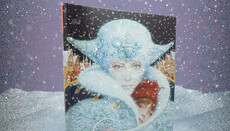
The version of the fairy tale we remember from childhood is abridged. In the original, Gerda defeats evil with the Lord’s Prayer, and angels appear from her breath in the frost.
When you open the old fairy tale "The Snow Queen" after many years, the text sounds different. In childhood, we saw a story with a happy ending about a girl who travels north in search of her foster brother. You reread it now and catch yourself thinking: before us is a very attentive look at what is happening to people today.
The optics of distortion
The fairy tale begins with a cruel experiment. A troll creates a mirror with a terrifying property: everything beautiful and good appears tiny in it, while everything bad comes to the forefront. The face of an ordinary person becomes distorted beyond recognition, a rose looks crooked, and the blue sky takes on an earthy hue.
The troll's pupils rush around the world with this toy. They lift it higher and higher, the mirror trembles, breaks free from their hands and shatters into millions of tiny fragments. Glass dust settles in people's eyes and hearts. A person with a fragment in their eye continues to live their usual life. It's just that now they suspect hidden self-interest behind every smile, see only deception and filth around them. For the one whose heart was pierced by glass, cold settles inside.
Andersen wrote this book in 1844. But the author described the distortion of the soul inherent in humans with striking accuracy. We carry the troll's mirror with us every day.
Perfect hexagons
What happens to Kai after the fragment hits him? His intellect does not disappear anywhere. If anything, the boy becomes extremely sharp-witted.
He mimics the neighbor, copying her gait, makes caustic jokes about his grandmother. The roses in the box on the roof, which they had cared for so tenderly, suddenly seem lopsided to him. But snowflakes under a magnifying glass fill him with delight: perfect symmetry in flawless hexagons.
Kai is very much like a person who has felt superiority over others for the first time.
Until this moment he was a simple child who knew how to love. Now he has mastered a new skill: noticing others' flaws and ridiculing them. This flatters his self-esteem.
Philosopher Søren Kierkegaard lived at the same time as Hans Christian Andersen. In his diaries he mentioned: cold reason that analyzes everything, puts everything in its place and at the same time loves absolutely no one. This is an exact portrait of Kai. And a portrait of many intelligent people of our time. They can masterfully explain the meaninglessness of everything around them. They suffer from this, although they take their suffering as a sign of high intelligence.
Icy anesthesia
The Snow Queen comes for Kai. She takes him away voluntarily, kissing him goodbye to his former life. The first kiss removes the cold. Kai sits in the ice sleigh in a light jacket and no longer freezes. The second kiss erases memory. The third could be fatal, and the Queen stops.
A very precise observation about the nature of cynicism is hidden here. Cynicism is rarely a conscious form of armor. More often, it is that very kiss that takes away one’s sensitivity to the cold. An ironic detachment in response to someone else’s pain often serves as nothing more than anesthesia. That is how a wounded person protects themselves from new blows. Feeling nothing is always safer.
But along with anesthesia, warmth disappears. The cynic really no longer suffers, because life inside them is simply turned off.
The erased miracle
We come to the scene that was often radically censored in Soviet editions of the book. In the original translation by the spouses Anna and Peter Hansen, Gerda approaches the ice palace barefoot. She walks through the snow, and the vanguard of the Queen’s army advances toward her: monstrous snow hedgehogs, many-headed serpents, giant bearsб etc. The girl falls to her knees in a snowdrift and recites the Lord’s Prayer.
From her hot breath in the frost, thick vapor rises. Andersen writes that figures begin to form out of this vapor. First small, then they grow, helmets and spears appear. Gerda continues to pray, and around her grows a legion of angels. They lift the snow monsters on their spears, clearing the way.
Gerda breaks through to the castle with the help of breath that becomes vapor in the frost, gaining strength through prayer.
In adapted editions, this scene was often shortened to one sentence: Gerda bravely walked forward and reached the palace. Where the courage came from and how she passed the monsters was omitted.
The gift of tears
In the castle, Kay sits on the icy floor. He is trying to form the word “eternity” out of icy pieces. For this, he is promised the whole world and a pair of new skates. The ice slips and refuses to hold together. This is a very recognizable scene: an attempt to assemble immortality on one’s own, relying solely on one’s intellect. In Christianity, however, eternity comes as a gift.
Finally, Gerda finds Kai, embraces him and cries. Her tears fall on his chest, penetrate inside and melt his heart. They wash away the tormenting fragment. Kai cries himself for the first time in a long while. And with his tears, the second piece of the crooked mirror comes out of his eye.
Finally, Kai and Gerda stand in the middle of the empty castle and sing a psalm: "Roses bloom – beauty, splendor! Soon we shall see the Christ Child!"
At this moment the unyielding pieces of ice on the floor arrange themselves into the word "eternity." The boy is free. He was saved by the mere ability to cry. The gift of tears in asceticism is considered a sign of a revived heart – a sign that the icy crust has cracked.
In the finale, the children return home and see their grandmother. She is warming herself in the sunlight and reading a book. Andersen explicitly writes: the Gospel. In retellings, this word was also often replaced.
The pain of thawing
Andersen took a very close look at a modern illness of perception. It is a state in which a person goes to work, makes witty jokes, buys things but remains inwardly frozen.
The recipe for healing the soul is left by the author right here. Magic spells are destroyed by prayer, tears and the living hands of a person who reached out to embrace the sufferer.
The mirror fragment sooner or later begins to come out of our soul. When the ice in the chest thaws, it can be very painful. But this pain is a sign that the heart can feel again.