
The draughtsman who invented the Grail

Secret dossiers in the National Library of France, descendants of Christ, Leonardo’s codes – the mythology was born in an apartment in the French provinces and ended with a sworn confession.
In modern escape rooms, everything is fairly simple: you pay to enter, you are locked in a room, and you have an hour to find the key among carefully arranged props. People leave with the feeling that they have touched a mystery. But the largest illusion of this kind was launched in 1956 by a French draughtsman. And many people still refuse to admit that it was merely the mental game of one man, preferring instead to believe in a global conspiracy.
What the draughtsman registered
The historical facts look rather prosaic. May 1956. The small town of Annemasse, near the Swiss border. Pierre Plantard, thirty-six years old, a draughtsman by profession and a man with a fraud conviction, arrives at the local subprefecture. He brings the charter of a new public organization.
That document still lies quietly in the municipal archives. The organization’s purpose is stated dryly: “the defense of the rights and freedoms of affordable housing.”
In modern terms, it was an association of apartment-block tenants planning to fight developers and resolve communal problems. It even had its own printed outlet – the bulletin Circuit, which mostly criticized the local mayor and complained about prices.
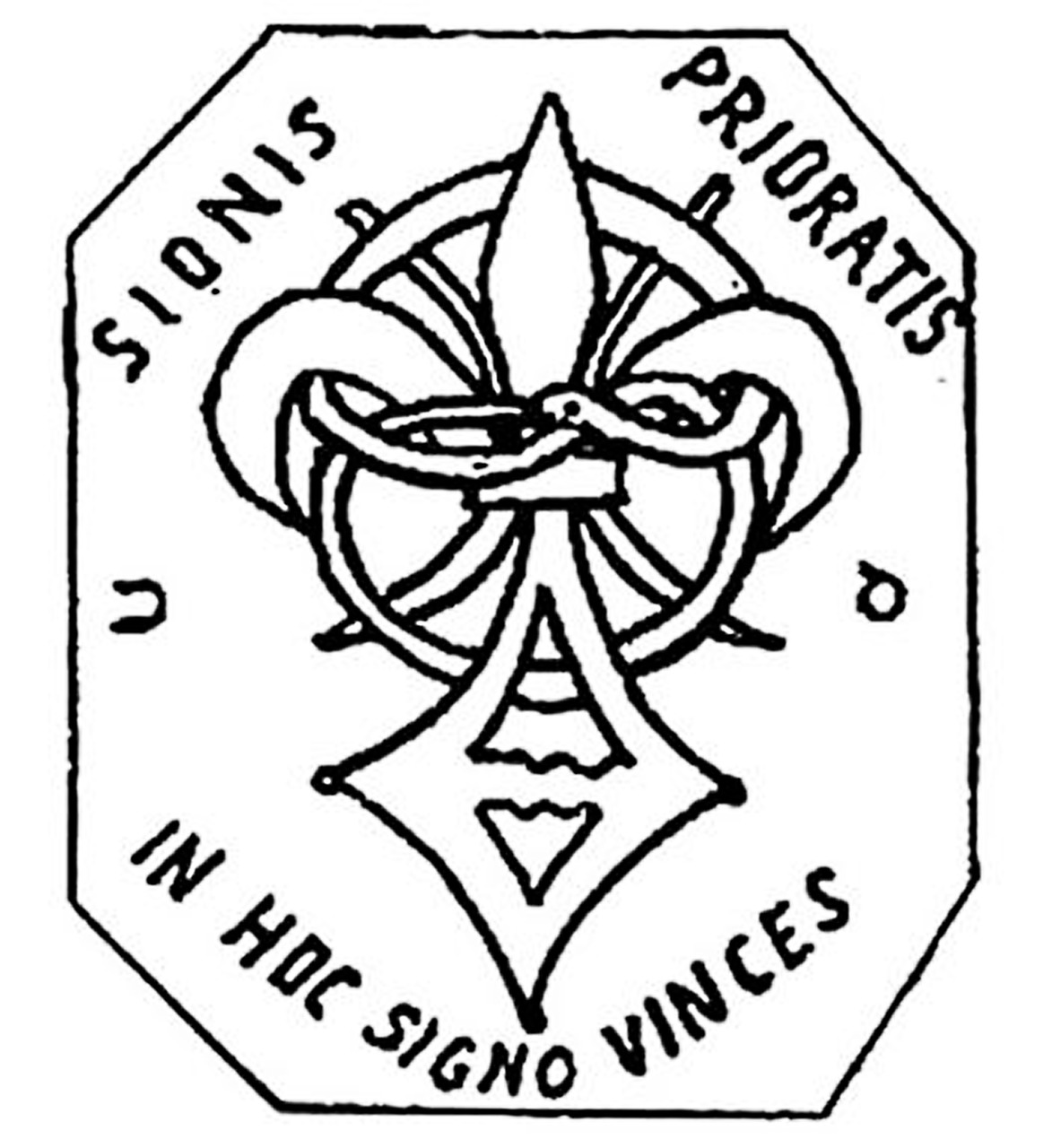
The founders chose a grand name: Prieuré de Sion, the Priory of Sion. It had nothing to do with biblical Jerusalem. Sion was the name of a hill south of Annemasse where the activists wanted to go on picnics. To make it sound more impressive, they added the acronym CIRCUIT, which they decoded as “Chivalry of Catholic Institutions and Rules.”
On paper, it looked like a stern order. In reality, it was a neighborhood committee.
By the end of the year, the association had stopped meeting and fell apart. That is the entire historically verifiable biography of the Priory of Sion.
The folders that never existed
In the 1960s, Plantard realized that this forgotten name could be given a new biography. At first, he fantasized cautiously; then the scale grew. A legend appeared claiming that the Priory had been founded by the crusader Godfrey of Bouillon in 1099. Supposedly, the organization preserved the secret of Christ’s descendants through Mary Magdalene – the Merovingian dynasty. And Plantard himself, by this logic, was the direct heir to the French throne.
To give the story weight, Plantard and several acquaintances printed fake genealogical trees and lists of grand masters. Leonardo da Vinci, Isaac Newton, and Victor Hugo all appeared in them. Then these papers were deposited in the National Library of France.
The library staff did exactly what procedure required: they accepted the printed materials, assigned them catalogue numbers, and placed them on a shelf. That is how the famous “Secret Dossiers of Henri Lobineau” appeared in a state repository. The sleight of hand lay in the very mechanics of working with information. Now any journalist or writer could refer to “a document from the National Archives.” The library did not conduct a historical examination; it merely preserved paper. But to the public, the very reference to a prestigious institution sounded like absolute proof of authenticity.
The famous reinterpretation of the Holy Grail rests on the same mechanism. Popular literature often claims that the Old French Sangréal, “Holy Grail,” should be read with a different space: Sang réal – “royal blood.”
From this linguistic shift comes the conclusion that the Grail is not a cup, but a genealogical line of Christ’s descendants.
The idea seems convincing only until medievalists point out that in medieval manuscripts, words were often written without spaces at all. Text ran in an unbroken stream. From such a line, one can extract almost any meaning simply by moving an imaginary space wherever the task requires.
The draughtsman in court
The end of this mystification proved strikingly mundane. In 1989, Plantard published yet another list of Priory masters. This time he included Roger-Patrice Pelat. Plantard had simply seen a prominent name in the press and decided to use it. What he failed to consider was that Pelat had been a friend of President Mitterrand and a figure in a major corruption investigation.
In 1993, investigating judge Thierry Jean-Pierre, who was handling the Pelat case, noticed the publication. The judge became interested in why the late businessman appeared in the lists of some secret order. Plantard’s home was searched. No documents related to the economic case were found there; instead, police discovered piles of homemade parchments proclaiming the draughtsman king of France.
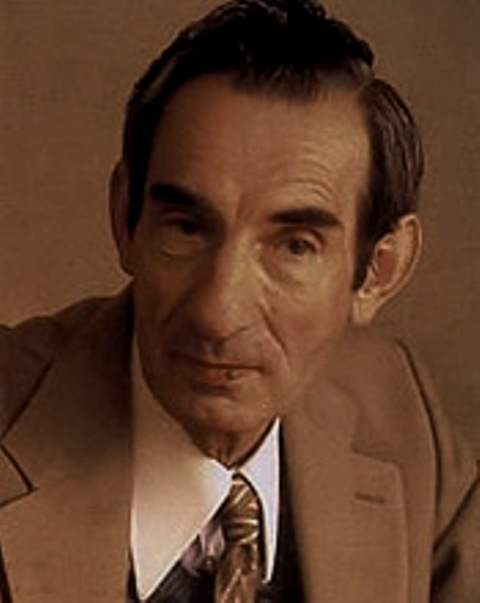
Under oath, the seventy-three-year-old Plantard confessed everything. The Priory, the masters, the genealogies, the crusaders – all of it was invented from beginning to end. The judge regarded him as a harmless fantasist and closed the case. Plantard died quietly in Paris in 2000.
But the mechanism of deception he had set in motion had already taken on a life of its own. In 2003, an American novel appeared through which millions of people learned the “truth” about the Priory of Sion – although the author of the myth himself had given full confessional testimony in court ten years earlier.
Gnosis as an escape from the Cross
Here it is worth pausing. Modern man is often skeptical of the Gospel, yet ready to believe in papers slipped into a Paris library. Beneath this trust lies a deep psychological need for comfort.
As early as the second century, the Gnostics appeared – those who sought salvation through “gnosis,” secret knowledge. Their teaching offered a convenient path: there was no need to repent, no need to overcome one’s own egoism, no need to change one’s life. It was enough to possess the password. If you knew the hidden code, you belonged to the elect.
St. Irenaeus of Lyons opposed this teaching even then. He began his vast work by quoting the Apostle Paul, who warned against myths and endless genealogies that produce nothing but disputes. Irenaeus showed that Christian truth is intentionally public. The Gospel speaks plainly of God, Who became man, was crucified, and rose again. There is no encrypted scheme here for a narrow circle of initiates. But for those seeking elitism, this transparency feels inconvenient. They need complex systems that give them a sense of intellectual superiority. Possession of a secret always flatters pride.
Centuries passed between the writings of Irenaeus and Plantard’s confession, but the motive remained the same. A worldview in which everything is controlled by a secret order is, paradoxically, comforting.
If the world has hidden masters and they have a clear plan, then the personal responsibility of an ordinary person for the evil is reduced to a minimum.
It is much harder to accept that history has no secret puppeteers. The Lord does not demand that we solve historical codes. He asks a direct question: how will a person build his life from this point onward, knowing of the blood He shed?
The search for Merovingian descendants saves one from having to answer that question. Studying fake archives becomes an excellent alibi for not noticing one’s own deeds. The truth of the Gospel is open. To draw near to it, one need not search for secret dossiers, but do concrete things: forgive enemies, give alms, speak the truth. For many, that test proves far more difficult than solving a historical cipher.