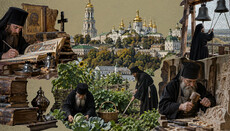

Stories of the early Church: the clergy's life in the 4th-9th centuries
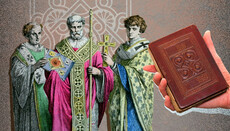
During this time, the Church transforms from persecuted to state-backed, which leaves its mark on the education, morality, and material provision of the clergy.
During the 4th century, the position of Christian clergy changed fundamentally. The Edict of Milan in 313 established the legal existence of Christians in the empire, gave Christians the right to freely profess their faith, and returned church property that had been confiscated during persecutions. And after the Edict of Theodosius in 380, so-called “Nicene Christianity” became the state religion of the Roman Empire, while other religions and denominations are subjected to varying degrees of pressure.
If in the first three centuries bishops, presbyters, and deacons were primarily representatives of the community itself, carrying out certain ministries on its behalf and dependent on it, in the following centuries the clergy became set apart from the laity and ultimately turned into a distinct, rather closed estate.
It acquired its own rights, privileges, and system of internal discipline. Bishops became not only leaders of church assemblies, but also prominent figures in public and state life.
New opportunities opened before the clergy, but with them came new temptations. It was precisely in this era that it became especially clear that the growth of the Church's external power did not mean automatic growth in education, moral stature, and selflessness among its ministers. Rather the opposite.
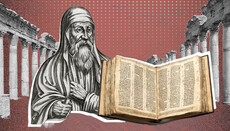
The crisis of theological education in the early Middle Ages
The 4th century gave the Church outstanding fathers and teachers: the great Cappadocians – Basil the Great, Gregory the Theologian and Gregory of Nyssa, John Chrysostom, Ambrose of Milan, Jerome of Stridon and others. Neither before nor after in Church history was there such a time when so many great theologians lived in one century. But alas, these few famous names mark the end of educated pastors. In the centuries that follow, the level of education in the Church declined significantly.
After the legalization of the Church, its numbers grew rapidly, and therefore the need for clergy also rose sharply. Accordingly, the quality of theological education was bound to decline.
The requirements for candidates for holy orders in this respect were fairly modest. The Council of Carthage in 397 required that a candidate for the episcopate be examined to see whether “he is sufficiently literate, capable of teaching, and correctly understands the dogmas of the faith.” The Seventh Ecumenical Council (787) required that a bishop know the Psalter well and be able to read the Scriptures and the canons “with understanding,” that is, at least grasp the meaning of what is written.
Clerics could obtain serious education in two ways: first, by getting into one of the very few Christian theological schools. The previous publication mentioned the Alexandrian and Antiochian schools that arose in the 3rd century. In the 4th century, the so-called Edessa-Nisibis school was added to them, which enjoyed such fame that "young men from East and West hurried here for education." The most famous teacher in this school was Ephrem the Syrian.
The second path was to study at one of the pagan philosophical and rhetorical schools, of which there were many at the time. For example, Basil the Great and John Chrysostom studied at the famous school of the rhetorician Libanius. Libanius even saw John Chrysostom as his successor and said, “The Christians have stolen John from us.” In such schools studied Gregory of Nazianzus, Jerome of Stridon, Augustine of Hippo, and many others.
Basic education at that time was also obtained in two ways. One was not even through schools, but small circles organized by the most zealous bishops and priests. The level of education in them varied greatly. The Council in Trullo (692) made it a duty for priests to teach literacy to their parishioners. The second path was to acquire basic literacy in monasteries. At the same time, many prominent church fathers considered monks poorly suited for pastoral work in the world. For example, John Chrysostom wrote: “He who has been accustomed to ease and to freedom from all cares, even though he may be endowed with great natural abilities, will nevertheless, through his complete inexperience in the labors of the priesthood, necessarily be filled with confusion and dismay. … Moreover, he needs knowledge of public and secular life, which monks do not possess.”
In general, the state of pastoral education at that time was quite deplorable.
Most of clerics were barely literate. Chrysostom wrote: "They ordain some ignoramuses as priests." Moreover, the situation in the West was even worse than in the East. Many pastors actually took pride in their illiteracy. Jerome of Stridon noted that such priests "considered themselves holy because they knew nothing."
The decline in morals and flourishing of simony among the clergy
The moral picture of the clergy from the 4th-9th centuries was very ambiguous. On the one hand, there were pastors in the Church who led truly holy lives. St. Augustine wrote at the end of the 4th and beginning of the 5th century that he knew “very many worthy men” not only among bishops, but also among presbyters and deacons. The pagan historian Ammianus Marcellinus (4th century) praised some bishops and clerics for their simple and modest way of life.
A few examples: Basil the Great (c. 330–379) became the “savior of the poor” during a famine and organized extensive aid for those in need. Martin of Tours (c. 316–397) shared his last garments with beggars. John the Almsgiver, the Patriarch of Alexandria (early 7th century), compiled a list of more than seven thousand poor people and fed them from church funds. The mercy and righteousness of Nicholas of Myra and Spyridon of Trimythous are well known to all.
But there was also a completely different reality. Often pastors of this period provoked "many and strong reproaches for their behavior."
Denunciations of the moral decline of clerics are found in practically all outstanding hierarchs of that time and in the acts of all ecumenical councils. Here, for example, is how Gregory the Theologian writes about this with sarcasm: "Yesterday you were still in the theatre among the comedians, and what you did after the theatre is not fitting for me to speak of; but now you are presenting an entirely new comedy yourself. Recently you were a lover of horses and raised dust to the sky as others do prayers and pious thoughts, and now you are so humble and look so bashful, although perhaps in secret you are returning again to your former ways." St. Jerome said the same thing in the West: "Yesterday he was a catechumen, and today – a high priest; yesterday in the amphitheater, and today in the church."
The reason for this, as already mentioned above, was that the sharp increase in the number of nominal Christians in the 4th century required a correspondingly sharp increase in the clergy. Church historian A. Lebedev writes: "In general, any rabble was admitted to the clergy simply because, speaking in the language of modern political economy, the demand for priests exceeded the supply." John Chrysostom explained church disorders in much the same way: "Church disorders crept in from nothing other than the fact that leaders are chosen without due examination, in a haphazard manner.” He also noted that bishops were often appointed to unworthy priests at the request of wealthy parishioners or officials. In particular, he mentions that “noble ladies” often asked for their favorites to be made priests. Basil the Great testifies that the clergy pushed their own sons or relatives into the clerical ranks, regardless of their moral character or willingness to serve the Church. This greatly contributed to the transformation of the clergy into a closed corporation, where church offices were often passed down hereditarily within a circle of “insiders.”
But even in the following centuries, when the problem of clergy shortage had already been resolved, the morality of the clergy still came under serious and justified criticism. One can only imagine how far things had gone if the Council in Trullo (692) issued specific canons prohibiting clerics from keeping taverns (i.e. from intoxicating their flock), engaging in usury, and even from “acquiring and keeping harlots.” Just think of it! A priest could simultaneously be a pimp and the keeper of a brothel. And these were by no means isolated cases, since combating them required a special decision of an Ecumenical Council.
But the most widespread evil in the Church is greed, abuse of power, and simony (ordination to holy orders for money).
The Seventh Ecumenical Council (787) forbade bishops to extort gold and silver from subordinate clerics and monks. That is, this phenomenon took place throughout the entire period under consideration. The history of simony is generally interesting. The first case of simony is described in the Book of Acts, but subsequently simony continued to exist in one form or another. And after the Church became state-backed, it flourished. Initially, the hierarchy tried to fight it. For example, Canon 2 of the Fourth Ecumenical Council of Chalcedon (451) threatens deposition from clerical rank both for the person ordained for money and for the one who performed that ordination.
But over time, simony became so ingrained in church life that fighting it with prohibitions alone was no longer possible. In words it was still condemned, but in practice the authorities were forced not to eradicate the evil but to set limits on it.
This is precisely what the 123rd Novel of Emperor Justinian (6th century) looks like: on the one hand, it forbids the appointment of bishops “for a gift of gold or other property,” but on the other hand, it establishes permissible amounts of “customary” payments at ordination. In other words, the state effectively legalized what had long since become customary practice. But even this concession should be understood as an attempt to curb, at least to some extent, the greed of bishops and their entourage: at times the fees were so large that church communities, in order to ordain a cleric for themselves, often went into debt, and episcopal sees increasingly became objects of buying and selling.
In our view, everything said above is evidence that it is not beneficial for the Church to become a state institution or a socially dominant force. In such a case, it begins to live “according to the elemental principles of the world, and not according to Christ” (Col. 2:8). And “whoever wishes to be a friend of the world becomes an enemy of God” (James 4:4).
Sources of Church enrichment and the struggle for inheritance
In the 4th century, the material position of the clergy also changed dramatically. The Church as a whole began to grow rich rapidly. The sources of this wealth were as follows: first, the Church often received a significant portion of the property of closing pagan temples: buildings, land plots, and other assets. Second, opening parishes were usually provided by the state or their founders with means of subsistence. Most often these were land plots that brought a certain rent. Third, private donations. This was probably the most natural and most stable source of growth in church prosperity. Believers donated money, vessels, fabrics, houses, rural plots, vineyards, workshops, etc. These were not only donations for current needs, but various economic assets that were then rented out, cultivated, or brought natural income. Thus entire church economies gradually arose.
Fourth. Another source of income was spiritual wills. But here we encounter the most abuses. Often clerics ingratiated themselves with elderly people and under plausible pretexts persuaded them to leave their property to them. Many hierarchs condemned such a method of enrichment. Here, for example, is what Jerome of Stridon wrote: "With what effort is a vain inheritance obtained! Some clerics distinguish themselves by shameful servility toward childless old men and women. They themselves bring the chamber pot, sit by the bedside, take into their hands stomach vomit and lung phlegm. Any improvement in the patient’s condition drives them into secret despair, while the approach of the end – that is, death – fills their hearts with joy." But not only childless elderly people were persuaded by such clerics to bequeath their inheritance to them. Often this happened bypassing direct heirs. And hierarchs also denounced this. For example, Augustine of Hippo wrote: “Whoever, by disinheriting his own son, wishes to make the Church his heir, may look for someone else who would accept such an inheritance, but do not count on Augustine.”
Fifth, payment for church services and sacraments. This source of income already bordered on simony. It was also regarded as quite reprehensible, but nevertheless very widespread. The Church both fought against it and tried to regulate it within certain limits. For example, the Council of Elvira (early 4th century) forbade taking money for baptism, while the Council in Trullo (692) stated: “No bishop, presbyter, or deacon, while administering the Most Pure Communion, shall demand any payment from the communicant,” because “grace is not for sale.” However, for example, Pope Gelasius I of Rome (492–496) insisted that those wishing to be baptized should not be subjected to any “excessive restrictions” and should not be required to make “excessive payments.” In other words, he allowed the collection of “moderate payments.”
Also during this period, the state provided the clergy with various benefits and privileges regarding taxes, duties, and so on.
We still need to say a few words about how church income was distributed. The bishop continued to play the main role in this. But whereas in the early centuries church income was primarily allocated to the poor and those in need, later this group was pushed far down the list of priorities. Beginning in the 5th century, a rule took hold dividing church revenues into four parts: first for the bishop, then for the clergy, then for the upkeep of the church, and only lastly for the poor. Beginning in the 5th century, the rule of dividing church income into four parts was established: first to the bishop, then to the clergy, then for temple maintenance, and finally to the poor. Interestingly, such a distribution scheme was established in the West and gradually spread to the East. Under Emperor Justinian (6th century), this order was legalized: church money went primarily to support clerics, then to church needs, and only the remainder went to benefit the poor. Over time, support for the poor completely disappeared as a mandatory item of church expenses. A striking contrast with apostolic times!
The history of the clergy in the 4th–9th centuries shows a simple but important thing: the external triumph of the Church does not yet mean its internal flourishing.
Having gained freedom, influence, and wealth, the Church faced the fact that its ministers increasingly began to live not according to the Gospel, but according to the laws of this world. Yet at the same time, alongside greed, careerism, and spiritual decline, examples of genuine holiness continued to shine in this period. This means that Christ’s words that “the gates of Hades will not prevail” against the Church (Matt. 16:18) were fulfilled in this period, as in all other times.
In the following publications on the history of the early Church, we will show the development of the administrative system of Church governance in the first millennium.