
Donatism: How the thirst for an ideal Church turned faith into a battlefield
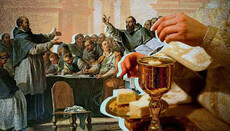
After the persecutions of Diocletian, the Church of North Africa was torn apart by schism. The heroes could not forgive the weak, and their struggle for “purity” ended in social upheaval and violence.
In 311, Emperor Galerius signed the Edict of Toleration. The Roman state machine, which for decades had labored to destroy Christianity, admitted defeat. For the believers of North Africa, it was the day they emerged from the underground and from prison cells. Yet it was precisely at the moment when external pressure ceased that a deep internal fracture opened within the Christian communities.
In Carthage, a sweeping inquiry began. At its center stood the status of the traditores, from the Latin tradere, “to hand over.” This was the name given to clergy and laity who, during the persecutions, had surrendered sacred texts to state officials for burning. In the world of the fourth century, such an act was seen as capitulation before a pagan state.
The Catholic Church chose the path of disciplinary mercy: those who had stumbled could be restored to communion through repentance and penance. But the radical wing of African Christianity rebelled against this. In their eyes, a Church that received back “traitors” became an accomplice in their sin and forfeited the right to call itself holy.
Radical theology of the spotless
The movement was led by Donatus of Carthage. He was followed by people whose radicalism had been purchased with personal suffering. These were confessors who had endured torture and remained faithful to Scripture. Their wounds gave rise to an unforgiving logic: the personal holiness of the minister was the one indispensable condition for the validity of the Sacrament.
According to Donatist doctrine, grace ceases to act in the hands of an “unclean” priest. If a bishop had once shown weakness, then the ordinations and baptisms he performed were to be declared invalid.
That turned the life of the community into an unending investigation of spiritual pedigrees. Every believer had to make sure that the chain of succession leading to his pastor had never, at any point, been touched by “traitors.”
Rebaptism became mandatory. When Donatists seized basilicas, they carried out a physical purification of the space itself: walls were washed with seawater, wooden altars were scraped clean. Donatism longed to create a “Church of the pure,” where the criterion of belonging was not faith in God, but an immaculate record from the years of persecution.
The case of the Apostle Peter
The chief intellectual opponent of the schism was Blessed Augustine of Hippo. In his polemic, he turned to the most famous example of failure in the history of the Church – the denial of the Apostle Peter.
On the night of Christ’s arrest, Peter said three times: “I do not know this Man” (Matt. 26:74). He broke under the questioning of a servant girl, showing cowardice. By Donatist logic, Peter had forever lost the right to minister. He ought to have been deposed, and all those he later baptized ought to have been rebaptized.
But Scripture bears witness to something else. The risen Christ asks Peter three times whether he loves Him, and restores him to apostolic dignity (John 21:15–17).
Augustine’s point was clear: the Church is not a society of people who have never fallen, but a community of those whom Christ has raised up and restored.
If God forgives the first of the Apostles, then the demands of the Donatists are not “purity,” but pride – pride that claims the right to stand above divine judgment.
Social protest under the sign of asceticism
By the middle of the fourth century, Donatism had ceased to be a purely theological dispute. Joining the movement were the Circumcellions, from the Latin circum cellas, “those who wander around the huts.” Modern historians view them not simply as religious radicals, but as a powerful movement of social protest.
The Circumcellions drew together Africa’s rural poor, ruined tenant farmers, and runaway slaves. They called themselves “soldiers of Christ,” but their struggle often took the form of attacks on estates and assaults on Catholic clergy.
Wielding heavy clubs as weapons, they demanded the cancellation of debts and the liberation of slaves, clothing their actions in the language of holy war against the “imperial” Church and an unjust social order.
Their radicalism went so far as to embrace a cult of suicide. In their thirst to win the title of “martyr,” they hurled themselves from cliffs or leapt into fires, convinced that such a death was the highest act of purification. This was the end point of Donatist logic: when the real world seems irredeemably “unclean,” asceticism turns into a hunger for destruction – of others, and at last of oneself.
The parable of the reapers: the verdict of history
The final theological answer to Donatism in Christian apologetics became the parable of the wheat and the tares, above all its central command: “Let both grow together until the harvest; and at harvest time I will say to the reapers, Gather the tares first and bind them in bundles to burn them, but gather the wheat into my barn” (Matt. 13:30).
Augustine showed that the right of final judgment and separation does not belong to man. The Church in history is a mixed body – corpus permixtum – in which holiness and frailty stand side by side until the end of time. Any attempt to tear out the tares before the appointed hour will inevitably destroy the wheat as well – love, mercy, and the life of the Church itself.
Donatism endured for about a century, gradually disintegrating into rival factions, each one claiming a monopoly on truth. The schism only finally faded in the seventh century, with the arrival of the Arab conquerors in North Africa. The history of the Donatists showed that the Church survives not through artificial sterility in its ranks, but through its power to receive back the fallen and restore them. And the craving for a perfect Church may end by killing the Church itself.