
Solovki 1926: How a prison barrack became the freest pulpit in the USSR
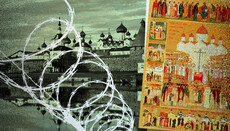
The OGPU gathered hierarchs on an island to decapitate the Church. But the secret police miscalculated: they themselves created the conditions for a council from which nothing could be taken away.
In the working files of the OGPU’s Sixth Department for 1926 (the OGPU (Joint State Political Directorate) and the NKVD (People’s Commissariat for Internal Affairs) were Soviet security agencies (1923–1934 and 1934–1946, respectively) responsible for state security, political repression, intelligence operations, and the suppression of counterrevolutionary activity – Ed.), the Russian Church appeared as a complex blueprint. In offices on Lubyanka Square, the head of the “church division,” Yevgeny Tuchkov, designed staff reshuffles, studied informants’ reports, and planned new arrests. It was a moment of total bureaucratic triumph: the system believed that through blackmail and exile it had complete control. The strategy was simple – fragment the hierarchy, pit bishops against one another, and turn the Church’s administrative apparatus into a compliant extension of the GPU.
At that very time, on the Solovki Islands, the largest group of bishops in the country was settling into cold plank bunks. While Lubyanka drafted its schemes of control on the mainland, something emerged on the island that Chekist logic had simply not anticipated.
It turned out that gathering all the “inconvenient” leaders in one place was not only a method of isolation – it was the creation of a unique intellectual headquarters.
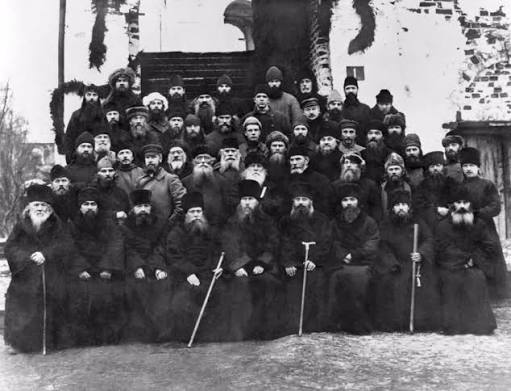
By concentrating the most active hierarchs in SLON – the Solovetsky Special Purpose Camp – the OGPU inadvertently gave them the opportunity for conciliar work. On the outside, any attempt by two or three bishops to meet and discuss Church affairs was immediately labeled a counterrevolutionary conspiracy and led to arrest. On Solovki, they were together twenty-four hours a day.
The camp administration itself, at the state’s expense, provided them with a platform for discussions that no search could suppress. The barrack became a council chamber; the forest work sites, a place for strategy. In Church history, this unique period would come to be known – unofficially but precisely – as the Solovki Council of Bishops.
The mechanics of pressure: when there is nothing left to lose
To understand where the repressive machine failed, one must look at how pressure worked on the mainland. In Moscow or provincial centers, investigators possessed an unlimited arsenal of leverage. The threat of closing a parish and leaving hundreds without the Liturgy. Deregistration, turning a priest into an outcast. Confiscation of housing, arrest of family members, exile of loved ones. This blackmail worked flawlessly – as long as a person had something to lose. A bishop in his see always carried “ballast”: responsibility for a diocese, a flock, personal comfort, the safety of subordinates. The fear of losing it made people pliable.
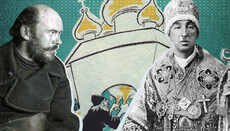
By the summer of 1926, the Solovki prisoners had already passed through every stage of dispossession. They had been stripped of civil rights, property, titles, and dioceses. Archbishop Hilarion (Troitsky) – the right hand of the late Patriarch Tikhon, a brilliant theologian and intellectual – wore a torn camp jacket, chopped wood, and mended fishing nets. To a camp guard, he was merely an inmate with a number, a man without weight.
And it was precisely at this point that the OGPU lost control.
When everything external has been taken from a person, what remains is conscience and faith. The only argument left to the authorities was physical violence – but in the coordinates of the Solovki hierarchs, death did not signify defeat.
On the contrary, it was the crown of their ministry. Blackmail ceased to function because there was nothing left to blackmail. The barrack became a territory of absolute freedom, where power could offer nothing attractive in exchange for a lie and could frighten them with nothing new.
A document written beneath the bunks
In May 1926, a group of bishops – their number fluctuating, but with a core of twenty to thirty – resolved to issue an open programmatic statement. The text that would later enter history as the “Memorandum of the Solovki Bishops” was composed in conditions of strict secrecy. It was written in pencil on scraps of paper, passed from bunk to bunk, revised in the brief intervals between exhausting labor.
At the same time, Yevgeny Tuchkov (the head of the so-called “church” – the 6th secret department of the OGPU – widely regarded as the chief architect of the destruction of the Russian Orthodox Church – Ed.) was attempting to impose on the Church a bargain modeled on the Renovationist schism: the state would grant legalization and return churches, but in exchange would gain the right to appoint bishops and directly dictate decisions of Church governance. In essence, it was a blueprint for the Church’s complete absorption into the state apparatus.
The hierarchs responded with a document impeccable in logic and in law.
They did not call for overthrowing the regime. They used no political slogans. They simply drew a line the authorities did not expect to see:
- Ideological honesty: the bishops stated plainly the “incompatibility” of Christianity and communism. They refused to reconcile the irreconcilable, declaring that the Church and Soviet ideology viewed man and the world from opposite poles.
- Legal argument: they demanded that the government abide by its own 1918 decree on the separation of Church and state. The logic was devastating: if you proclaim separation, why do you seek to control our appointments?
The authorities received a text that could not be framed as counterrevolution. It was a demand that the system obey its own laws. The bishops imposed their language on the OGPU, refusing the role of petitioners. They spoke not as prisoners to a camp начальник, but as a free Church to a state.
The authority of a prison coat
In those years, the voice of Solovki carried an almost magnetic weight within the Church. It was a strange moment: the official Church leadership in Moscow was under constant pressure and often forced into compromise. Yet when Metropolitan Sergius issued his Declaration of Loyalty in 1927, proclaiming that “the joys of the state are our joys,” believers across the country awaited the response not from the chancelleries, but from the imprisoned bishops.
The opinion of confessors in padded jackets mattered more than official documents stamped in synodal offices. It was a paradox: a man deprived of the right to correspond, stranded at the edge of the world, possessed a spiritual authority no GPU circular could silence.
Archbishop Hilarion himself, according to contemporaries, would say that the camp had become their finest theological academy. It stripped away bureaucratic dust, the clutter of offices, and the necessity of “diplomacy” with power.
On Solovki, the Church was cleansed of administrative varnish. What remained were shepherds and their personal fidelity. This restored to the episcopate an authority that cannot be conferred by appointment or title. They demonstrated that conciliarity is not the number of signatures under a protocol, but the ability of a group to stand in truth with one mind – even when that truth may cost them their lives.
A cold conclusion
The story of the Solovki Council is, in essence, a documentary record of how paper proved stronger than bars, and a pencil trace on a scrap more enduring than imperial designs. The OGPU had prisons, convoys, investigative departments, and an inexhaustible resource of violence. The bishops had only faith – and a courageous text hidden in the pocket of a prison jacket.
The authorities believed that isolation would destroy the community, forcing each person to save himself alone. In reality, it crystallized their position. The Memorandum became the foundation for the Church’s survival through the decades of underground existence and repression that followed.
The Soviet empire, with all its grand designs for reshaping the human soul, crumbled and passed into history. But the text written in a frozen barrack at the edge of the inhabited world endured. The Solovki bishops outplayed the system on its own field, proving that real power lies not in offices on Lubyanka Square, but in the ability to call things by their proper names – even under guard.