
Strategies for spiritual life in the Nativity Fast
Why are prayers alone not enough, and why does a diet not save? Let us compare fasting to war and to sport, learn from Venerable Paisios Velichkovsky, and consider how not to waste our strength.
We have set foot upon the grace-filled arena of the Nativity Fast. It is a special season – salvific, penitential. During these forty days every Christian will strive to fulfill the spiritual aims and tasks set before them.
But it is worth asking: what must happen within our soul so that this fast does not pass by without bringing us any benefit?
“Tell me how you fast…”
A familiar proverb says: “Tell me who your friend is, and I’ll tell you who you are.” If we give that saying a Christian form, it might sound like this: “Tell me how you fast – and I’ll tell you who you are.”
The way we spend the days of a fast reveals the quality of our entire spiritual life.
Sadly, many believers hold distorted notions. For some, fasting does not rise beyond the level of an ordinary diet for shedding extra weight. Others fast for show, thinking this will underline the “Orthodox” flavor of their lifestyle. Still others, especially zealous souls, burden themselves with excessive prayers or prostrations without calculating their strength.
A common problem lies here: people lose sight of the very meaning of fasting amid the multitude of outward rules. That is why it is so important to ask ourselves the “uncomfortable” questions:
- For what am I fasting?
- In what state of soul will I cross the finish line of the fast?
- What will I do to preserve my strength to the end, without squandering it on the trivial?
Only by answering these honestly can we avoid losing the precious time given to us for the perfection of the soul.
The spiritual gymnasium
The spiritual life can be compared to athletics. When a person wants to be strong, they build muscle and then fortify it with regular training. When we aim to fight against the passions, we use similar methods. A Christian develops the soul through prayer, strengthens it through fasting, and grows in virtue.
Virtue is always the fruit of faithfully passing through the arena of battle – against the evil world, against the flesh, and against the envy of the devil.
Fasting sets before us precisely such a task – to strengthen the powers of a soul exhausted under the weight of sorrows and daily anxieties.
The tactics of battle: generals and foot soldiers
Yet fasting is not only a spiritual gymnasium – it is also a field of real spiritual warfare. Here the laws of battle apply. Soldiers wage an intense struggle for a time, and then comes a pause – a needed quiet – when they rest while their generals consider the next strategic steps.
The same laws operate in the spiritual life. If we wage never-ending active combat, our strength will sooner or later be spent. We do not always need to swing the saber rashly. When the enemy withdraws or hides, sending “machine-gun volleys” of prayers and prostrations into the empty air can become nothing more than firing blindly.
This is not a call to laziness.
If we relax into sloth, the enemy will strike us unawares. But while remaining vigilant, we must at times pause and soberly assess our condition, acting as stern prosecutors rather than indulgent advocates of our own soul.
“Yes, today I judged those in authority, but I read all my prayer rule,” or “I shouted at my child, but I kept to dry eating – God will forgive me.” Such thoughts are from the evil one. A true fast is impossible without honest judgment of oneself. Progress comes only when we begin to accuse ourselves, not excuse ourselves.
A lesson from Venerable Paisios
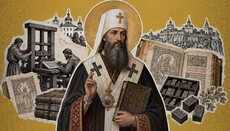
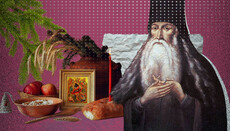
At the very beginning of the fast the Church sets before us a model of this spiritual strategy – Venerable Paisios Velichkovsky, whose feast we celebrated on November 28.
If one reads his life attentively, one sees a sorrowful picture reminiscent of our own time: moral decline, the fading of spiritual mentorship, persecutions against Orthodoxy.
Yet this Athonite ascetic, born in Poltava Province, not only preserved his faith – he multiplied it. He immersed himself in the writings of the Holy Fathers and restored on Mount Athos the forgotten tradition of the Jesus Prayer. The results came quickly: monks began to gather around him like fledglings gathering around a parent bird. If on Athos he assembled about fifty disciples, then in the Moldavian monastery of Neamț their number reached seven hundred.
Venerable Paisios showed that the world does not become better on its own. But if we ourselves change, if we strengthen ourselves by prayer and good deeds, we become those silent “Atlases” holding up the world upon our shoulders.
At the journey’s end
At first glance, the fast may seem long. Yet sooner than we expect, the Feast of the Nativity will be at the door. Then comes the moment to assess the path we have traveled. And naturally, we will lament that many plans did not come to fruition.
But if, with God’s help, we are able to bring to life even a portion of our intended goals, that alone will grant us spiritual profit.
During these days of the Nativity Fast, let us strive, even a little, to emulate Venerable Paisius and his disciples. Let us not grow despondent as we behold a world falling apart, but place our hope in the Lord. For such a fast, as Venerable Ephrem the Syrian says, “brings joy to our Lord, if only we fast with love, hope, and faith."