
Interview for UOJ with a former OCU cleric – key takeaways
The words of a former OCU cleric are valuable precisely because they offer an insider’s view, free of bias. How does the OCU live today, and how do its own clergy see its future?
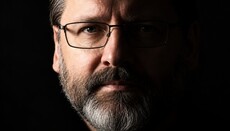
Yaroslav Yasenets, a former “priest” of the Kyiv Patriarchate and until recently of the OCU, gave an interview to UOJ in America in which he spoke about the internal situation in the OCU and the prospects of this religious organization. None of this is new – UOJ has long described these realities in news reports and analytical pieces. But the testimony of a former OCU cleric is especially important because, first, he knows the inner workings of the OCU from the inside, and second, he is immune to accusations of being “pro-Russian,” “unpatriotic,” and the like. Below we analyze only the most significant points of the interview.
The internal state of the OCU
According to Yaroslav Yasenets, it is dire: "We don't have enough priests. We have very few parishes. We don't have monasteries almost at all. Our level of education is very bad. We've lost the parishes that were abroad according to the Tomos of the Ecumenical Patriarch."
First, the former OCU priest pays special attention to the extremely low level of theological education among the OCU “clergy”: "Unfortunately many bishops don't have the proper education [...] This system needs servants loyal only to the administratvie hierarchy."
Another problem is that very few people actually want to become priests in the OCU – and those who do often have more pecuniary concerns. As he put it: “I believe that the problem is that very few people want to become priests in this church […] Many priests want to have a stable place and to have financial support. Because if you have a good parish here in Ukraine, you can supply yourself and you can get enough money, and sometimes you can even be a rather rich person.”
However, assignment to a parish that allows a comfortable life is possible only in cases of complete loyalty to the OCU leadership: “If you are very loyal to the system, they will appoint you to a wealthy place. You don't need any interest in theology in order to serve in the OCU.”
Yasenets confirms that in the OCU there are cases of “ordination” of people who do not even know the Nicene Creed, including some lecturers at a theological academy.
Second, there is a very small number of “monks,” and their quality is low. Yasenets acknowledges that when Filaret Denysenko went into schism in 1992, the monks did not follow him: “Most monks remained with Metropolitan Volodymyr Sabodan […] When most of the gerondas, old monks, spiritual fathers remained on the other side, it was very hard to form anything new.”
Learning from with Greek and other monastic traditions was also impossible for the Kyiv Patriarchate, since it was not recognized by the Local Orthodox Churches. But when the OCU was recognized by some of the Churches, there were ample educational and scientific opportunities for the "exchange" with them, "to follow their example."
However, as the priest complained, "they (OCU clergy – Ed.) are not interested. They need these monks for decoration." As a result, monastic tonsure began to be viewed by the OCU as a step on a career ladder: “Some young priests try to become monks in order to become bishops in the future. It’s a kind of hierarchical elevator fpr them.”
Today, the OCU does not even publicly disclose the number of monastics within its structure. The priest cites the Kyiv-Lavra as an example of a catasrophic situation with the monks: "There used to be about 150 monks in the Lavra under Metropolitan Onufrios, and now, in the church of Epifanios, they have only about six of them."
Third, the negative image of the OCU, created by its own supporters. Among the people, the OCU has firmly acquired the reputation of a “church of angle grinders and crowbars.” Yasenets confirms that the practice of violent church seizures creates an extremely unattractive image. Yet despite this, the OCU leadership not only fails to distance itself from church raiders but actively encourages them.
As he says: “They are considered very good people, effective organizers, and great patriots. For a long time they have received their mitras, their crosses with decorations, you know all these church awards, and they also receive big money from from their sponsors. So they don't need anything as long as they are loyal, as long as they are favored by the system. They receive rather big financial amounts.”
According to Yasenets, after seeing footage of the seizure of the cathedral in Cherkasy, Patriarch Bartholomew even considered revoking the Tomos.
Fourth, the patriotic agenda in the OCU, which dominates over the Christian one – sometimes to the point where OCU “priests” allow themselves blasphemous statements about churches or Holy Communion. He recalled how OCU cleric Dmytriiev, in a conversation with journalist Yanina Sokolova, did not react at all to her remark about Communion in the UOC: “If they eat some kind of trash from a spoon, it makes them holy?”
Yasenets also stated that he possesses a video in which an OCU cleric from the Odesa diocese says that “church buildings are nothing more than public bathrooms.”
A future union with the UGCC?
Yasenets considers such a development entirely possible. As he put it: “I think that it is quite possible because the Greek Catholics, the Uniates benefit the most from this struggle of two branches of Orthodox Church: at some point the Church of Onufrios will be weakened and the church of Epifanios will not grow, the Uniates may say: 'Now look at us: we are strong, we have a lot of people, we have a lot of priests, we are connected to the civilized world (as they would like to to call it 'this liberal world') so why cannot we become the national church?"
"I believe that the state at some point can say 'all right, we see you as a useful instrument and now we will build the national church on the on the ground of your hierarchy,'” the priest said.
In that case, the OCU would have no choice but to unite with the UGCC: "There's this prevailing narrative that in many ways the OCU as a project is really meant to open the way for the union with Rome and that in the end the OCU would either unite with the Union or be overpowered by it."
According to the priest, such a scenario could also be encouraged by the growing rapprochement between the Patriarchate of Constantinople and the Vatican.
Is union with the UOC possible?
Yasenets answers this question in the affirmative. Moreover, he believes that the unification of Ukrainian Orthodoxy is possible on the basis of the UOC rather than the OCU. However, before that, the UOC, in his words, must be cleansed of “agents of Moscow” – not imaginary “agents,” into which all UOC clergy are indiscriminately lumped, but real ones.
He says: “And then, when Onufrios’s Church is cleansed of real agents of Moscow – then unification has to be proposed. But this unification must be true. If they have more bishops, they can elect whomever they want. And their institutions – monasteries, parishes, educational institutes – will remain Orthodox and will serve the good of the Ukrainian people. Only then can a single, truly Orthodox Church be created here.”
At the same time, Yasenets notes that this would be a negative scenario for the OCU, since the UOC has a significant numerical advantage in bishops, monasteries, parishes, and so on – and therefore the ability to elect the leadership of a united church structure. As he explains: “Let's imagine that Metropolitan Onufrios and his surroundings agree to conduct a new council to unite. There would be more bishops from the side of Onufrios than from the side of Epifanios and, of course, their majority would elect their leader, their metropolitan, the one they would want, so Epifanios and his followers would lose their positions. Of course, he doesn't want to do that.”
Yasenets is also skeptical about the possibility of convening some kind of council to resolve the Ukrainian church issue with the participation of both the Churches of Constantinople and Russia.
Conclusion
In essence, Yaroslav Yasenets confirmed everything that has repeatedly been said about the OCU on the pages of UOJ – not out of a desire to please the editors, but because in this interview the former cleric merely repeated what he had been saying ever since leaving this religious organization.
He confirmed that the OCU is a state-backed church structure with a dominant national-“patriotic” agenda; that the level of education of its “clergy” is extremely low; that there are very few monastics and empty churches; that in the future the OCU may well be heading toward unification with Ukrainian Uniates; and that without state support, once the authorities lose interest, this structure will simply not survive.
The main conclusion of the interview is this: for a person sincerely seeking God and the salvation of his soul, doing so within such a religious organization is extraordinarily difficult.