
Moscow Theological Academy dissertation challenges Constantinople’s primacy
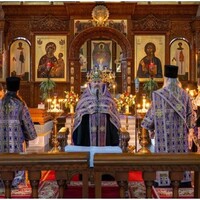
Hegumen Dionysius (Shlenov) received a doctorate in theology for a study arguing that the Phanar’s claims to authority are incompatible with the conciliar structure of the Church.
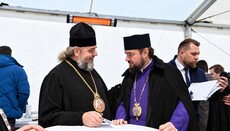
The Moscow Theological Academy has held the defense of a doctoral dissertation by Hegumen Dionysius (Shlenov), abbot of Moscow’s St. Andrew Stavropegial Monastery and head of the Academy’s postgraduate program.
The dissertation is titled “In Defense of the Conciliar Structure of the Orthodox Church: The Theory of the Primacy of the Patriarch of Constantinople and Its Critique.”
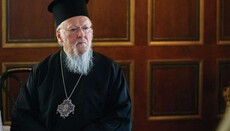
In his study, Hegumen Dionysius argues that the modern “theory of primacy” of the Patriarch of Constantinople – namely, the claim that he possesses special supra-jurisdictional authority over the entire Orthodox diaspora and the right to hear appeals from clerics of other Churches – has no canonical, theological, or historical foundation and directly contradicts the conciliar ecclesiology traditionally upheld in Orthodoxy.
Among the dissertation’s key conclusions are the following:
The theory of the Patriarch of Constantinople’s primacy is in profound conflict with the conciliar ecclesiology of the Orthodox Church: Christ alone is the Head of the Church, while the Local Churches are equal members of one body. Therefore, no primate can possess authority superior to that of the others.
The theory, according to the author, rests on arbitrary interpretations of canons, theological terms, and isolated historical precedents that the Phanar presents as universally binding norms. In particular, he argues that Canon 28 of the Council of Chalcedon, concerning authority “among the barbarians,” originally applied only to three Byzantine dioceses rather than to the entire worldwide diaspora, while the title “Ecumenical” was historically honorary and did not confer governing authority.
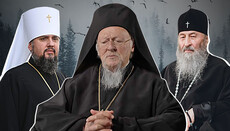
The “oikonomia” extended by the Phanar to members of the UOC-KP and UAOC in 2018, without repentance on their part, did not heal the schism, the dissertation argues, but instead laid the groundwork for open persecution of the canonical Ukrainian Orthodox Church – including legislation effectively banning the UOC, court proceedings against hierarchs, and forcible seizures of churches.
The implementation of the theory of primacy, the author concludes, is the chief cause of the present church division, comparable in scale to the schism of 1054, while defending the principles of conciliarity is vital for world Orthodoxy as a whole.
The author stresses that the dissertation does not claim to exhaust the subject and outlines areas for further research – including a detailed analysis of precedents of autocephaly, a deeper study of Slavic church history, and continued scholarly and theological dialogue in defense of the Church’s conciliar structure.
Earlier, an Albanian archbishop told UOJ in an interview that being “first among equals” does not mean ruling over the second and third. According to him, all Churches are equal, and without this understanding Orthodox unity will be placed at risk.
“Unity always requires humility, truth, and love,” the archbishop concluded.