
KNU professor: In EU Ukrainians go to ROC, not Catholics
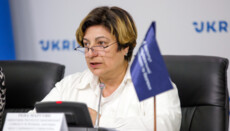
According to Rena Marutian, refugees choose the Russian Orthodox Church due to the inability of the Orthodox Church of Ukraine to carry out its activities abroad.
A unified network of Russian influence has been identified in the European Union, with the “church channel” serving as its main backbone. This was stated by Rena Marutian, Director of the Institute for National Resilience and Security and a professor at Kyiv National University, during a presentation at Ukrinform. According to her, refugees choose the Russian Orthodox Church (ROC) because the Orthodox Church of Ukraine (OCU) is unable to open parishes abroad.
"We have determined that there exists a unified network of Russian hybrid influence on Ukrainian communities abroad, consisting of six channels," said Rena Marutian. "The structural backbone of this network is the church channel, which unites many components: education, legal assistance, and psychological support."
The researchers emphasize that refugees, especially Russian-speaking natives of the southern and eastern regions of Ukraine, do not turn to the Uniates or Roman Catholics. "According to Article 4 of the Tomos, the Orthodox Church of Ukraine cannot open its parishes in Europe," the researcher noted.
Therefore, Ukrainian refugees — who are often Russian-speaking natives of the southern and eastern regions — do not go to the Ukrainian Greek Catholic Church or the Roman Catholic Church, but instead go to the Russian Orthodox Church." In the professor's view, for many compatriots abroad this is connected to the inertia of habit and a sense of the "sound of home."
As the UOJ reported, Dumenko discussed the "destructive influence" of the UOC abroad with diplomats.