
Jesuit Order closes its oldest community in Belgium over declining numbers
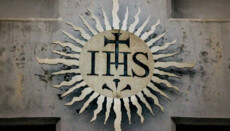
In Liège, an official farewell was held for the representatives of the Society of Jesus, whose uninterrupted presence in the region had lasted since the 16th century.
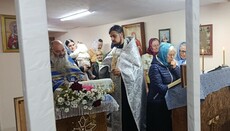
On June 13, 2026, a solemn Mass was held in the Diocese of Liège, marking the end of the 456-year presence of the Jesuits in this Belgian city, reports Life Site News.
The Mass, celebrated by Bishop Jean-Pierre Delville at Saint-Christophe Church, gathered around 600 people, including clergy, former students, and teachers from Catholic colleges, and and local faithful. The decision to dissolve the community was made by the order's leadership against the backdrop of declining numbers and an aging membership.
"If the Jesuits are withdrawing from Liège because they are no longer numerous enough, is it because we have not prayed enough?" Delville asked during the homily. The development in Liège is not an isolated case, as similar challenges have affected numerous religious institutes throughout Western Europe over recent decades, prompting several congregations to consolidate or close long-standing communities. The Jesuits previously dissolved their last community in the Diocese of Cartagena in Spain, where they had been present continuously since 1871. Representatives of the order in both cases acknowledged that the primary reason for the closure of these historic strongholds was demographic decline.

Experts note that the current decline of the order has been a consequence of its infatuation with the ideas of neo-modernism and attempts to adapt its doctrine to the "signs of the times." In recent decades, the Jesuits have turned their centers into places where fashionable ideas have taken precedence over Church teaching. This has led to a gradual erosion of monastic identity and a loss of interest among young people in serving within the ranks of what was once the most influential Catholic order.
The history of the Jesuits in Liège began in 1569, just a few decades after the founding of the Society by Ignatius of Loyola. The order played a key role in the education and evangelization of the region during the Counter-Reformation, maintaining its influence over five centuries despite social and political upheavals.
Although the Jesuit community is leaving the city, educational institutions established by the order are expected to continue operating, but the spiritual presence of the Jesuits in Liège has now been entirely discontinued.
As previously reported, the Jesuits of Spain wish for the RCC to advance on the path of accepting LGBT.