
Serbian priest criticizes plans for pantheon at Kyiv-Pechersk Lavra
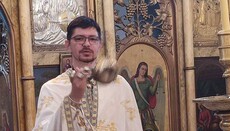
Only monks may be buried at a monastery, and the Lavra is not a museum site but a place of worship, Serbian priest Siniša Buvač stressed.
The Ukrainian authorities’ decision to establish a pantheon of heroes on the grounds of the Kyiv-Pechersk Lavra runs contrary to the Church tradition of burial at monasteries, priest Siniša Buvač, a cleric of the Banat Eparchy of the Serbian Orthodox Church, told the UOJ.
He stressed that the tradition of burying people near churches is indeed ancient and that cemeteries have long existed beside churches. A monastery, however, lives by different rules, he said.
“It is impossible to establish ordinary cemeteries at Ostrog Monastery or Visoki Dečani Monastery. Only monks and abbots who have earned such an honor may be buried there,” the priest said.
In his view, the same principle applies to the Kyiv-Pechersk Lavra: “I see the Lavra in the same way – if a cemetery is ever established on its grounds, only monks may be buried there, not laypeople.”
The cleric also commented separately on the authorities’ establishment of a museum at the monastery. “As a priest, I strongly condemn such an overt attempt to appropriate what belongs to others,” he said.
The priest also recalled the status of UNESCO World Heritage sites, which include Visoki Dečani Monastery, while the monastery itself retains its autonomy. “Of course, all cultural monuments must be respected and protected. However, the Lavra is not merely a historical site. The Lavra is a place of prayer,” he stressed.
“The Church is not a circus. The Church is a sacred institution that must preserve its autonomy and independence,” Fr Siniša said, adding that believers face difficult trials, but “the gates of hell shall not prevail against the Church.”
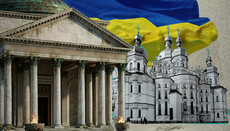
Earlier, the UOJ reported that the Cabinet of Ministers had disclosed details of plans to build a pantheon at the Lavra.