
Nerves on edge: Why DESS is going after UOC's lawyers
The DESS lawsuit against the Kyiv Metropolia is not unfolding the way Viktor Yelensky had hoped.
Ukraine’s State Service for Ethnic Policy and Freedom of Conscience (DESS) has issued an unusually combative statement attacking lawyers representing the Ukrainian Orthodox Church. More than a routine press release, it reads like a document written under mounting pressure.
The tone of the statement speaks for itself.
Among other things, Yelensky’s agency accuses the UOC’s international counsel, Robert Amsterdam, of trying to undermine international support for Ukraine, smear the country’s leadership, and distort the reality of religious life in Ukraine. It further labels his public comments as “disinformation.”
Yet the agency provides no quotations whatsoever to support those accusations. The claims are simply asserted as fact.
The reason for DESS’s irritation is not difficult to understand.
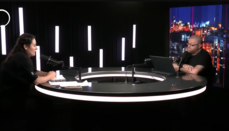
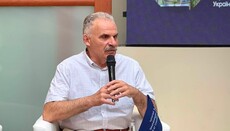
In his interview with Tucker Carlson, Amsterdam repeatedly drew attention to an uncomfortable chapter in Viktor Yelensky’s own past. He recalled that during the Soviet era Yelensky published works containing antisemitic themes, praised Lenin, and wrote articles attacking the Church. Whether the DESS chief welcomes that discussion or not, it is hardly surprising that these revelations have attracted attention.
A similar pattern can be seen in the agency's attack on UOC Protodeacon Vadym Novynskyi. DESS claims that Novynskyi "places full responsibility for Russia's armed aggression on Ukraine."
The problem is that his own words, spoken in the very same interview with Carlson, say exactly the opposite: "Under no circumstances do I justify Russia or the Russian authorities for committing this act of aggression against Ukraine."
Why, then, would a government agency make claims that are so easily contradicted?
The answer appears fairly obvious.
The lawsuit seeking the dissolution of the Kyiv Metropolia is proving far more difficult than DESS anticipated. What government officials expected would become the legal dismantling of the governing body of the UOC last year has instead turned into a lengthy court battle.
One reason is the work of the Church's legal team. Another is the unprecedented response of ordinary believers, who continue joining the proceedings as third parties in support of the Kyiv Metropolia. More than 10,000 applications have already been submitted, and that number continues to grow.
Against that backdrop, the increasingly emotional rhetoric coming from Yelensky's agency is hardly surprising.
DESS now claims that the UOC is suing "to preserve its membership in the Russian Orthodox Church" while allegedly concealing that fact from its own faithful. In effect, the agency is asking the public to believe that UOC parishioners have spent more than a year participating in litigation without understanding either the government's claims or the court proceedings themselves.
According to DESS: "In conversations with many believers, it became clear that they do not know the substance of the Directive or what exactly the Ukrainian state is requiring of the Kyiv Metropolia."
The agency does not identify these "many believers," explain where these conversations supposedly took place, or provide any evidence that they occurred. Given that other assertions in the same statement are unsupported, there is little reason to accept this one at face value.
The stakes for DESS could hardly be higher.
The case against the Kyiv Metropolia is widely viewed as the cornerstone of the government's broader legal campaign against the Ukrainian Orthodox Church. A victory would likely pave the way for similar actions involving the Pochaiv Lavra, Holosiiv Monastery, diocesan administrations, and other UOC institutions.
Yet despite extensive state pressure, the case has not gone according to plan. The anticipated breakthrough never occurred.
That may well explain why the tone coming from Yelensky's office has become increasingly defensive.
If the case ultimately collapses, difficult questions are likely to be asked – not of the Church's lawyers, but of those who launched the campaign in the first place.