
Why UCCRO should rename itself as “State Service for Religious Affairs”
For several years now, the Ukrainian Council of Churches and Religious Organizations has been operating under a name that no longer reflects reality.
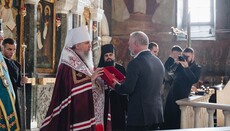
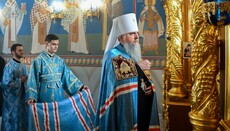
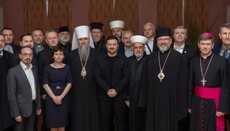
Members of the Ukrainian Council of Churches and Religious Organizations (UCCRO), led by OCU figures Epifaniy Dumenko and Yevstratiy Zoria, are currently visiting Brussels. There they speak about the Maidans of 2004 and 2013, condemn Russian aggression, assure European officials that the Ukrainian Orthodox Church is not being persecuted, and – most importantly – lobby EU bureaucrats to accelerate Ukraine’s accession to the European Union.
At first glance, one might say they are working for the good of the country. Yet an obvious question arises: if exactly the same things were being said by Ukrainian ministers or ordinary government officials, would anything change? Does Ukraine really lack people capable of praising the Maidans or persuading a European Commissioner to admit the country into the EU? Is this truly the mission of bishops of the Church of Christ?
Today the Church commemorates the Apostles Bartholomew and Barnabas. Like the other apostles, they journeyed to distant lands in obedience to Christ’s command: “Go into all the world and preach the Gospel to every creature.” The present-day members of the UCCRO – including Dumenko and Zoria – present themselves as the successors of those apostles.
But let us imagine for a moment that the apostles two thousand years ago had behaved as their modern “heirs” do. Imagine them arriving in India, Armenia, or Cyprus only to complain about oppression by the Roman Empire, boast about the revolt of Judas the Galilean, and negotiate advantageous political alliances with local rulers.
The very idea sounds absurd.
The apostles brought nations the Good News of cosmic significance, before which every political dispute appears trivial and fleeting. They proclaimed a Kingdom that is not of this world.
Of course, one could argue that the UCCRO finds itself in a different situation because Europe has long since received the Gospel and because Christianity lies at the foundation of European civilization.
But is everything really so healthy in that Europe?
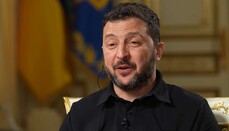
In Kyiv, while religious processions face restrictions, a gay pride parade took place with the participation of employees from EU embassies. The President and the Ministry of Family Affairs regularly issue statements in support of LGBT causes. The Speaker of Parliament consults LGBT activists on provisions of the new Civil Code. Meanwhile, the head of the State Service for Ethnic Policy and Freedom of Conscience openly declared that acceptance of the LGBT agenda is effectively “mandatory” for Ukraine’s accession to the European Union.
Could the members of the UCCRO have stated plainly during their meetings in Brussels that same-sex relationships are sinful and that Ukrainians will never accept them?
Not only could they have done so – as clergymen, the author argues, they were obliged to.
Yet they remained silent.
Just as they remained silent after the pride parade.
The explanation, according to this view, is simple: no such assignment had been given by the authorities.
And there is little doubt, the author contends, that if tomorrow they were instructed to promote the LGBT agenda, they would do so as well. Such a possibility was hinted at rather openly by Viktor Yelensky, who stated that the UCCRO is “capable of compromises” on this issue.
For several years now, the Ukrainian Council of Churches and Religious Organizations has carried a name that no longer corresponds to its actual role.
Today, the organization should be called something else:
“The State Service for Religious Affairs.”
At least then, the name would be more honest.