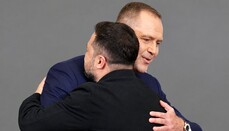

Zelensky's revoked order: What kind of heroes should Ukrainians have?
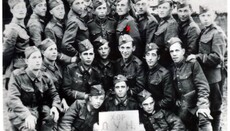
In recent years, the Ukrainian authorities have sought to present members of the OUN-UPA as heroes for all Ukrainians.
Polish President Karol Nawrocki stripped Zelensky of the Order of the White Eagle over the glorification of the UPA – more specifically, because one of the AFU’s special operations centers was named after the “UPA heroes.”
According to Nawrocki, “the facts are that at least 100,000 Polish citizens were murdered by the UPA in Volhynia, Eastern Galicia, the Lublin region, and Subcarpathia simply because they were Poles, Jews, or members of other minorities. The victims included villagers and townspeople, entire families, women, children, and the elderly.”
“These were not soldiers on a battlefield. They were defenseless civilians. They were brutally and mercilessly murdered,” the Polish president stated.
He made it clear that by glorifying the UPA, Ukraine risks undermining its prospects for EU membership: “In the European family, there can be no place for the glorification of bandits and murderers who killed women and children.”
Nawrocki also stressed that “Bandera’s red-and-black flags have no place in Poland’s public space.”
The reaction among Ukrainian politicians has been one of outrage. Dozens of indignant statements have already appeared, while Presidential Office chief Budanov, Foreign Minister Sybiha, and Ukraine’s ambassador to Poland, Bodnar, announced that they would return their Polish awards in protest.
Virtually all of these statements claim that Nawrocki’s decision constitutes an insult to the Ukrainian state and to the Ukrainian people as a whole. Andriy Kornat, head of the People’s Movement of Ukraine, even recalled the “reconciliation” services held jointly by Roman Catholics and Ukrainian Greek Catholics. At those services, UGCC head Sviatoslav Shevchuk repeatedly voiced the formula: “Accept these words from the Ukrainian Church and the Ukrainian people: we forgive and ask forgiveness.”
But this raises a fundamental question: what does the entire Ukrainian nation have to do with it?
Why should millions of Ukrainians ask forgiveness for crimes committed by specific individuals?
Karol Nawrocki himself emphasized that his position “is not directed against the Ukrainian people.” What Poland demands is the acknowledgment of UPA crimes and an end to their glorification.
This distinction is crucial.
In recent years, the Ukrainian authorities have worked tirelessly to portray UPA members as heroes of the entire nation. But did anyone ask the nation itself?
Do Ukrainians truly agree to honor as their heroes people who, for the most part, served the Nazi regime in the Roland and Nachtigall battalions, the SS Galicia Division, and Hitler’s auxiliary police? People who cold-bloodedly killed women, children, and the elderly?
Yes, they fought for an independent Ukraine.
But can a noble goal sanctify horrific means?
Can rivers of innocent blood be transformed into a pedestal for national heroes?
Can a nation build its future on the memory of those whose hands were stained with the blood of civilians?
The Gospel reading appointed for Saturday – the very day after Nawrocki’s controversial decision – contains Christ’s warning:
“Everyone who hears these words of Mine and does not put them into practice is like a foolish man who built his house upon the sand. The rain came down, the floods rose, the winds blew and beat against that house, and it fell – and great was its fall” (Matt. 7:26–27).
What future awaits a state that lays bloodshed and violence in its foundation?
What can endure when historical truth is sacrificed to political expediency?
Christ continually gives us the answer.
The question is whether we are willing to hear Him – and whether we dare not ignore His words.