
A dragon-faced downpipe
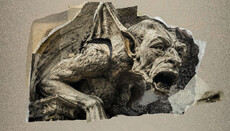
A gargoyle is not merely a decorative element on the façade of a Gothic church but a downspout. The place assigned to it by the architects speaks eloquently of the inner state of man.
Rain over a Gothic cathedral is a sight worth waiting out the bad weather for. When the streets are dry, the stone creatures on the ledges simply sit there. When a downpour begins, they come to life: streams of water pour from their open mouths, carrying the water well away from the walls and onto the pavement without touching the masonry. The monsters are at work.
We commonly think of them as stone guardians of the church. But it turns out that the architects had something quite different in mind.
A dragon not found in any bestiary
Let’s start with the word itself. The French gargouille is a compound term: the first part is related to the Late Latin gargarizare and the Greek word for "to gargle," while the second derives from gula – "throat." In other words, it simply evokes the sound of water in the throat. At the end of the 13th century, the word first appears in the form gargoule, meaning precisely "throat."
In other words, a gargoyle is a drainage feature – a sculpted outlet for a rain gutter.
The medieval bestiaries (collections of accounts of various creatures), which conscientiously described the unicorn, the basilisk, and the manticore, know nothing of gargoyles at all. A creature by that name was born much later — in the Romantic literature of the nineteenth century — and only fully grew into the image of a winged demon in cinema and fantasy.

Let’s take a closer look at the most famous sculptural menagerie. The contemplative horned figure, resting its cheeks in its hands and gazing out over Paris from the towers of Notre-Dame, is part of the Gallery of Chimeras, which was created during the cathedral’s restoration in the 1840s–1860s. But these sculptures do not channel rainwater and serve no functional purpose. The cathedral’s actual gargoyles are hidden where tourists rarely look: on the buttresses, along the edges of the roofs, and in the corners of the towers.
Stone fears water
Why was this projection needed at all? The Gothic wall is vulnerable. Its cornice barely protrudes, and rainwater running down the masonry washes the mortar from the joints. This led to a simple engineering requirement: carry the runoff as far away from the wall as possible. Thus emerged the peculiar form of the gargoyle, a figure projecting outward at a right angle to the wall, with a channel running along its back and an opening in its mouth.
Early examples were massive. At the Cathedral of Notre-Dame in Laon, a gargoyle consists of two halves – a water channel and a cover – which together form the shape of an animal. But builders soon realized that one powerful stream was more damaging to masonry than many weaker ones, so they switched to smaller gargoyles spaced evenly along the length of the gutter. The sculpture benefited as well: the figures became smaller, more detailed, and more refined.
Monkeys, jesters, and mermaids on the walls
Contrary to popular belief, gargoyles depicted far more than dragons alone. Monkeys, pigs, dogs, goats, and fish sit on the cornices, alongside monks, jesters, acrobats, mermaids, and shield-bearers bearing the patron's coat of arms. Occasionally one even encounters meaningful compositions such as a demon riding a sinner or a serpent winding around a tree, recalling the Tempter. The streams of water gushing from the creatures’ mouths completed the effect, turning the sculptures into a street spectacle.
Not everyone was fond of this engineering solution. The clergy were the main opponents of the sculptors.
Abbot Bernard of Clairvaux was outraged: “But what purpose do these ridiculous curiosities, these strangely grotesque images, serve in monasteries, before the eyes of the brothers who read? What are those filthy apes doing there? Those wild lions? Those monstrous centaurs?"
It is worth noting that the priest was less concerned about the presence of the demonic alongside the altar than about the idle curiosity these sculptures might provoke. In his view, a monk would spend all day gazing at marble curiosities instead of reading the sacred books. One cannot deny that his criticism hits the mark. A monster on the wall really can distract from prayer.
The place assigned to the monster
So do these creatures have a spiritual meaning beyond their practical purpose? Art historian Michael Camille, who devoted an entire book to the monsters of Notre-Dame, believed they did: the demonic figures on the outside of the building seem to tell passersby that they were not allowed inside the church.
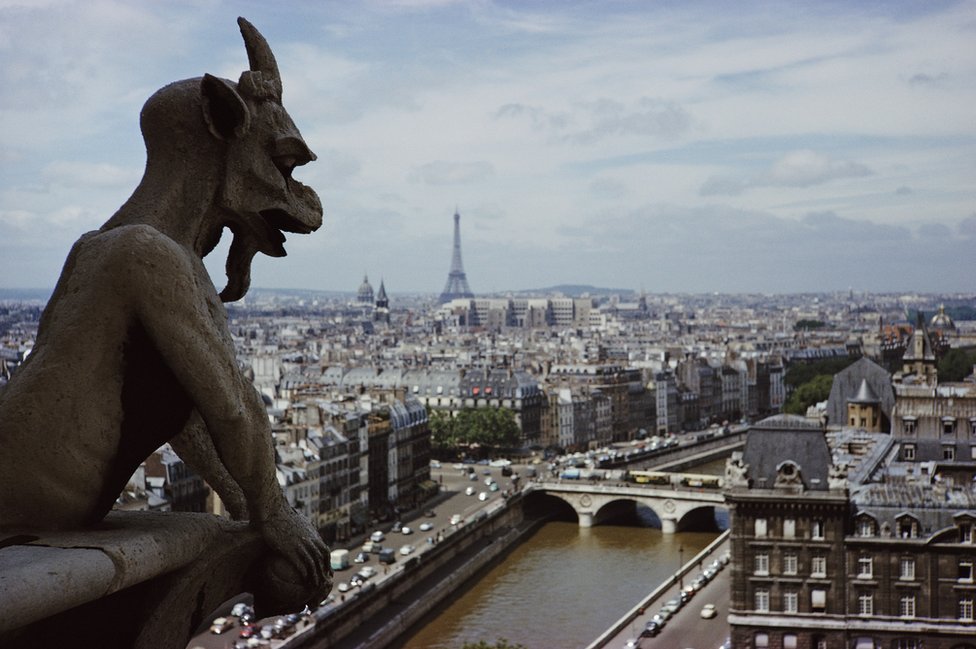
The gargoyle faces the city, with its back to the altar. It only makes its presence known in bad weather; on a clear day, the monster is silent and useless. Yet it is one of the first things a person entering the church sees, which is significant as well.
Above the western doors of Notre-Dame, there is a depiction of the Last Judgment. The sequence of the sculptures is highly symbolic. At first, standing in the square, a person sees frightening monsters. Upon entering the church, they notice the Last Judgment depicted above the doors. And only then do they see the church itself, with its magnificent vaults, natural light, and silence.
"For from within, out of the heart of man, come evil thoughts, adultery, fornication, murder" (Mk. 7:21), said Christ. The stone monsters, which so closely resemble our inner demons, remind us of the same truth.
The gargoyle takes in the water and carries it away from the church masonry, fulfilling its engineering purpose. We, too, must constantly work on ourselves through repentance: acknowledge our sinfulness, name our sins aloud in confession, and draw them out of the soul before they have utterly corroded it.