
A Man Before the Elements
A solitary figure on the shore seems infinitely small before the elemental force of water, yet it is this very figure that stands before the Creator.
The vast canvas of Caspar David Friedrich's "Monk by the Sea" is filled with three simple and laconic bands. At the bottom stretches a narrow strip of dark earth, in the middle lies a heavy mass of leaden sea, and above it extends a boundless pale sky. At the very edge of the shore stands a tiny bareheaded human figure. A solitary silhouette, its back to the viewer, gazes into the cold abyss of the elements.
The German painter created a work that radically transformed the perception of landscape in European art. The canvas was first shown to the general public at the Berlin Academy of Arts in the autumn of 1810.

Viewers of that era were accustomed to picturesque Italian ruins and heroic subjects from antiquity. Here there is nothing of the sort. The master stripped the painting of its familiar attributes of comfort, leaving the viewer face to face with the terrifying grandeur of the universe. The figure of the monk is the sole conduit of human consciousness in this boundless wasteland.
The Sensation of Severed Eyelids
The most precise and piercing response to this groundbreaking work was left by the writer Heinrich von Kleist in the October issue of a Berlin newspaper. He confessed that contemplating the seascape produced a strange sensation, as though someone had forcibly cut off his eyelids. It proves impossible not to gaze into this infinite void, and the human eye has nowhere to hide. The critic called the painting apocalyptic, noting the terrifying sense of utter solitude amid a cold kingdom of death. The only boundary of the space in the painting is the heavy wooden frame.
The artist's contemporaries were shocked by the boldness of the composition, in which solid ground seemed alien and the celestial heights overwhelmed with their scale.
The artist deliberately renounced architectural backdrops, cozy details, and charming landscape particulars. He invited the viewer to lay bare the soul before the face of the elements.
The monk on the shore becomes a symbol of the human soul that recognizes its total dependence on the Creator and the insignificance of any earthly supports. The viewer is drawn into a prayerful awe in which all social roles and worldly concerns dissolve, leaving only a naked conscience before the face of Eternity.
The Meaning of Emptiness
Technological examination of the canvas revealed a unique detail of the painter's creative method. X-rays showed that in the early sketches the horizon was not empty. The master had originally painted two small sailing ships drifting peacefully in the distance. The ships could have served as a saving anchor for the viewer's wandering gaze and a kind of sign of safety. However, in the course of his work the artist deliberately erased these landmarks, leaving the canvas gaping.
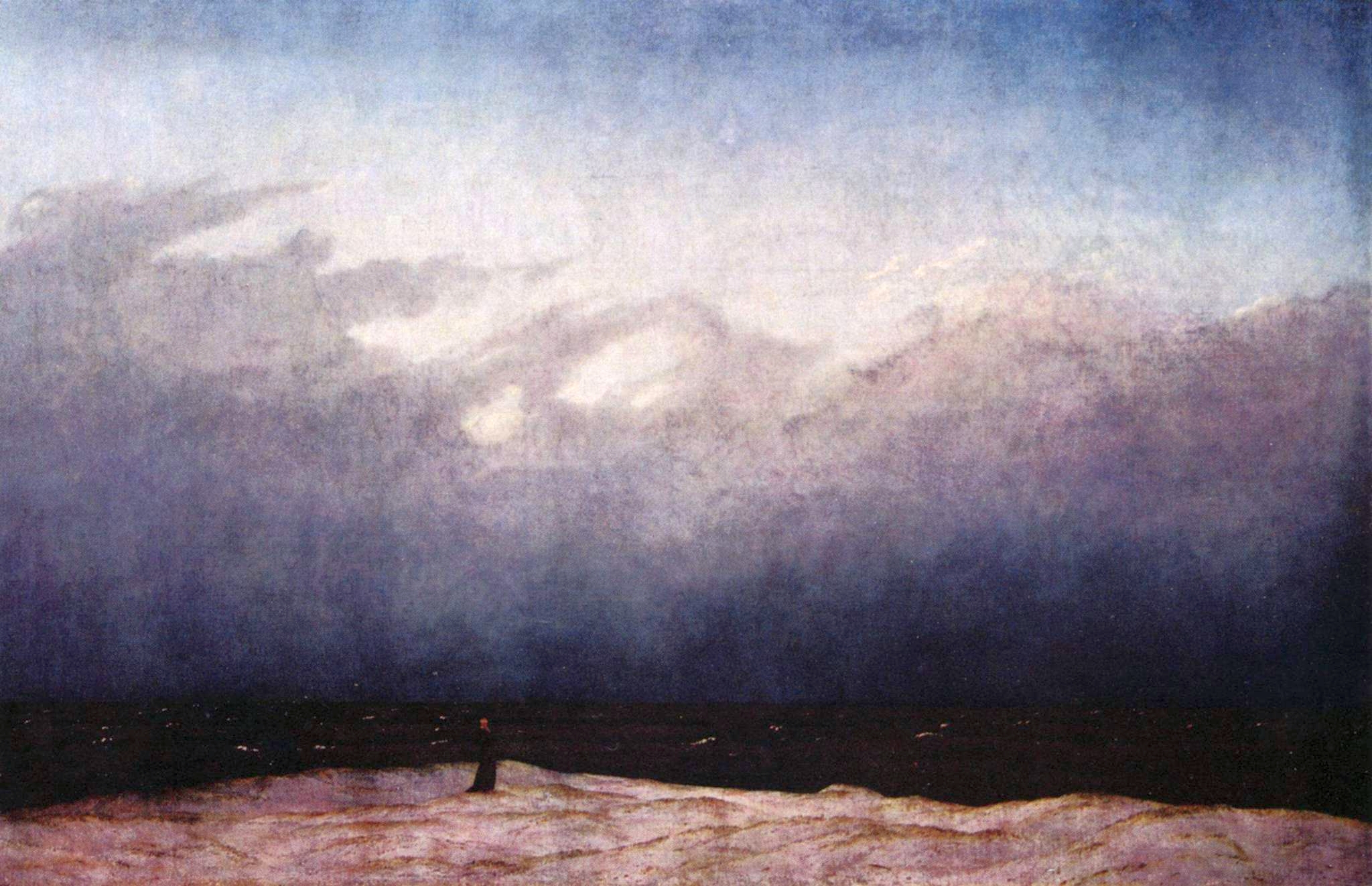
With the removal of the ships, the master stripped the painting of its last traces of narrative, transforming the landscape into a pure metaphysical space. The viewer can no longer console himself with dreams of a civilization somewhere nearby. All that remains is the raging elements and a solitary man within them. The rejection of narrative detail largely anticipated the explorations of twentieth-century artists.
Tragedy in Icy Water
Behind the radical minimalism of this canvas lies a personal catastrophe that shaped the entire creative biography of the master. At the end of February 1787, the future painter broke through the ice of a frozen lake. His younger brother Christopher rushed to save the drowning boy. The ice could not bear the double weight, and the young rescuer sank beneath the water before the future artist's eyes.
A heavy sense of guilt over the death of his loved one haunted the painter for the rest of his days. Death was no longer an abstract philosophical category for him. It had grown into him through memories of icy water, winter cold, and a child's cry lodged in his throat.
This is precisely why the figures of people in his paintings are so often turned with their backs to the viewer. They gaze into the misty distance, where the boundary between temporal existence and eternity fades away.
The tragedy taught the master to perceive the fragility of human fate against the backdrop of majestic nature, in which man finds himself a defenceless wanderer.
Contemplation of Heavenly Light
The painter himself left valuable advice on how to perceive the images he created. In surviving notes he counselled his students to close their natural sight in order to open their inner vision for the spiritual contemplation of their future canvases.
During country walks he told his companions that the Divine presence was diffused everywhere, felt in every grain of sand and in the simple reeds along the shore.
Later, the Prussian monarch acquired the canvas immediately after the close of the exhibition. At the personal wish of the artist, this work was hung above a companion canvas depicting the gloomy ruins of a Gothic church beneath snow-laden trees. Thus the themes of the transience of earthly creations and the eternal boundlessness of the Creator were joined together.
A man before the face of the universe seems infinitely small, yet it is his fragile consciousness that is capable of holding a sincere prayer addressed to the heavens. The artist discerned in the silence of the landscape a reflection of the higher world, reminding us of inner recollection and the search for spiritual supports amid a restless age.