
The monks who were 300 years ahead of progress

An inventory compiled by royal officials in the 16th century shows that these silent monks created Europe's first industrial network.
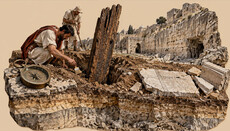
In 1538, royal commissioners arrived in Yorkshire's Rye Valley to carry out a tedious task: cataloguing the property of the dissolved Rievaulx Abbey. Among the listed assets were two sites whose names meant little to the clerk recording them – an "ironworks" at Laskill, about four miles from the abbey, and a "hammer forge" at Rievaulx itself. The report then lay forgotten in a dusty archive for four and a half centuries.
In the late 1990s, the documents were rediscovered by Gerry McDonnell, an archaeometallurgist at the University of Bradford. He wondered what kind of furnaces the monks had built and just how advanced their metalworking had become.
A typical furnace of that era was a clay shaft about two meters high into which charcoal and iron ore were fed from above, while air was supplied by hand-operated bellows. Such furnaces could not reach the required temperature of around 1,500°C, leaving the slag rich in unrecovered iron.

The slag found at Laskill, however, told a different story. It was remarkably poor in iron – so poor that its composition resembled waste from a blast furnace. Yet according to history textbooks, blast furnaces would not appear for another century and a half. Archaeological excavations uncovered a square stone structure roughly five meters on each side, along with evidence of a diverted stream that appears to have powered the bellows.
In other words, these silent monks, who had withdrawn from the world in search of prayerful stillness, had come astonishingly close to launching the Industrial Revolution.
A desert that flourished
The Cistercian Order, founded in 1098 at Cîteaux in Burgundy, deliberately settled in places where no one else wished to live. According to one explanation, the name of the mother abbey derives from an Old French word meaning "reed" or "marsh."
The valley that would become the site of Fontenay Abbey consisted of more than 1,200 hectares of swampy woodland. The monks drained the marshes to make the land habitable. Remarkably, seven ponds and several waterfalls that they created still survive today.
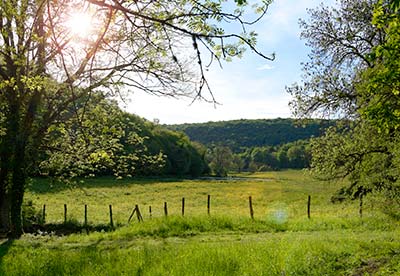
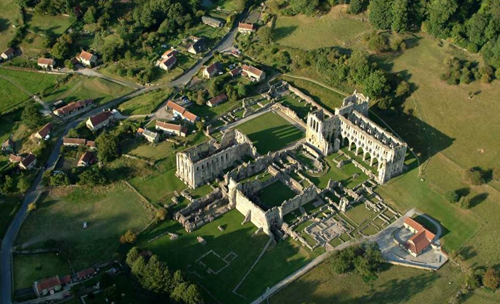
A contemporary chronicler described Yorkshire's Rye Valley in the 12th century as a vast and desolate wilderness. The twelve monks sent there from Clairvaux in 1132 began by literally redirecting the river. Over the next century they altered its course three times until they had created a level site of the desired size. On it they built 72 structures, and within twenty-five years the community had grown to 140 monks and more than 500 lay brothers.
The hardworking river
Another remarkable 12th-century document survives: an anonymous description of the landscape surrounding Clairvaux Abbey. Its author describes the River Aube flowing toward the monastery through a channel "made not by nature but by the labor of the monks," half of which had been diverted inside the abbey itself.
The account lists the hydraulic innovations the monks developed to serve the monastery. Water turned the blades of a mill, while millstones ground grain into flour and separated it from the bran. It then filled a boiler in a neighboring building before flowing to the fulling mills, where it raised and lowered heavy hammers, sparing the workers exhausting labor. From there it reached the tanners preparing leather for the monks' footwear.
The stream then divided into branches, winding through the remaining workshops, "carefully inquiring everywhere what work required its service and for what purpose" – whether to brew, sow, sharpen, grind, irrigate, wash, full cloth, or soften materials. Only after completing every task for which it had come did the water carry away the waste as it hurried back to the river.
What is striking is the tone of this medieval text. There is not a single word celebrating human ingenuity or technological triumph. Water serves people, and its service is described with the same gratitude that one might show toward a novice faithfully carrying out his duties in the monastery kitchen.
At Fontenay, this same principle gave rise to a true water-powered mechanical system. The building known as the Forge was deliberately constructed at a distance from the church and monks' cells, separating prayer from manual labor.
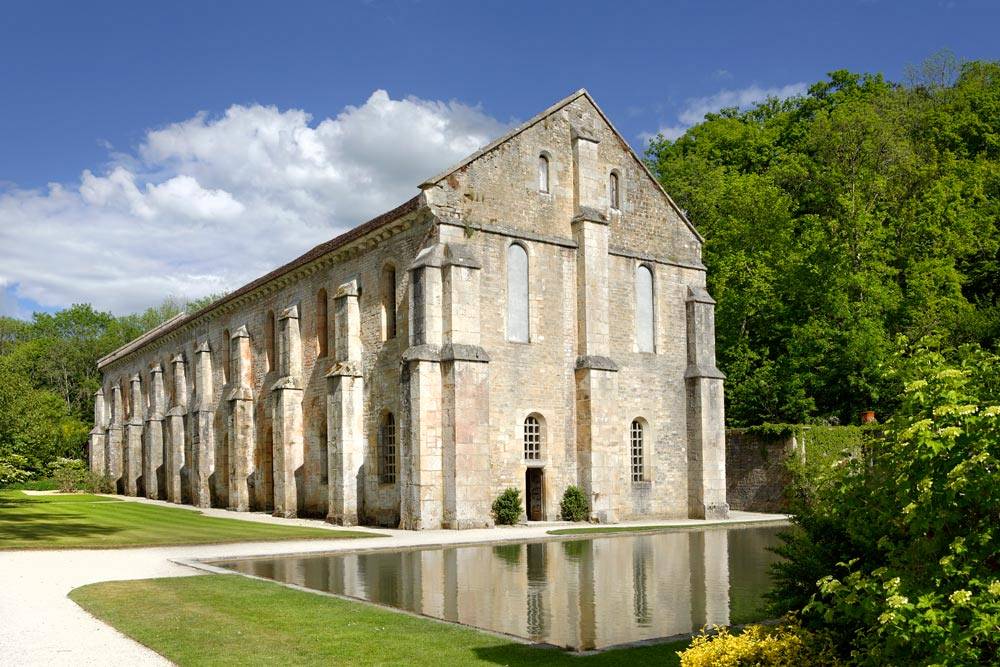
Supported by massive buttresses, the building stretches for more than 50 meters. Inside stood two furnaces and several water-powered mechanisms driving heavy hammers, one of which has now been reconstructed. The sale of metal products became a major source of income for the abbey. Archaeologists regard the Forge as one of Europe's oldest surviving metallurgical workshops.
The abbots' technology council
None of these innovations remained confined to a single monastery. New techniques spread rapidly from one abbey to another.
The Cistercian Rule required abbots to gather annually at Cîteaux for the General Chapter. Officially, these meetings existed to preserve common discipline and uniform observance. In practice, however, they became a communication network through which knowledge spread across the Catholic world – methods of drainage, improved sheep breeding, grain selection, and advances in furnace design.
The technological transformation was visible everywhere. By the time of St. Bernard of Clairvaux's death in 1153, the order already comprised 343 flourishing abbeys. By the middle of the 13th century there were 647, and by the end of the Middle Ages, 742.
As medieval historian Jean Gimpel wrote in his book The Medieval Machine: "Every monastery had a model factory, often as large as the church itself and only a few feet away, where water power drove machinery for a variety of industries."
Then came the inventory of 1538. The monks were expelled, and the technological network they had built was broken apart. McDonnell argues that had the community not been dissolved, the Industrial Revolution might well have begun in Yorkshire.
A drained marsh, once abandoned, returns to swamp within a few decades. A diverted river, left without maintenance, eventually finds its old channel again. The same happened to the inventions of the Cistercians. Centuries later, humanity rediscovered technologies that the humble monks of medieval abbeys had already mastered long before.
Sadly, few today acknowledge that Europe's Industrial Revolution of the nineteenth century became possible in no small measure because of the Church and the tireless labor of its monks.