
What should Orthodoxy expect from Georgia's new Patriarch Shio?
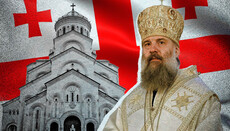
Metropolitan Shio has become Patriarch. A new era has begun for the Georgian Church. What will it look like? And what could it mean for the Orthodox world as a whole? Let us try to understand.
On May 11, 2026, Metropolitan Shio (Mujiri) of Senaki and Chkhorotsku was elected the new primate of the Georgian Orthodox Church. Twenty-two hierarchs voted in his favor.
Thus ended the half-century era of Patriarch Ilia II, who not only revived the Georgian Orthodox Church after the Soviet totalitarian period, but also became, without exaggeration, the father of the nation. His successor is Metropolitan Shio – a longtime disciple and close associate of Ilia II. Whether he will become for the Georgian people what his predecessor was remains to be seen. Yet even now it is clear that Shio is a very different kind of primate: not a charismatic national symbol, but rather a hierarch of discipline, cautious conservatism, and canonical order.
Let us examine his position on the key issues of contemporary Church life. We begin with what is perhaps the most important question for us – the Ukrainian issue.
Georgian Church and Ukraine
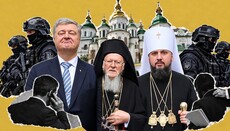
To this day, the Georgian Church has not recognized the OCU or the head of that structure, Serhii (Epifaniy) Dumenko. Will the position of the Georgian Church now change? Most likely – no.
When Patriarch Bartholomew granted a Tomos to Serhii Dumenko in January 2019 and called upon all Local Churches to recognize the OCU, Metropolitan Shio was already serving as locum tenens of the patriarchal throne. His opinion carried significant weight in deliberations on the matter. At the time, Metropolitan Shio stated: “We will familiarize ourselves with the text of the Tomos, and a decision will naturally follow after that.”
Seven years have passed, and no recognition has followed. This can no longer be called a technical pause. It is a position. Metropolitan Shio is known to belong to that part of the Georgian episcopate which has blocked recognition of the OCU.
An important signal came during the meeting between Metropolitan Shio, members of the Georgian Synod, and the delegation of the UOC that arrived for Patriarch Ilia’s funeral in March 2026. According to media reports, the parties spoke of the brotherly relations between the Churches of Ukraine and Georgia and expressed hope for strengthening Church unity.
It is important to understand that the Georgian Church itself faces the painful issue of Abkhazia and South Ossetia. Formally, these territories remain within the canonical jurisdiction of the Georgian Patriarchate, yet in practice there are structures operating there that seek independence from it.
Thus, for the Georgian Church, the Ukrainian issue is not merely a matter of relations with Moscow, Kyiv, or the Phanar. It is a question of whether the ecclesiastical territory of a Local Church may be redrawn from outside if that territory contains political conflict, unrecognized entities, and state pressure upon the Church itself.
The Georgian Church and Constantinople
The Ukrainian issue cannot be separated from the question of Constantinople. The Tomos for the OCU became a test: would the Local Churches accept the supremacy of the Phanar?
We have not found direct statements by the newly elected Patriarch Shio that clearly answer how he views the idea of supremacy for the Patriarch of Constantinople. Yet his position regarding the OCU Tomos inspires cautious optimism.
In reality, the dispute over the OCU is a dispute over the future structure of Orthodoxy itself. Can the Patriarch who is first in honor unilaterally intervene in the life of another Local Church? Can he restore to communion hierarchs who were outside canonical communion? Can he establish a new Church structure without the consent of the Church to which that territory previously belonged, and without a pan-Orthodox decision? The Georgian Church has never loudly answered these questions with “no.” But neither has it said “yes.”
The Georgian Church’s stance matters greatly. This is an ancient Church that has endured both the loss and restoration of its autocephaly, as well as territorial losses and external pressure. Its relations with the Russian Orthodox Church are complicated because of Abkhazia and South Ossetia, meaning it cannot simply be placed within a so-called “Moscow camp.” Its position stems not from the Moscow–Constantinople conflict line, but from traditional Orthodox ecclesiology itself.
One should not expect Patriarch Shio to engage in public confrontation with the Phanar. Yet the likelihood of him becoming a proponent of the new Constantinopolitan ecclesiology appears very small.
The Georgian Church and ecumenism
Patriarch Shio’s attitude toward ecumenism must be viewed in the context of Georgian Church history. In 1997, the Georgian Orthodox Church withdrew from the World Council of Churches (WCC) and the Conference of European Churches (CEC). According to the WCC itself, on May 17, 1997, abbots of five monasteries published a letter to the Synod threatening to break communion with Patriarch Ilia because of his ecumenical activity, and on May 20 the Synod formally decided to withdraw from both organizations.
The resource Public Orthodoxy writes that Shio’s ecclesiastical worldview was shaped in the 1990s at Shio-Mgvime Monastery, where ideas of ecclesiastical isolationism were influential. It is difficult to say to what extent Metropolitan Shio personally adheres to those ideas. Yet it is reasonable to assume that an ecclesiastical environment in which ecumenism was viewed as a threat to Orthodox identity had a formative influence on him. For this reason, one should hardly expect active ecumenical engagement from the Georgian Church under Patriarch Shio.
Incidentally, this also marks another point of divergence from the policy of the Church of Constantinople, which has advanced far along the ecumenical path.
The Georgian Church and canonical order
One of the most interesting questions concerns Shio’s style of Church governance – and here he differs sharply from his predecessor.
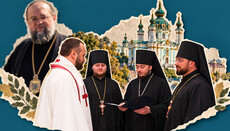
UOJ has previously written about how Locum Tenens Shio attempted to restore canonical order in Church administration by “relying on the younger married clergy,” which at times provoked quiet dissatisfaction among hierarchs of Ilia II’s “old school.”
What does this mean? The episcopate – Church hierarchy itself – is monastic. Bishops govern the Church, yet the daily life of the Church rests not only upon bishops and monasteries. It also depends upon parishes, rectors, teachers, Church administrators, catechists, and many others. As a rule, these are married clergy.
Shio genuinely relies on such people, and this may signify several things.
First, he appears to envision a more qualified and professional Church administration. He relies on educated people capable of handling documents, organizing parish life, and communicating with contemporary society – not only within ecclesiastical circles.
Second, Shio prefers rules over personal arrangements in Church governance. Under Ilia II, the personal authority of the Patriarch played an enormous role in maintaining unity despite internal tensions. But after the departure of such a figure, that unity can begin to fracture. In such circumstances, clear and functioning rules become essential.
Third, this may indicate a shift in the Church’s internal balance – from influential hierarchs of the older generation toward more educated and administratively effective clergy.
The issue of succession is enormously important for the Local Churches. In many of them, authority still belongs to elderly hierarchs who have endured great trials. Those who succeed them often do not possess the same authority or charisma. At the same time, social conditions are changing radically and rapidly. How can the Church ship be guided through such circumstances? Perhaps the Georgian Church will provide an answer.
The Georgian Church and the State
Another important question concerns how Patriarch Shio will build relations with the secular authorities.
At present, the positions of the Georgian Church and the current government largely coincide: defense of the traditional family, rejection of gender ideology, concern for demographics, national identity, historical memory, and state sovereignty.
For example, on May 17, 2025 – the Day of Family Purity – Georgia’s top political leadership participated in Church events. Among them were Prime Minister Irakli Kobakhidze, Parliament Speaker Shalva Papuashvili, Tbilisi Mayor Kakha Kaladze, and other senior officials. Many teachers and civil servants also took part in the procession. On that same day, Metropolitan Shio praised the authorities for legislative measures defending traditional values, including a law against LGBT propaganda and the removal of the concept of gender identity from Georgian legislation.
Another example came on May 1, 2026, when Metropolitan Shio received Foreign Minister and Vice Prime Minister Maka Bochorishvili at the Patriarchate. They discussed ties with the Georgian diaspora and preparations for the 1700th anniversary of Christianity being proclaimed the state religion of Georgia.
Still, relations between Metropolitan Shio and the authorities have not always been entirely smooth. The Georgian Church appealed several times to the government regarding the release of detained protesters and journalist Mzia Amaglobeli. On one occasion, Metropolitan Shio himself raised the matter with Prime Minister Kobakhidze, but the authorities did not accommodate the Church’s request.
Will Patriarch Shio be able to find common ground with the authorities while avoiding becoming part of the political system? A cautious prediction would be – yes.
The Georgian Church and moral foundations
In the moral sphere, however, predictions may be made with much greater confidence: Shio firmly defends the Church’s position on moral issues.
On May 17, 2025, for example, he stated that the population of the Georgian nation had declined from five million to 3.7 million over recent decades, linking this in part to alarming abortion statistics. Shio called abortion “a most grievous sin” and “the killing of a human being in the mother’s womb,” describing the embryo as a conceived human person.
He spoke not only in terms of moral evaluation, but also of practical measures: education, programs for senior school students, social initiatives by the Church and the state, and legislation intended to regulate and tighten abortion policy.
This is encouraging, especially at a time when many religious confessions are experiencing erosion in their positions on LGBT issues, abortion, euthanasia, and related matters. Most Protestant denominations long ago embraced the liberal agenda. The Vatican has permitted priests to bless same-sex couples. Even some representatives of the Local Orthodox Churches have engaged in deeply ambiguous actions. One example is the highly publicized baptism by Archbishop Elpidophoros (Lambriniadis) of the Greek Orthodox Archdiocese of America of children adopted by a gay couple.
Under Shio, the Georgian Church may become one of the centers of resistance to this new liberal agenda.
Conclusion
Summing up this brief overview of Metropolitan Shio’s views on the contemporary challenges facing the Church, we may answer the question posed in the headline in several concise points.
First, continuation of the policy of non-recognition of the OCU.
Second, a quiet rejection of the Constantinopolitan Patriarchate’s claims to primacy within Orthodoxy.
Third, strengthening of the conservative camp in Orthodoxy, together with categorical rejection of the liberal moral agenda.
Fourth, continued distancing from ecumenical structures and processes.
Fifth, the possible emergence of a model of so-called post-charismatic Church governance – one based not upon the personality of the Patriarch, but upon institutions and rules. If Patriarch Shio succeeds in achieving this without allowing administrative principles to overshadow conciliarity, the Georgian Church’s experience may prove important for other Local Churches.
Sixth, Shio’s patriarchal ministry may offer an example of Church–state relations. If the Georgian Church manages to cooperate fruitfully with the authorities in defending family, tradition, and historical memory while at the same time avoiding absorption into the political system, this too may become a model for many Local Churches.
May God grant the new Patriarch help in all good works!