
How can Christians show mercy during wartime?
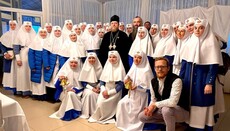
Archimandrite Markell (Pavuk), lecturer at the Kyiv Theological Academy and Seminary, responds.
At first glance, it seems that mercy and war are incompatible. If you don’t kill, you will be killed. How can one be merciful in such a situation?! Where there is war, anger, hatred, and vengeance inevitably spread. It would appear that mercy can only be spoken of in relation to medical staff caring for the wounded and the sick. My grandfather, who was wounded during World War II, always gratefully remembered a nurse named Shura who, having correctly assessed his injury, advised him not to agree to the amputation of his leg. Thanks to her, he returned from the war on both legs and with a medal for bravery. It is not without reason that in earlier times nurses caring for the wounded were called “sisters of mercy.”
Yet mercy is not excluded even among soldiers fighting on the battlefield. The teacher of mercy among soldiers is the holy prophet John the Forerunner, who called everyone to repentance. When soldiers came to him asking what they should do, he answered: “Do not intimidate anyone, do not accuse falsely, and be content with your wages” (Luke 3:14). Some exegetes (commentators on Holy Scripture) believe these words referred only to soldiers who, in addition to combat, also performed police duties among civilians and could abuse their authority, just as happens today. But considering the peace-loving spirit of the Gospel, I do not think this applies only to police functions.
The fact is that war is always a great tragedy. In essence, it is a return to wild pagan times. From the lives of the saints of the first three centuries of Christianity, one can see that Christian soldiers (for example, the Holy Great Martyr George the Victorious or St. Demetrius of Thessaloniki) became martyrs not only because they refused to sacrifice to pagan gods, but even more because they showed humanity and mercy on the battlefield. This is precisely what provoked the rage of their superiors against them. Indeed, it is unreasonable to expect mercy from unbelieving soldiers: it does not fit into duties built on strict calculation and rigid discipline. But a Christian soldier, if he is truly such and not only by name, is simply obliged to show mercy.
Any war (whether just or unjust) is always the result of immense fueling of passions, especially the passion of anger. For a war to break out, distrust must be deliberately sown between nations for years. It is no coincidence there is an old saying: “If a word does not kill, then a stick will not help.” Therefore, to end war, as St. Nicholas of Serbia taught, repentance and the struggle against passions are needed. And this gives birth not to self-seeking but to genuine mercy. Only such mercy can finally extinguish the flames of war. This – unlike what schismatics teach – is what our Church proclaims, and precisely this has always stirred the anger of the non-church and the weak in faith against Her. But Christians by their very nature cannot but be merciful.