
German scholar Bremer: UCCRO cannot be considered all-Ukrainian without UOC
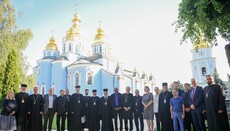
Honorary Professor Thomas Bremer of the University of Münster says excluding the UOC has deprived the All-Ukrainian Council of Churches of its full representative character.
Thomas Bremer, Honorary Professor of Church History and Eastern Christian Studies at the University of Münster (Germany), has published an article questioning whether the All-Ukrainian Council of Churches and Religious Organizations (UCCRO) still lives up to its name after the effective exclusion of the Ukrainian Orthodox Church from its activities. The article was published on the Public Orthodoxy platform.
According to Bremer, when UCCRO was founded in 1996, it was intended as an interfaith platform where Ukraine's religious communities could develop common positions on their relations with the state. The country's largest religious denominations, including the UOC, became members of the council.
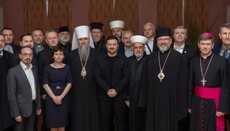
Bremer argues that the situation changed in 2023, when the council supported state actions against the UOC. According to him, UCCRO violated its own rules in doing so. In particular, under the council's statute, the UOC was due to assume the rotating chairmanship in September 2023. Instead, without the Church's participation or even notification, the chairmanship was transferred to another religious organization.
The professor notes that although the UOC formally remains an UCCRO member, it no longer receives invitations to council meetings. In his view, this practice calls into question the representative nature of statements issued on behalf of the council. Bremer points out that, under UCCRO's statute, decisions must be adopted unanimously by all members. Therefore, he argues, documents published as "statements of the council's members" cannot be regarded as expressing the position of all religious organizations in Ukraine if the Ukrainian Orthodox Church was not involved in their adoption.
Bremer also claims that some representatives of other religious organizations have privately expressed dissatisfaction with the situation but are reluctant to speak publicly. According to him, state authorities possess mechanisms for exerting pressure on religious communities, including through decisions related to the mobilization of clergy.
The professor also draws attention to UCCRO delegations visiting foreign countries. In his opinion, Western partners should bear in mind that such delegations do not represent all religious communities in Ukraine because the country's largest religious body – the Ukrainian Orthodox Church – has effectively been excluded from the council's work.
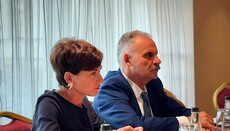
As an example, Bremer cites the recent visit of a delegation from the World Council of Churches to Kyiv. He notes that while UCCRO's website reported a meeting with the WCC delegation, the UOC was not invited. At the same time, representatives of the World Council of Churches held a separate meeting with representatives of the Ukrainian Orthodox Church.
Bremer concludes that the rule of law should apply not only to state institutions but also to the work of interreligious organizations, especially in the context of Ukraine's European integration. In his view, Western churches and civil society organizations should take into account the fact that one of Ukraine's largest religious communities has effectively been excluded from participation in a body that presents itself as representing the entire country.
As the UOJ previously reported, an UCCRO delegation recently discussed Ukraine's European integration with members of the European Parliament.